
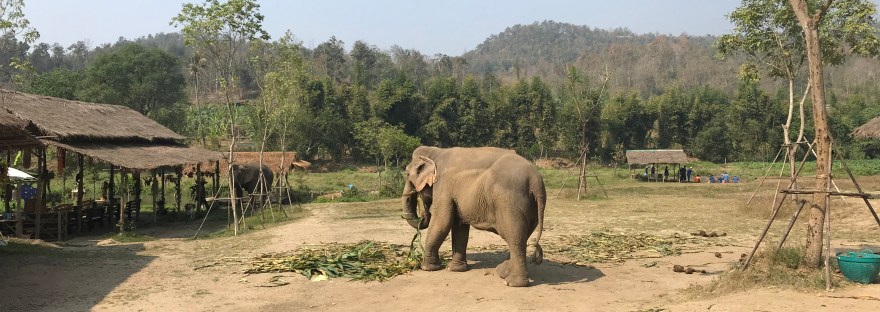
After a week in beach paradise I headed north, to the mountains of Chiang Mai!
The largest city in northern Thailand, Chiang Mai is located on a plain and surrounded by mountains and forests. Its unique topography, warm climate, and rich history make it an extremely popular place to visit; in fact, in 2016 Travel & Leisure magazine ranked it as the 2nd best tourism city in the world!
As if that wasn’t enough, Chiang Mai’s affordable (for Westerners) cost of living and fast internet have turned it into the digital nomad capital of the world. If you’re unfamiliar with “digital nomads”, here is a nice Wikipedia entry (which mentions Thailand 3 times).

While writing this post I learned that Chiang Mai has a “burning season.” Around March/April, to prepare the soil for the upcoming crop season, local farmers burn their land, which traps a bunch of smoke in the valley. This is bad news bears for Chiang Mai’s air quality; during these weeks the locals usually stay indoors or wear masks. Totally ignorant of this during my visit, I was lucky to have missed burning season by just a few weeks!
Brief History
Founded in 1296, Chiang Mai was designed as a walled square surrounded by a moat. The walls and moat served both a practical and spiritual purpose: to protect against the nearby Mongol Empire, and to symbolize the mountains and seas of the world. In the middle was Chiang Mai city pillar, representing a link to heaven at the center of the universe. Today, the half-square-mile area inside this original wall is called the Old City, which modern Chiang Mai has substantially outgrown.

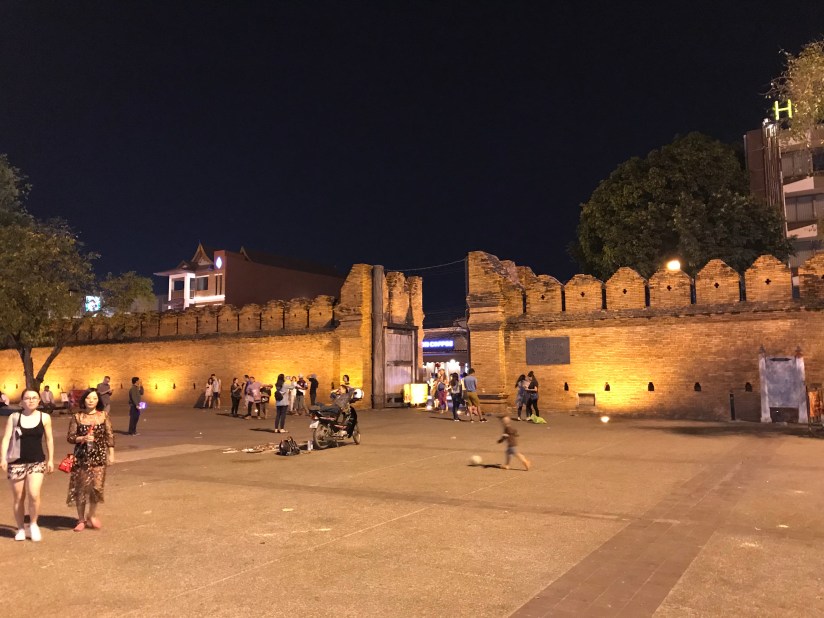
Chiang Mai’s walls originally had 4 gates in and out; a 5th gate was added in the 1500s to allow the king’s mother to more easily supervise the building of a temple. Today, only small restored sections of the wall remain.
Chiang Mai’s economic and cultural development over the years is attributed to its strategic location on the Ping River and proximity to trading routes. As the city prospered, villages built near the outer walls became its extensions, and the outward expansion continues to this day.
Arrival
After the 2-hour evening flight from Krabi I took a $5 taxi to my Airbnb. I wanted to get one night of good sleep before hostel life.
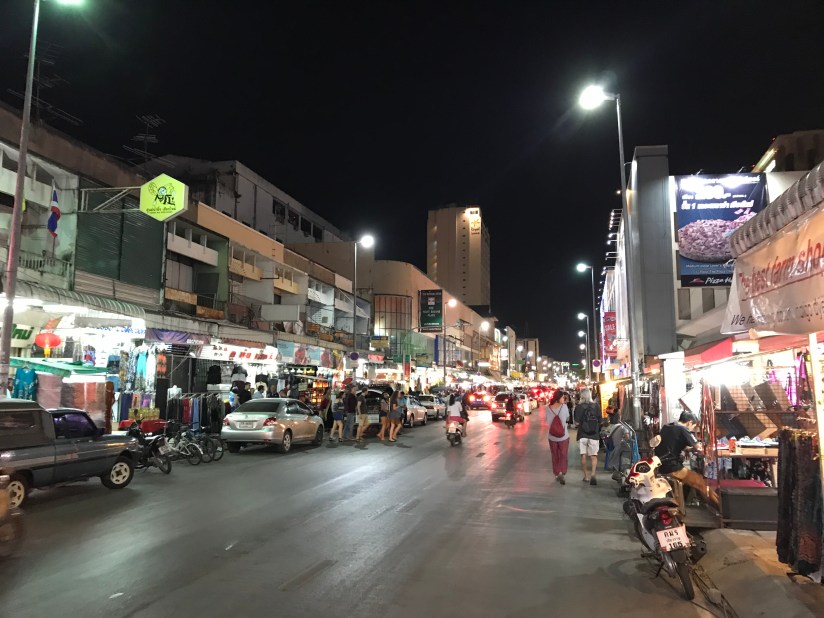
The next day, fully rested and ready for any type of noise, I checked into D-Well hostel. In my 4-bed dorm I met Robert from Washington State, a 33-year old pharmacist on a 5-week backpacking tour of Southeast Asia.
After a nice chat with a new friend I grabbed lunch and came back to the dorm, spending the afternoon in bed booking tours for the next few days. The tour life was to begin later today.
Night Temple Tour
Chiang Mai has 24 Buddhist temples, many of them located inside the Old City. This evening I signed up for a tour of 2 temples that were not: Wat Umong and Doi Suther.

Wat Umong was built in 1297 and is famous for its ancient underground tunnels. The tunnels contain Buddhist images of forest and animal scenes, originally serving a very specific purpose. Jan, a mentally deranged monk who lived at the temple, had a habit of wandering off into the nearby woods for days on end; the scenes were drawn to help keep him at the monastery.
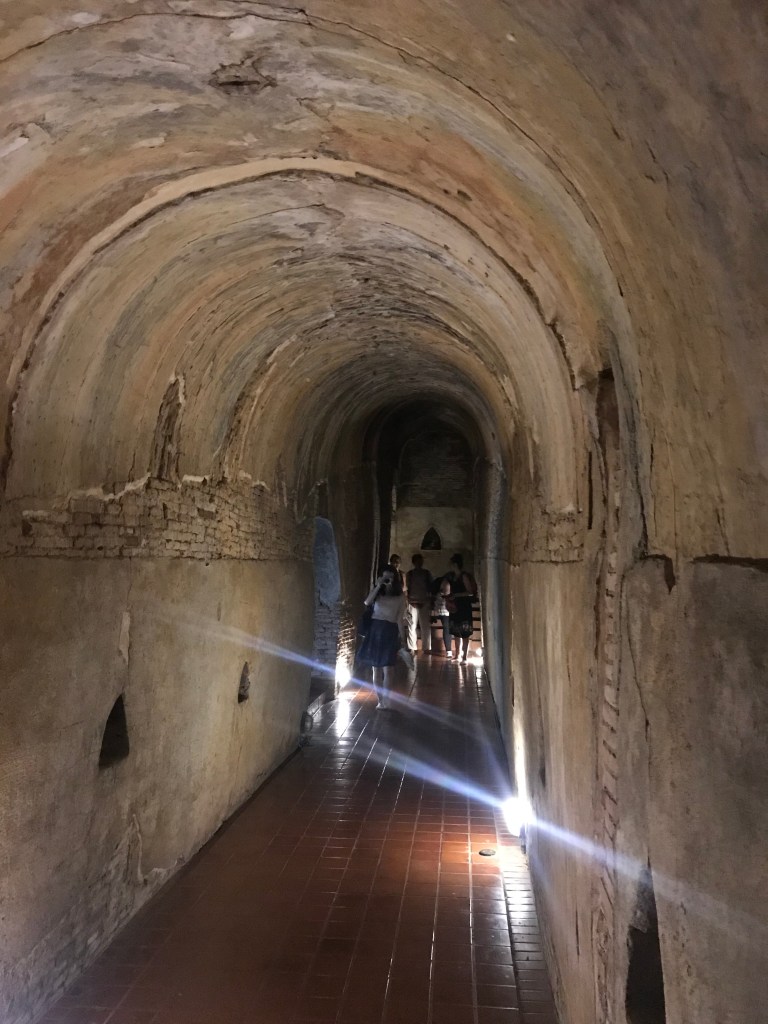

Wat Umong and its tunnels were super impressive, and tour group itself was cool too. The most memorable characters were 3 women from Minnesota who told me about their 2-day meditation-yoga-detox retreat, and a group of 5 Argentinians who were singing nonstop in the van.

The next stop was Doi Suthep mountain, home to Wat Phra That Doi Suthep temple (Doi Suthep for short), one of the most sacred Buddhist pilgrimage sites in Thailand and the #1 tourist site in Chiang Mai. Doi Suthep contains a famous relic – a bone claimed to be from the shoulder of Buddha himself!

After the tour I got back to the hostel and went to dinner with Robert the pharmacist. We first came across a super touristy night market that reminded me of food trucks in the US, but then found a less touristy one, which ironically had a performer playing American songs on the guitar. Awesome!

Elephant Sanctuary
Besides temples and digital nomads, Chiang Mai is also known for its wildlife sanctuaries. Visiting these has become a popular tourist activity in recent years, particularly with the “conscientious” Westerners.
And with good reason – the idea of hanging out with cool animals in a cruelty-free environment is, hypothetically, a home run. Wanting to support the local economy I signed up for a day at one of the top elephant sanctuaries on TripAdvisor (basic). The tour included feeding the elephants, walking with them, and even bathing them. I was pumped!
The morning of the tour I was picked up by Alex, a jolly Thai guy about my age who spoke good English. On the drive over he told me and the other passengers (newly-retired couple from New Jersey + 2 German girls my age) a bit about life in Thailand. We learned that people here like listening to pop rock, and that men over 21 must go through mandatory military service.
The annual military draft requires each eligible male to either volunteer or participate in a lottery. In the lottery, each person draws a card – if the card is red, they must serve, and if the card is black, they are exempt. Each year the proportion of red to black cards depends on the quota; in 2018 the probability of being drafted was 13%. Just like with credit cards, the black card is what you want.

Alex also told us a bit about the sanctuary. We learned that their mission is to buy elephants from places of exploitation and mistreatment, and to provide them with a safe habitat.
After an hour we arrived at the sanctuary, which was basically just a large, quiet farm. We met the owner who reiterated that the elephants are loved and treated with kindness. After a brief chat with our group he left to go “meet with the governor.”

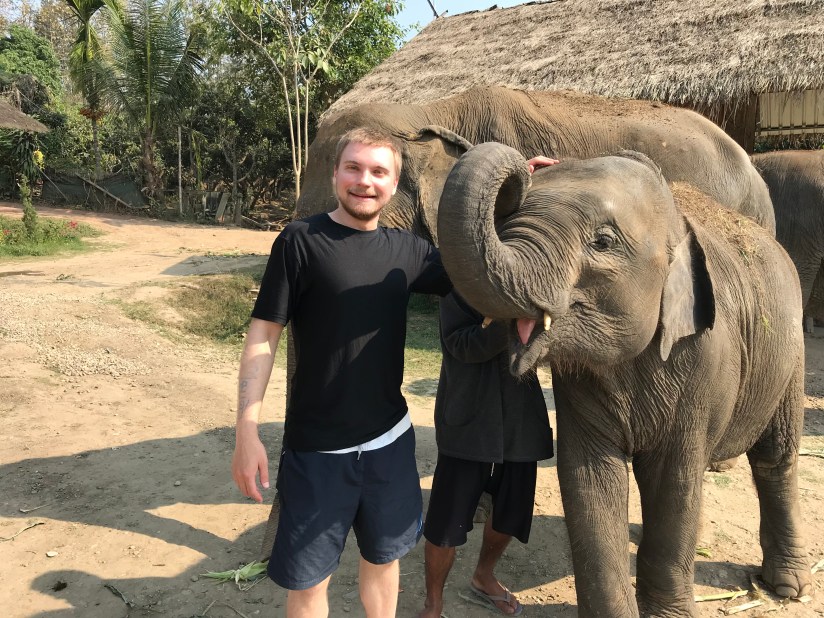
The sanctuary had 6 female elephants, including baby Lana who was only 2.5 years old! Each elephant had a dedicated mahout who lived on the property; each mahout spoke very little English and each elephant spoke no English. We were told that the sanctuary only had female elephants because males are prone to bursts of blind aggression that can be dangerous to humans.
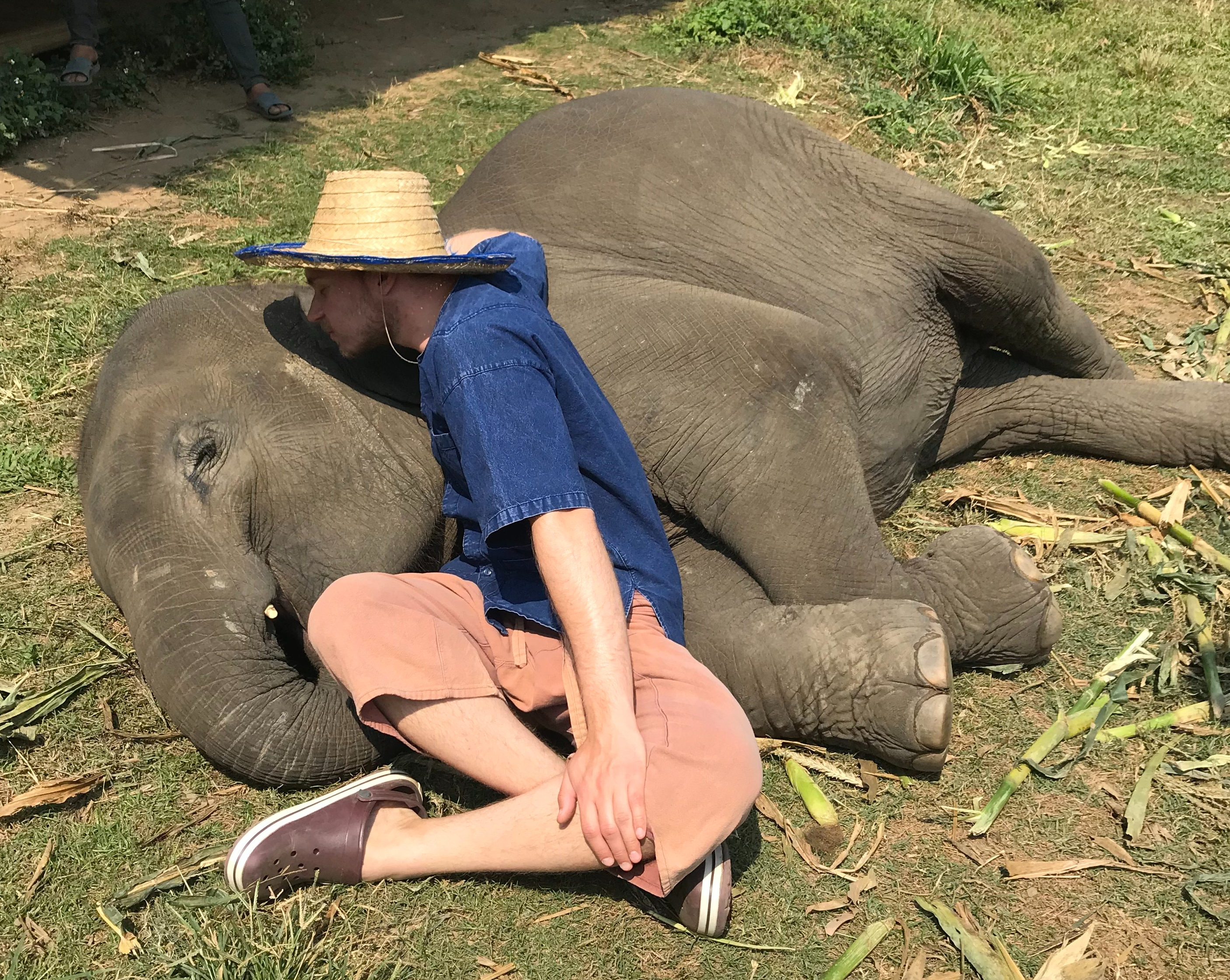
After changing into “sanctuary” clothes (in anticipation of the mud bath) we had a meet and greet with the animals, which turned into a meet and feed. I grabbed a bucket of bananas and was immediately attacked by two hungry elephants eager for treats.

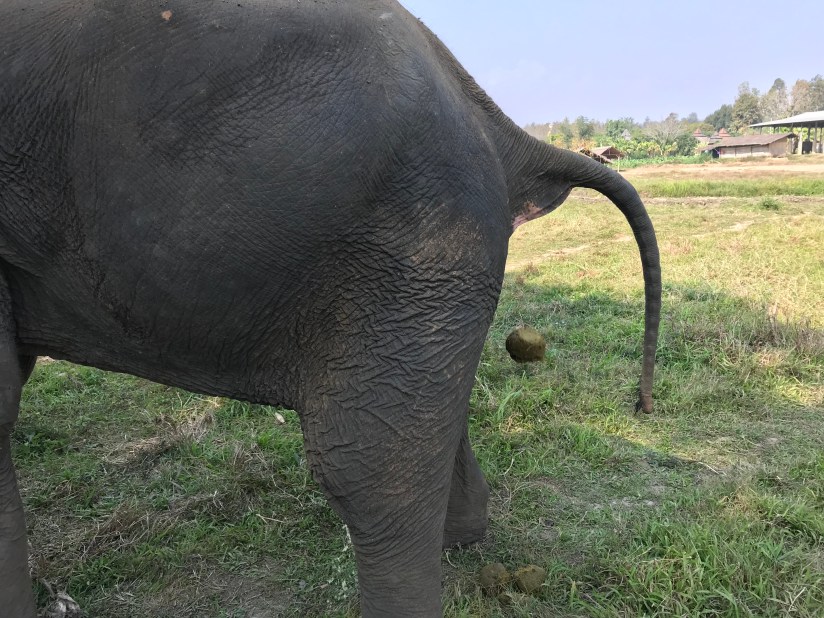
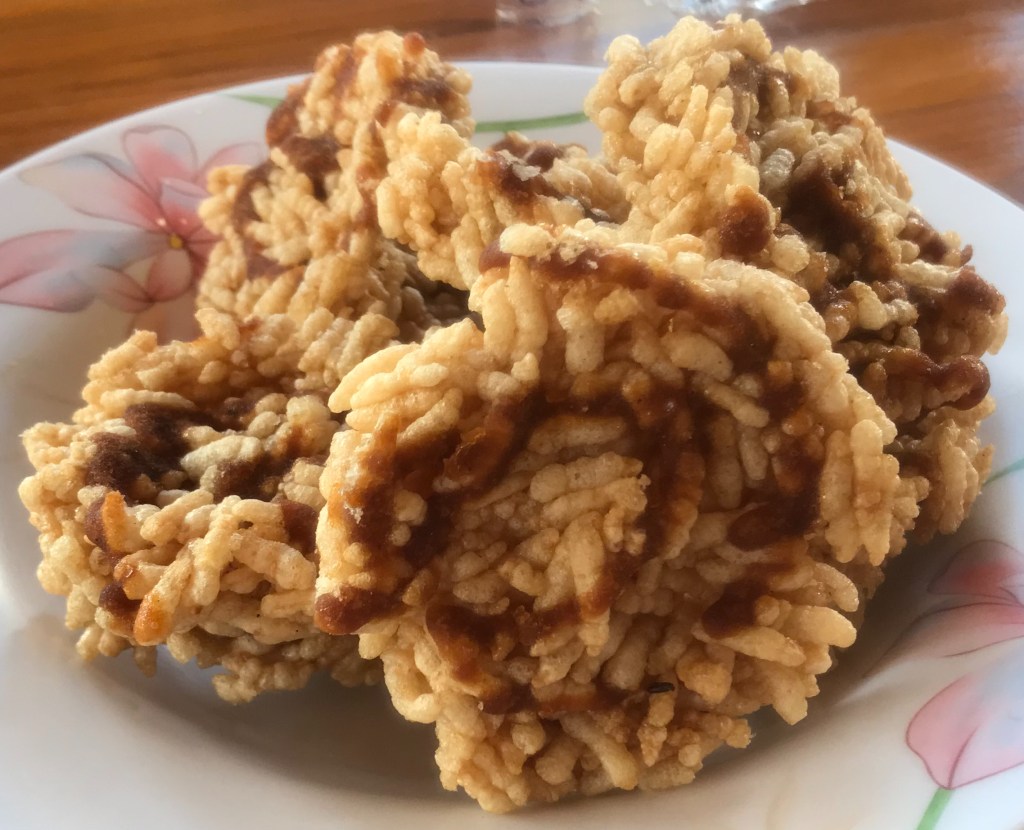
After feeding the elephants it was time to feed the humans. Lunch was Pad Thai with rice crackers; the crackers were made using rice grown on the sanctuary, fertilized with elephant poop. Alex called it poop rice and it was delicious.
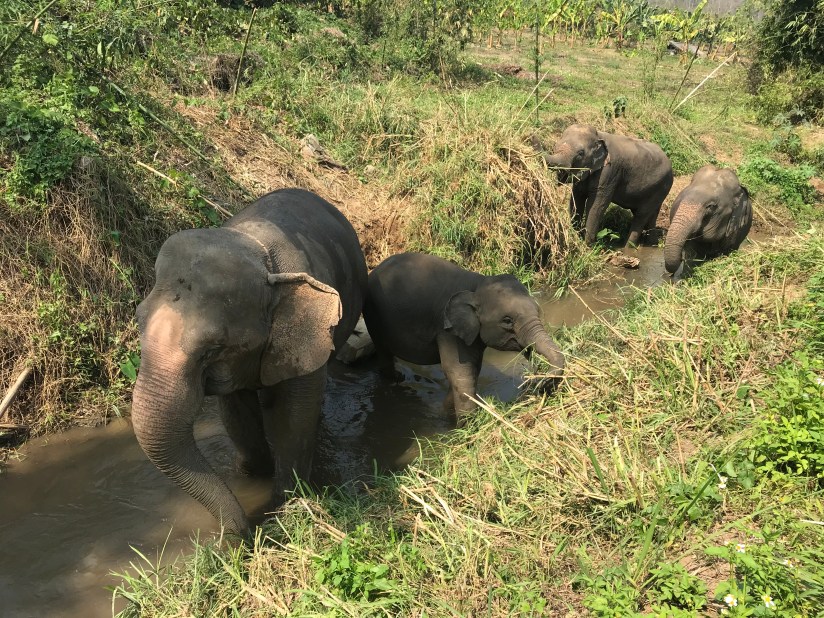

Next we ground up some “vitamin balls” (bananas + sugar cane + tamarind) and fed them to the elephants. Unfortunately there was no rationing process so the most aggressive elephants got most of the treats. So many metaphors for real life!
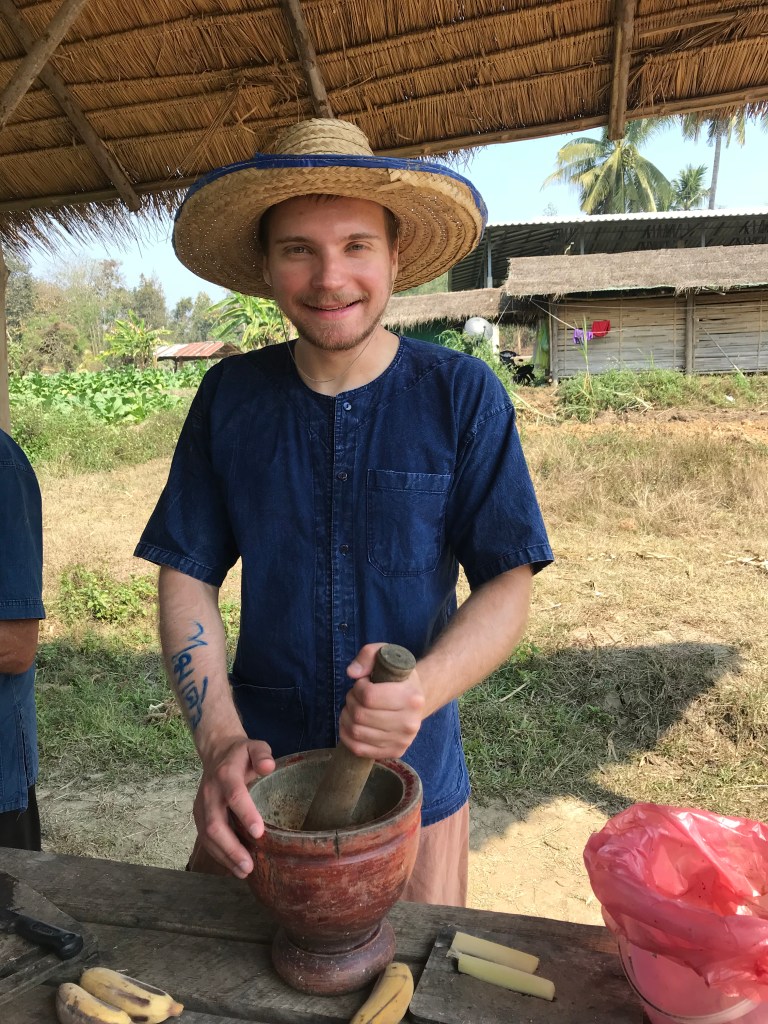
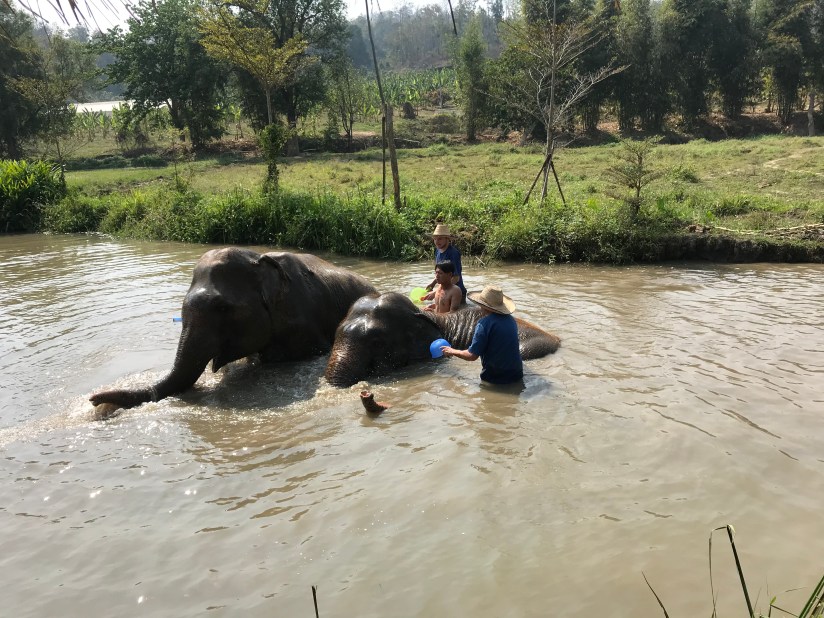
After that we “bathed” the elephants, which just meant that we scrubbed them in a giant mud puddle. The mahouts kept throwing mud at each other and seemed to enjoy this activity the most.
Afterwards we showered, changed, and took some more photos.
After a day full of activity and emotion it was finally time to head back to the hostel. I made some new friends in the lobby and grabbed dinner with a couple of nice Dutch girls.
Doh Inthanon National Park
The next day I signed up for a jungle trekking tour of Doh Inthanon National Park, named after Doh Inthanon, Thailand’s tallest mountain. For obvious reasons the park is also called “the roof of Thailand.”
The tour van picked me up and made the usual rounds to grab the others; the 2-hour drive passed quickly thanks to some interesting chats with fellow passengers. There was a really nice older couple from Halifax, another couple from Canada who now worked as teachers in China, and a third couple from Austria where the girl was also a teacher.

The first stop was Doh Inthanon mountain, the final peak of the Himalayan mountain range. Not much of a view here but the nearby short jungle trail had some cool birds.
A short drive away was the main hike. To get some help navigating the jungle terrain our group met up with an additional local guide, a young girl who didn’t speak any English except for “I don’t speak any English.”
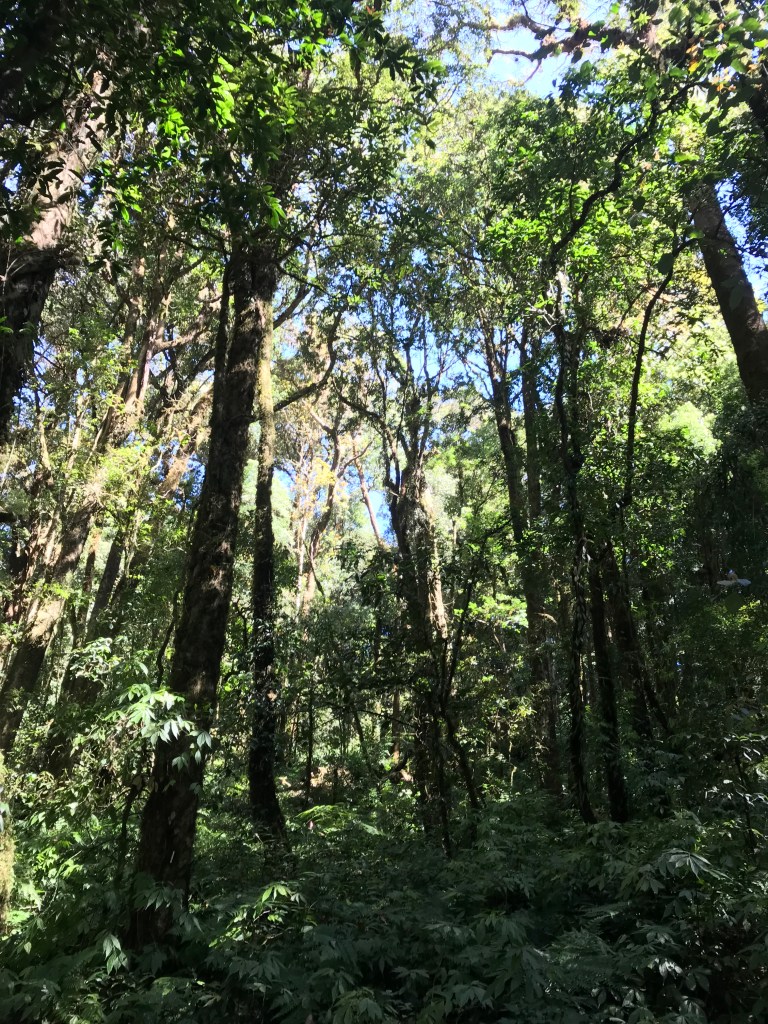
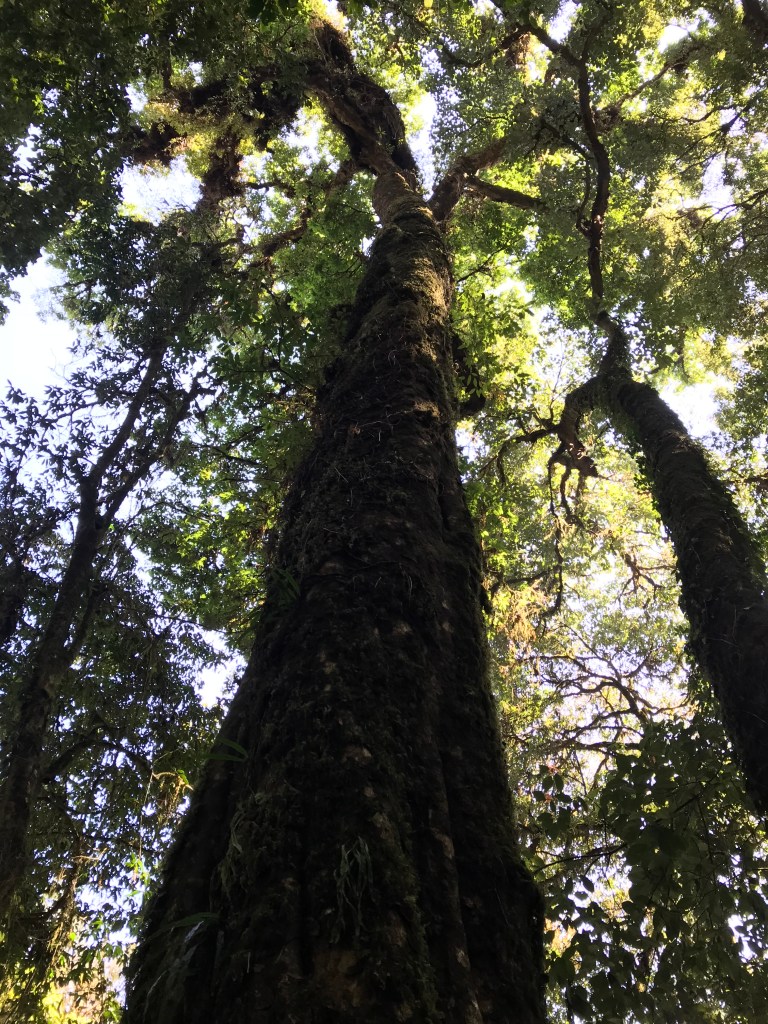
The jungle trail was awesome and so were the guides. Our English-speaking guide originally came from a jungle village and told us about life there. Apparently, back in the day the village grew opium. At one point the king wanted the villagers to pivot to something less addicting, so he came by and taught them to grow berries, rice, fruit, etc. Periodically he would come back and check on progress, which paid its dividends – today, the village no longer grows opium.

We also learned that the jungle villagers like to eat snake soup. In the summer all the water sources in the jungle dry up, which forces the rodents to drink directly from the river. The snakes are smart so they wait for the rodents by the river. But the human hunters are even smarter! They throw stuff to make the snakes think there’s prey nearby, and then kill the snakes using their slingshots.
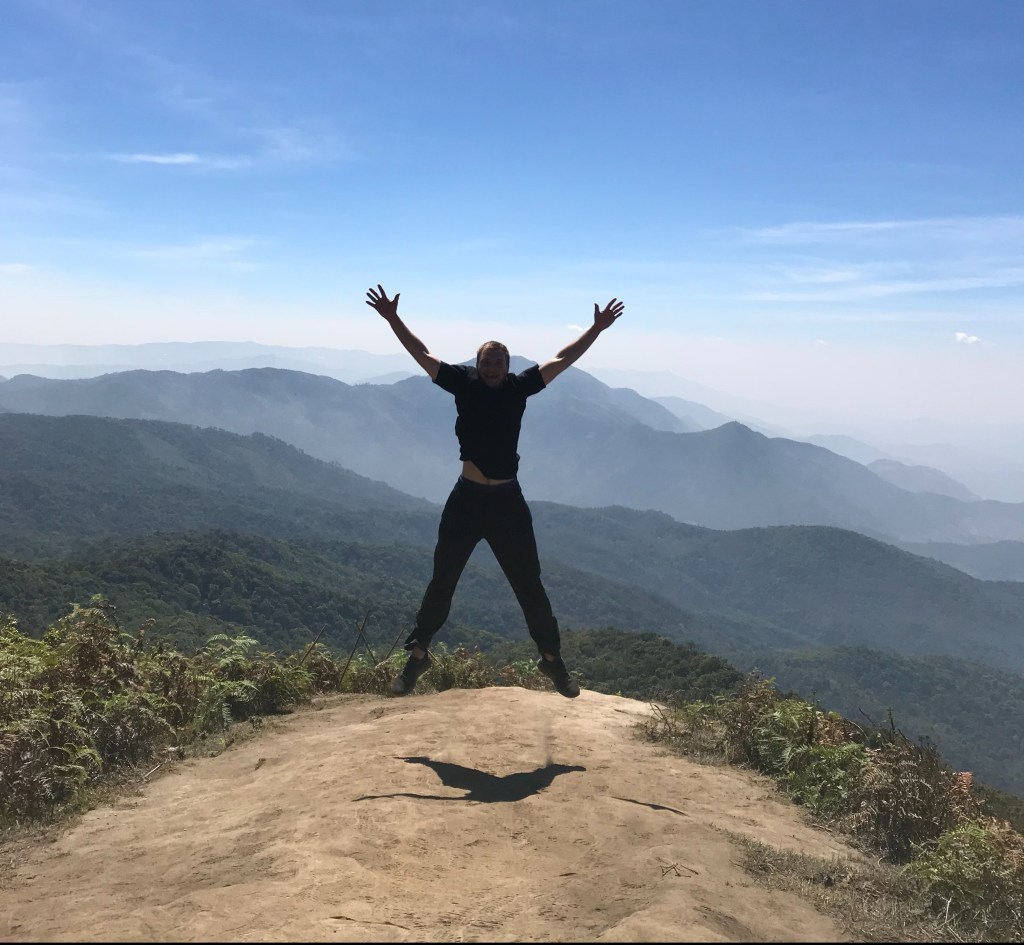
After the forest portion we reached a couple of incredible viewpoints; one of them had a nice view of the King and Queen temples.

We headed back to the van and after the 2-hour hike drove to the King and Queen temples we saw from afar.

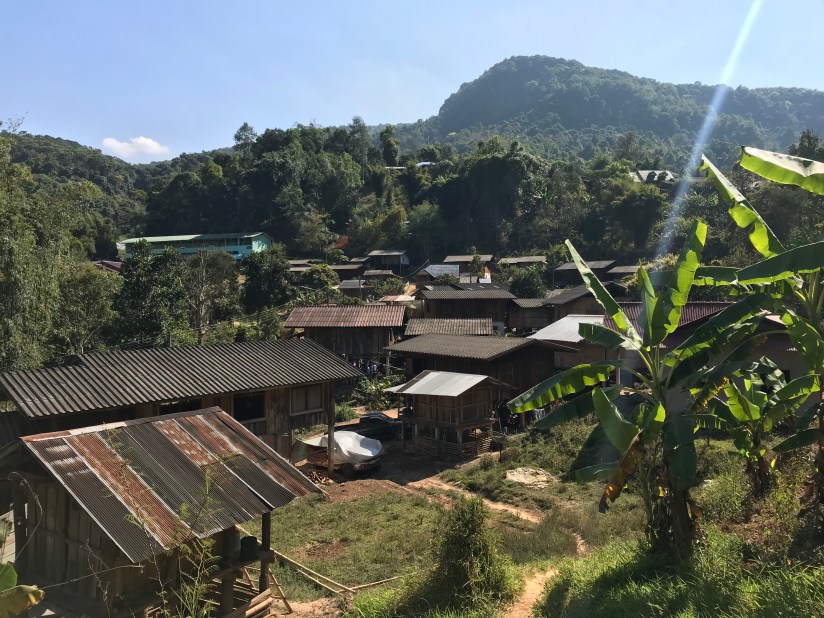
Next up was lunch at a small mountain village. The place was incredibly peaceful and innocent, with chickens and piglets running around. Coincidentally, lunch was really fresh chicken with rice. Very suspicious..
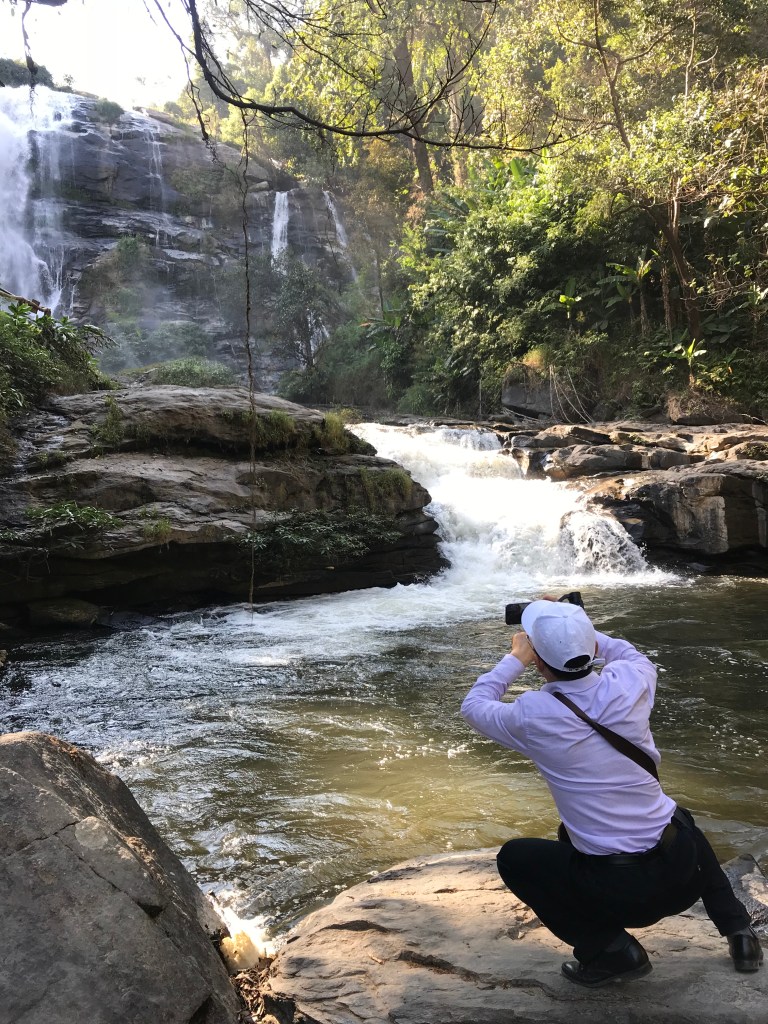
After lunch we drove to our last stop: Wachirathan Falls.

Thai Farm Cooking Class
After some active, outdoor fun I wanted to take it easy so I signed up for a cooking class with Thai Farm Cooking School.
In the morning a van picked me up and took me to the local market, where we had the first lesson: the instructor led us through different stalls and explained how to pick out quality ingredients. I wanted to buy some stinky durian but in the absence of a ripe one settled for some consolation watermelon.
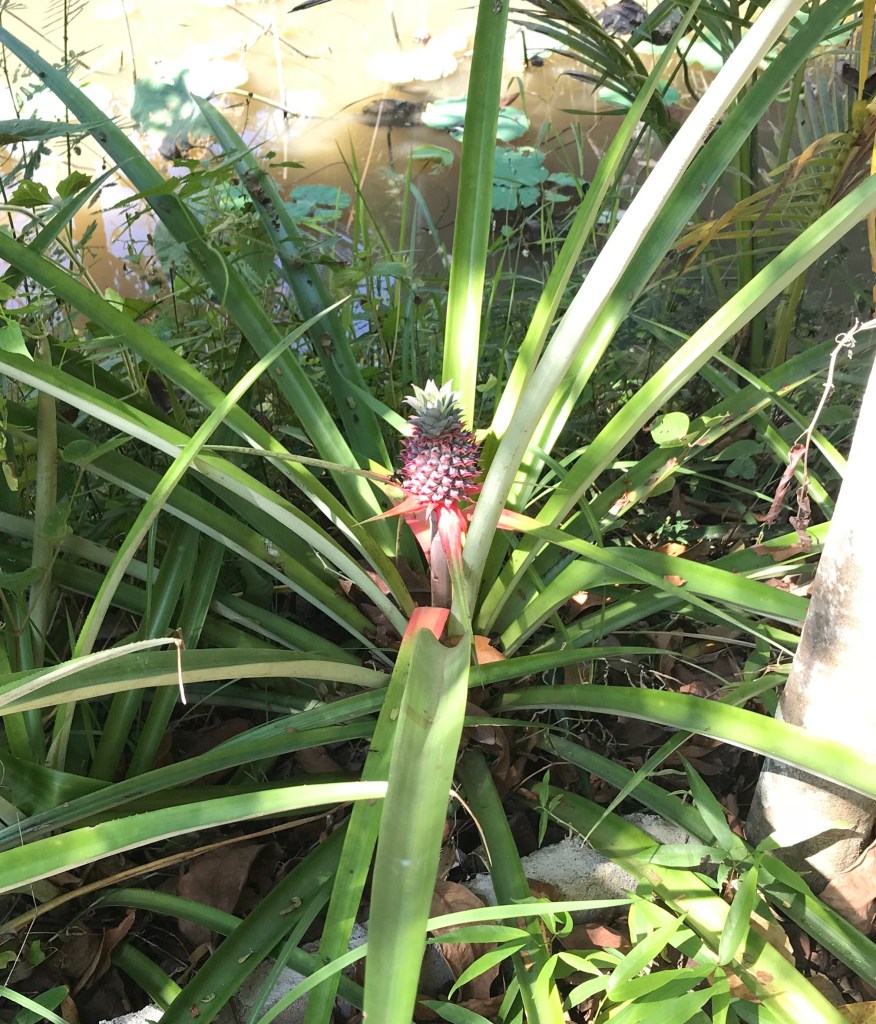
Next we drove to the farm where the instructor showed us the garden. Rather impressive, it was ripe with all sorts of tasty stuff: lemongrass, kaffir lime, and pineapple, just to name a few ingredients. It was cool to see pineapples growing “in the wild.”

Today’s meal was literally farm to table!
The class went smoothly and by the end we had amassed quite a collection of popular Thai dishes: spring rolls, red curry, tom yum soup with shrimp, and chicken stir fry.
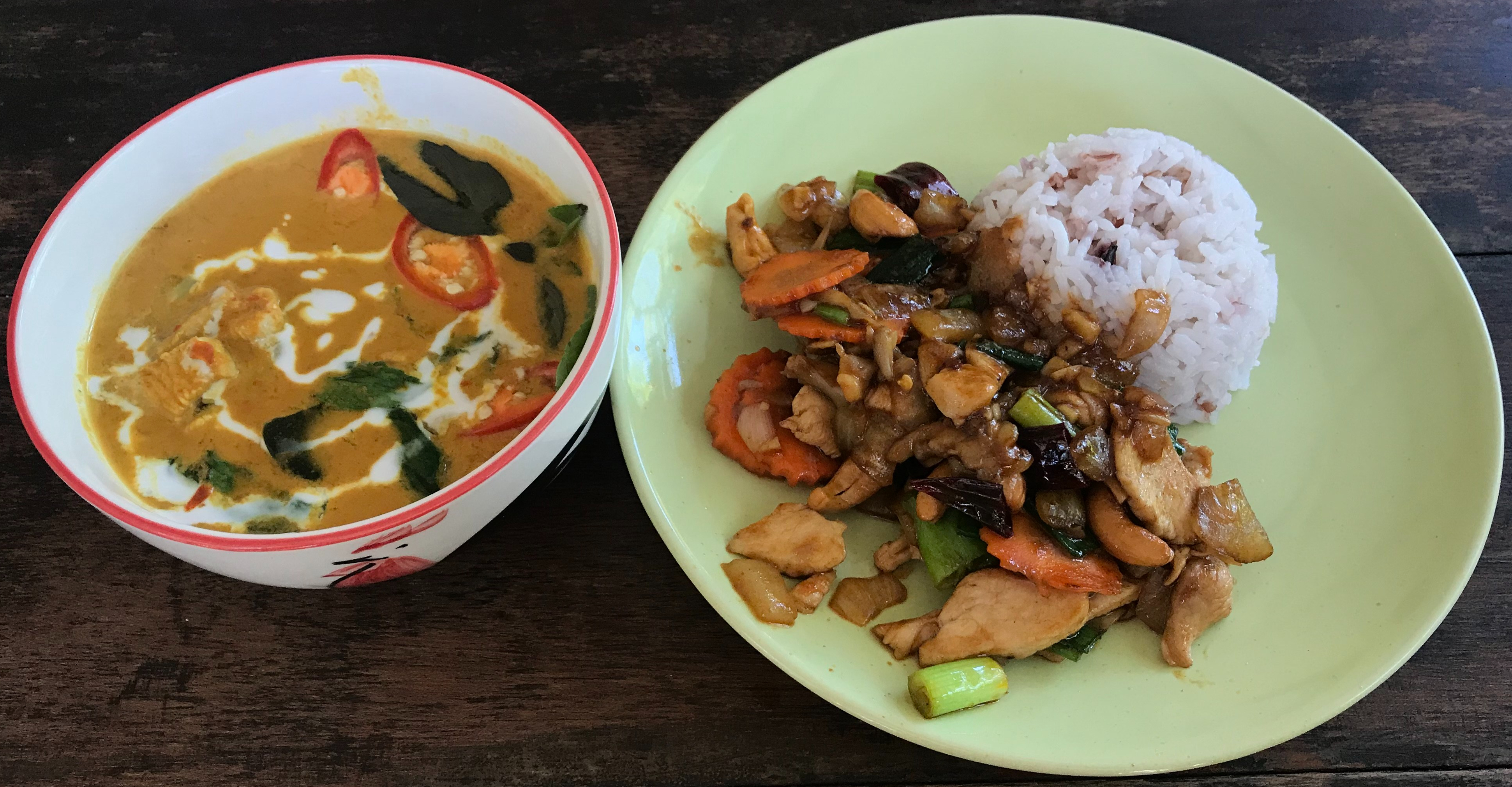
For dessert we made my favorite mango sticky rice, with a cool twist: we used flowers to dye the rice purple. Delicious.

As it turns out, making Thai food can be easy – as with most things in life, you just need the right recipe and attitude! Of course, here all the ingredients were already sourced and prepped, but even with some extra work it would be quite tractable.
Case in point: after “graduating” we were given a cookbook with some popular recipes, and upon my return to California I successfully used it to make yellow curry.
“Ladyboy Cabaret”
After class I went back to the hostel and grabbed dinner at a night market to prepare for tonight’s main event: a “ladyboy cabaret” show (apparently a must-see in Chiang Mai).

While at the night market I heard fireworks, which according to the smoothie guy were coming from Chinatown. Having forgotten that it was Lunar New Year I rushed over to check it out. Chinatown was lit: the packed street was filled with food stalls, and kids were performing traditional dances at a nearby stage. I got some obligatory (mini) mooncakes and while buying them met an American guy about my age.

The mooncakes were amazing but the insane crowd was overwhelming so I walked back to the hostel. There I ran into Trent, the American guy from the mooncake stand earlier! Trent was from Florida, had recently quit his job, and was on a backpacking journey through Southeast Asia. We were peas in a pod so I asked him to join me for the cabaret show.

Before moving on, a disclaimer: I am by no means an expert on identity terminology.
This cabaret was officially called “Ladyboy Cabaret,” with “ladyboy” being a commonly used term in Thailand that refers to transgender women. While this term can be considered derogatory depending on context and intent, and is generally considered offensive outside of Thailand, specifically in Thailand it seems to be accepted as an identity category (though not by all Thais).

The show itself was amazing and had some really impressive singing and dancing. There were some risqué performances too, but all in good fun – well worth every penny.
Mikhail Day
The next day was Mikhail Day, a day of decompression. It was my last night in Chiang Mai so I checked in to an Airbnb for a good night’s sleep before departure.

I relaxed for a bit, FaceTiming with family and friends back home, and headed out to explore the Old City. After failing to find street food inside the walls (and thus eating 2 Burger King whoppers) I walked to Chiang Mai city pillar – the one centrally erected at the city’s inception.

Next up was Wat Chedi Luang, the second hit on Google for “things to do in Chiang Mai” (the first being Doi Suthep temple). It was magnificent and I caught it at the perfect time – sunset.


Next I walked to Wat Phra Singh, which houses the famous Phra Buddha Sihing statue.

As the sun was setting I walked to Three Kings Monument, a sculpture of the founding fathers of Chiang Mai.


Finally it got dark, and tired from all the walking I headed home to get ready for the Muay Thai exhibition boxing event which I had signed up for earlier.
A tuk tuk picked me up and on the ride over I chatted with the one other passenger: an older gent from New Zealand who had been teaching English in China for 8 years. This trend of white people moving to China to teach seems to be rather common!
Muay Thai was quite the show. The first fight was between 2 young boys who must’ve been around 8; these guys weren’t messing around and ended things in a knockout.
Next up was a women’s fight, followed by 4 men’s fights. All were pretty gruesome and a few ended in knockouts as well. Overall a really cool experience, though maybe a tad too violent for me personally.

The fun didn’t stop at the main event: on the way out of the venue some guys were fighting in the parking lot, probably just too inspired by what they saw.
All the adrenaline got me hungry so I grabbed some chicken fried rice and one more mango sticky rice before heading to bed.
And with that, my lovely stay in Chiang Mai came to an end. Next stop, Pai!

 Mikhail's Travel Adventures
You definitely know how to put together a tour. Such wonderful pictures and information. Thanks so much for taking us along through this post.
LikeLike