
After a very eventful month in Thailand I continued on with my trip. My next stop was Cambodia, home of the famous Angkor Wat – considered the 8th wonder of the world!
The Kingdom of Cambodia has a population of ~16 million and is sandwiched between Thailand and Vietnam. Its official currency is the riel, but the US dollar is also widely accepted – very nice!
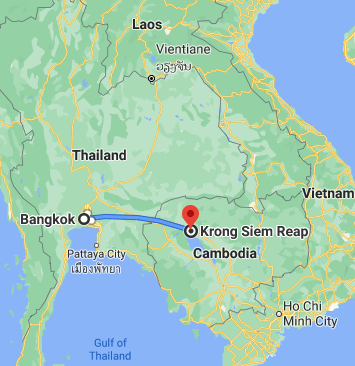
Siem Reap is Cambodia’s 5th largest city, with a population of 140k. Settled in 802 AD, it is home to the world-renowned Angkor temples. As I learned on one of my tours, Siem means “Thai” and Reap means “defeat”.
Brief History
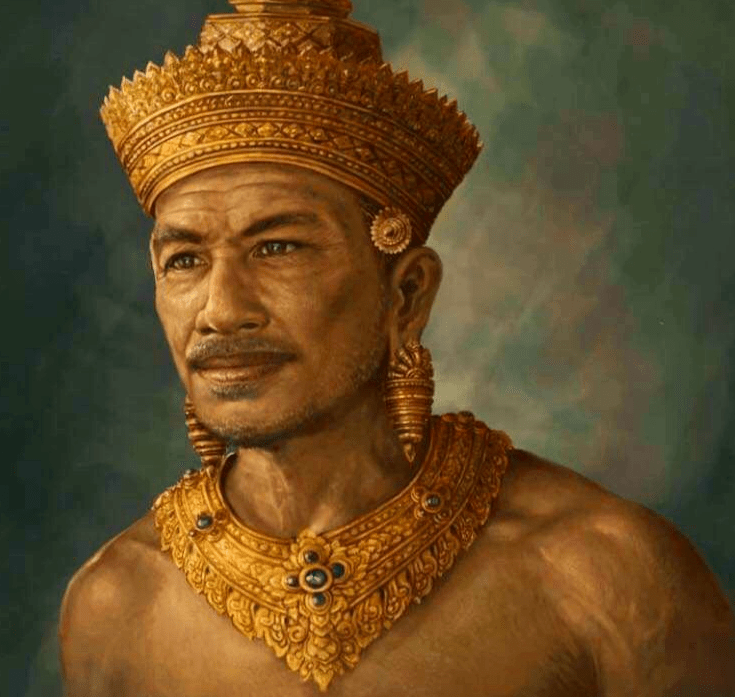
Cambodia began as the Khmer (Angkor) empire in the 9th century when Jayavarman II united warring princes under the name “Kambuja”. The empire prospered and left behind an incredible legacy of monuments at Angkor, its capital. However, the success did not last forever and things began to decline around the 14th century due to frequent civil wars, invasions from neighboring Thai kingdoms, and a bit of bad luck – the plague.
This marked the beginning of present-day Cambodia, which became a protectorate of France in the 1800s and eventually gained independence in 1953. Cambodia experienced US bombings during the Vietnam War, and in 1970, a pro-US right-wing Khmer Republic was installed after a coup.
Opposition to the Khmer Republic was the Communist Khmer Rouge, which took control in 1975. Supported by the Chinese Communist Party and influenced by the Cultural Revolution, the regime wanted to turn Cambodia into a socialist agrarian republic. They emptied cities and carried out forced relocation to labor camps.
There, from 1975 to 1979, they carried out an awful genocide. An estimated 2 million Cambodians, 25% of the 1975 population, were executed (often by pickaxe, to save bullets) in the Killing Fields and buried in mass graves. The Khmer Rouge targeted anyone judged to be conspiring against them, such as those suspected of connections with the former government, intellectuals, monks, and ethnic minorities.
In 1979 Khmer Rouge were ousted by the PRK (People’s Republic of Kampuchea), a Communist group supported by Vietnam and the Soviet Union. In 1989 the PRK renamed itself to the State of Cambodia, and in 1991 abandoned its Communist ideology. In 1992-93 a UN mission was in charge, withdrawing after holding a public election.
As you can imagine, present-day Cambodia is heavily influenced by its painful past. There are still active land mines in the fields and the average population is under 15 years old. The country experiences widespread poverty, hunger, and corruption. The World Justice Project’s Rule of Law Index ranks Cambodia 127th out of 128 countries, ahead of Venezuela (Denmark is 1st, the US is 21st, and Russia is 94th). However, Cambodia is also one of fastest-growing economies in Asia. The dominant sectors are agriculture, textiles, and tourism, and I was happy to inject my USD into the local economy.
Arrival
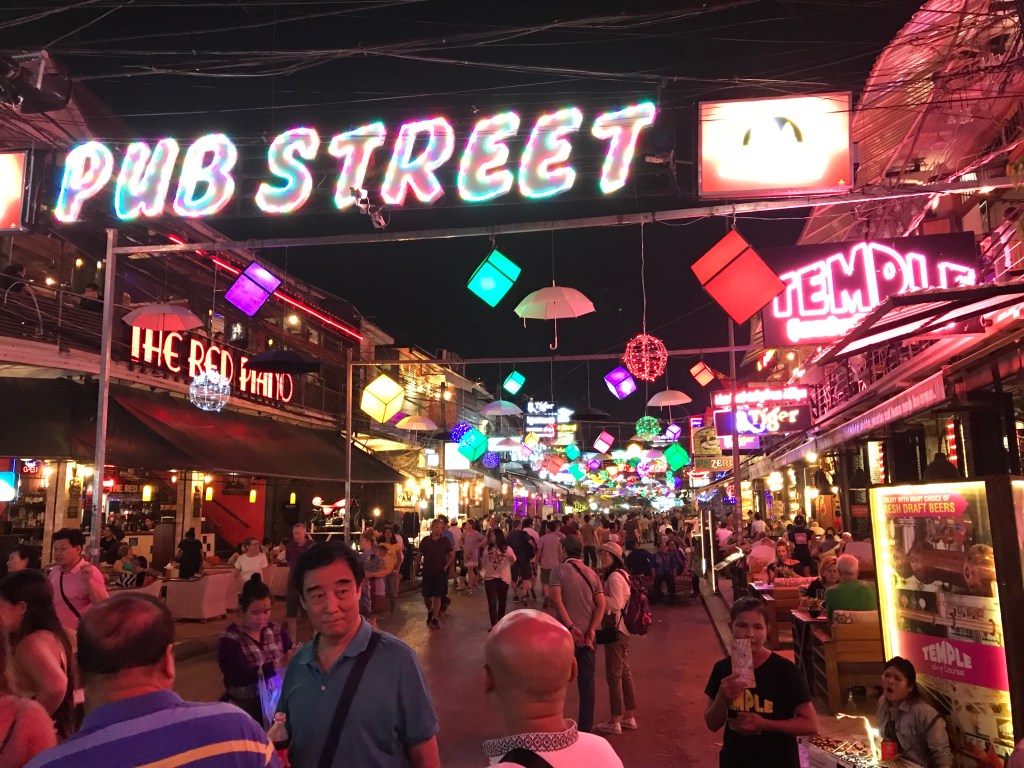
I landed in Siem Reap in the afternoon and immediately sprained my ankle on a pothole walking from the plane to the terminal. I was briefly held up at customs for not having a passport-sized photo for the on-arrival visa, but they just charged me an extra $2 and let me in.
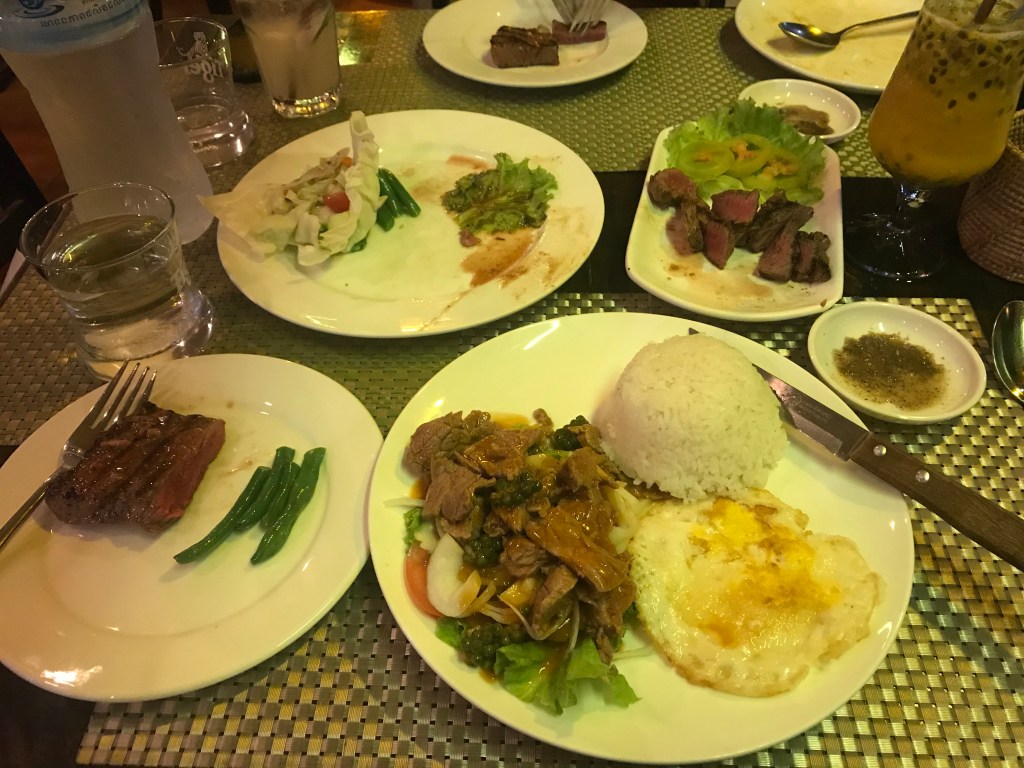
In my hostel dorm I met Clemens, a 19 year old German guy who was biking his way through Southeast Asia. We had a nice chat and then walked to dinner nearby.
Phnom Kulen National Park Tour
The following day I had a tour of Phnom Kulen National Park. I got up at 7am, tired from not being able to sleep the night before because of a loud group that got back to the room late. That’s hostel life for you, but I had the last laugh – I had booked myself an Airbnb starting later that day.
Tired and sad, I ate my $2 breakfast of cereal and pancakes and boarded the tour bus. The group was: Clemens (German guy from yesterday), Bailey (a really nice girl from Vancouver), 2 more Germans (who mostly spoke German with Clemens), a British guy named Mike and a Scottish guy whose name I didn’t write down. The drive was almost 2 hours.
Wat Preah Ang Thom
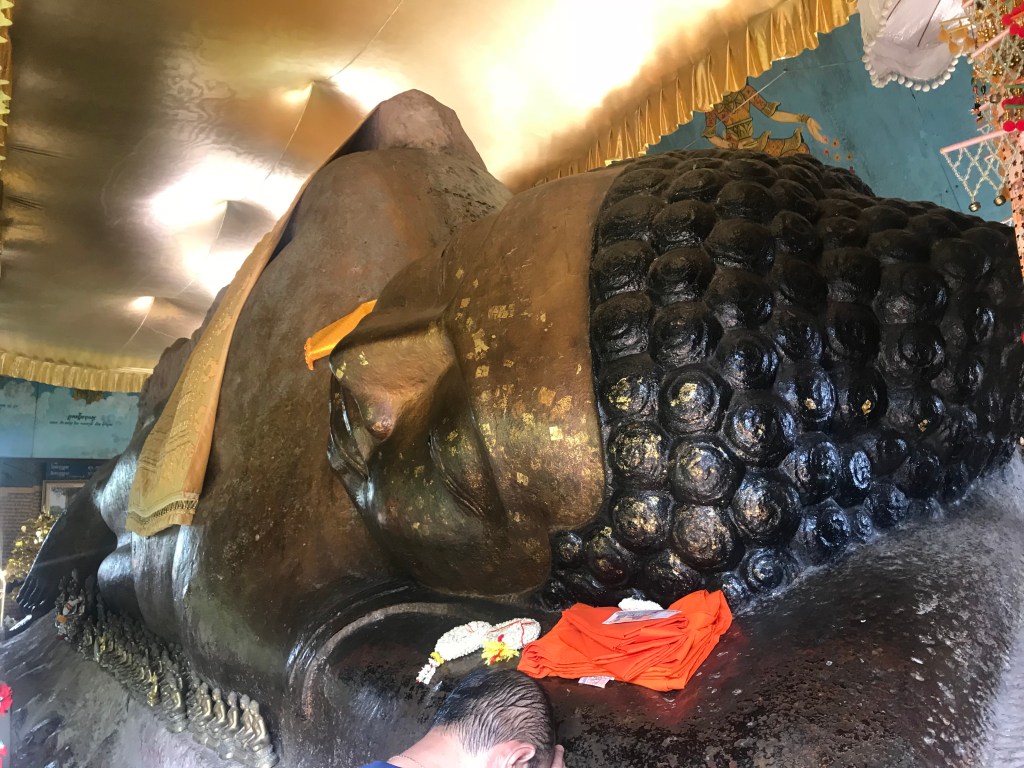
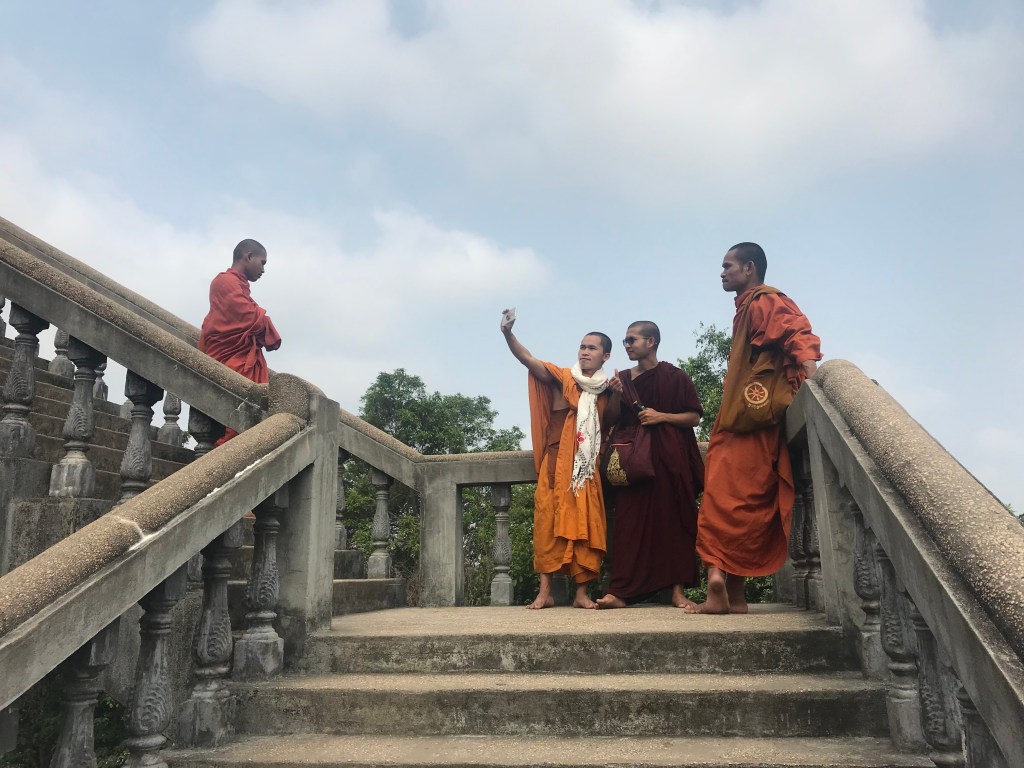
The first stop was Preah Ang Thom temple, located on top of a mountain and featuring a large reclining Buddha statue. It was pretty cool but certainly less impressive than Wat Pho in Bangkok.
Kbal Spean
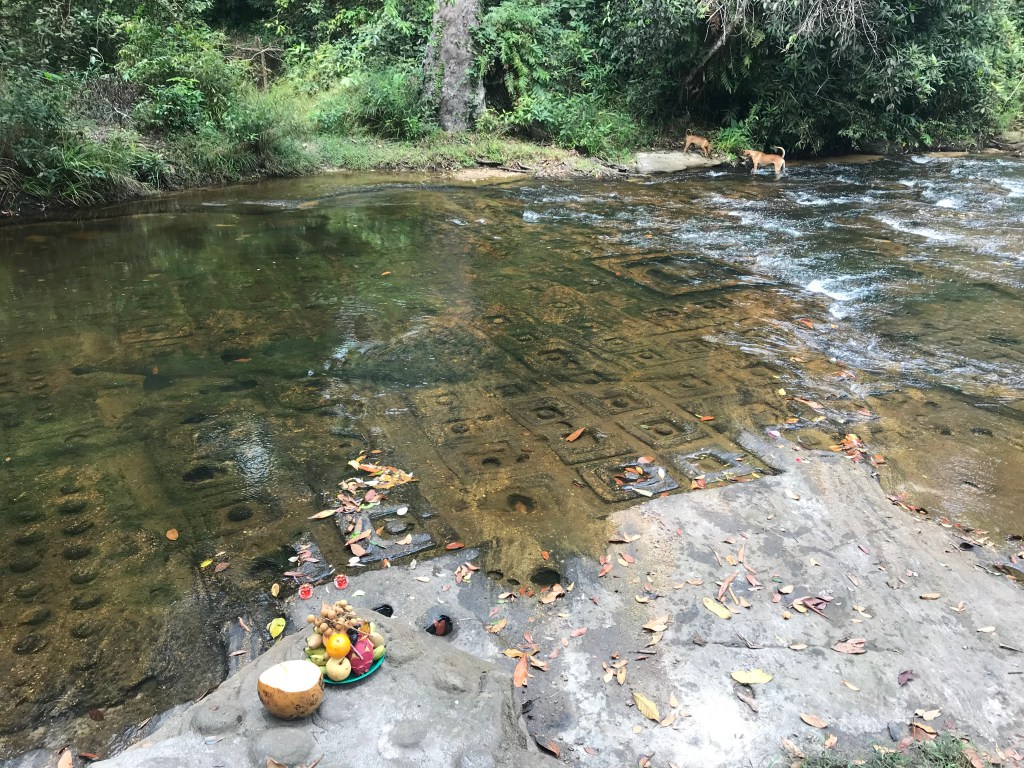
Next was the nearby Kbal Spean, otherwise known as the River of a Thousand Lingas. A linga or lingam is an aniconic representation of the Hindu god Shiva, commonly portrayed within a disc-shaped platform.
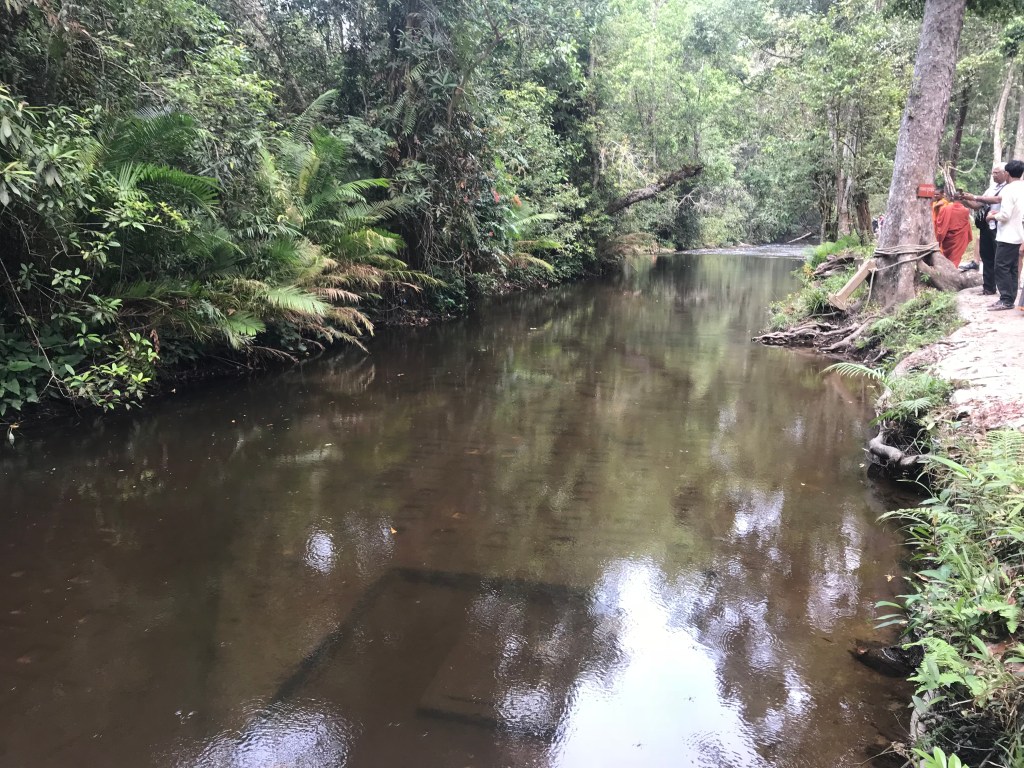
Here, the lingas are stone carvings in the riverbed, depicted as neat bumps that cover the bedrock and lined in a perfect grid pattern. They were carved in the 9th century by local hermits; it is believed that the sacred lingas bless the Siem Reap River floating into Angkor.
Kulen Waterfall
After the lingas we headed to our final stop: the majestic Kulen Waterfall.
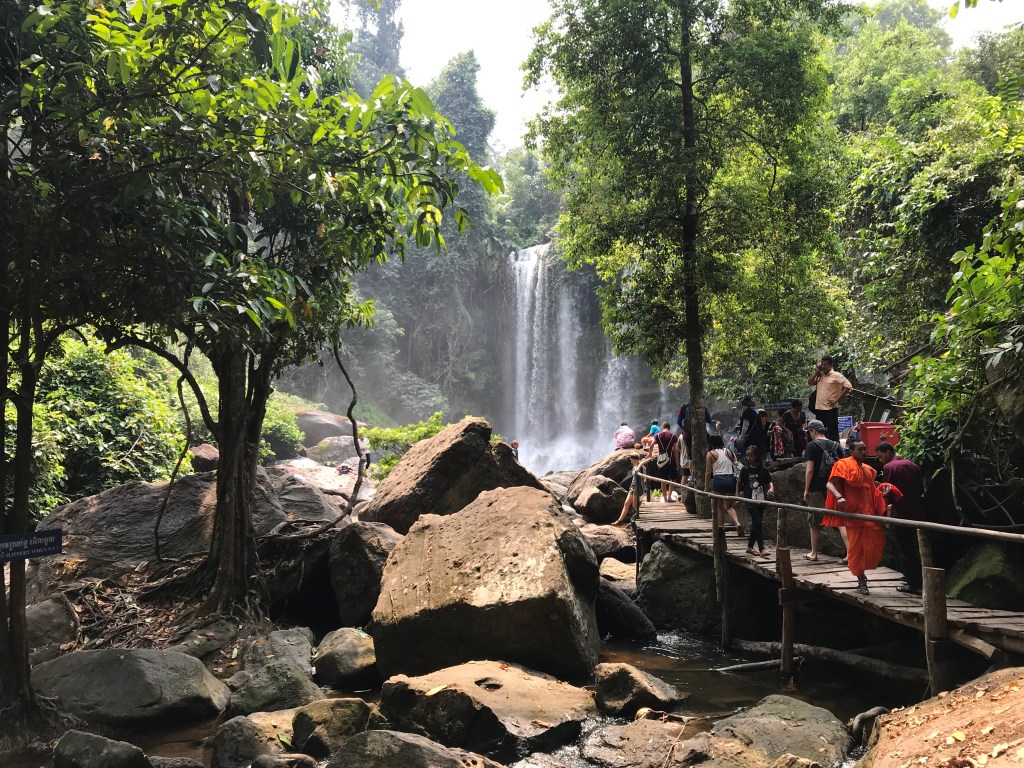
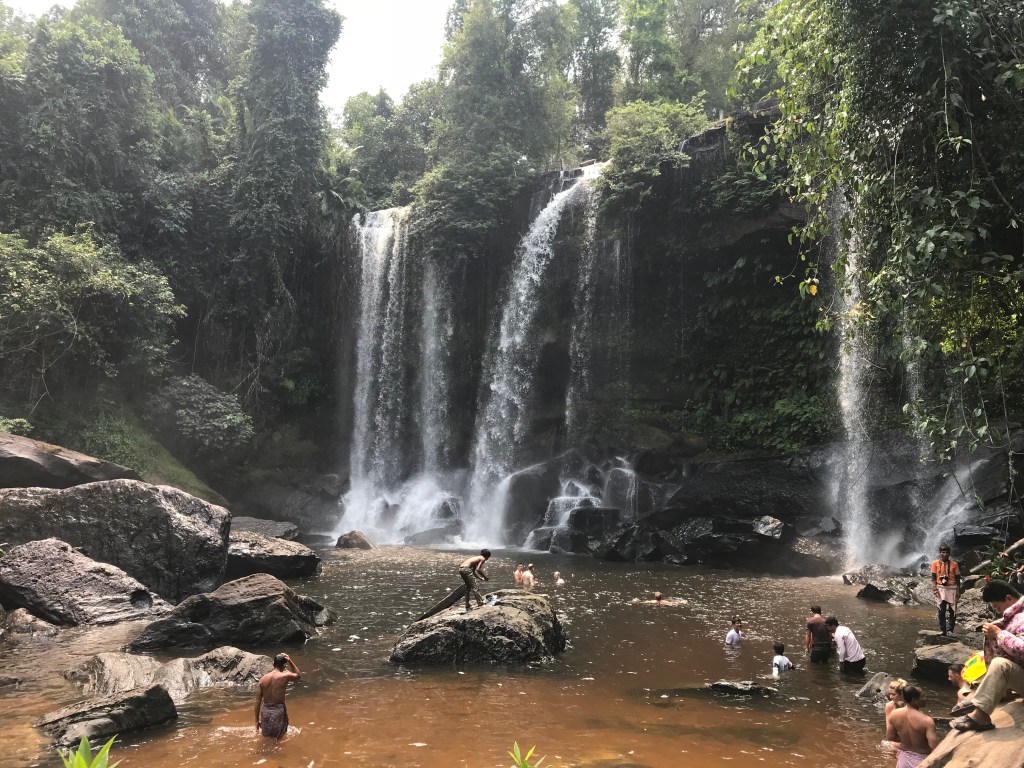
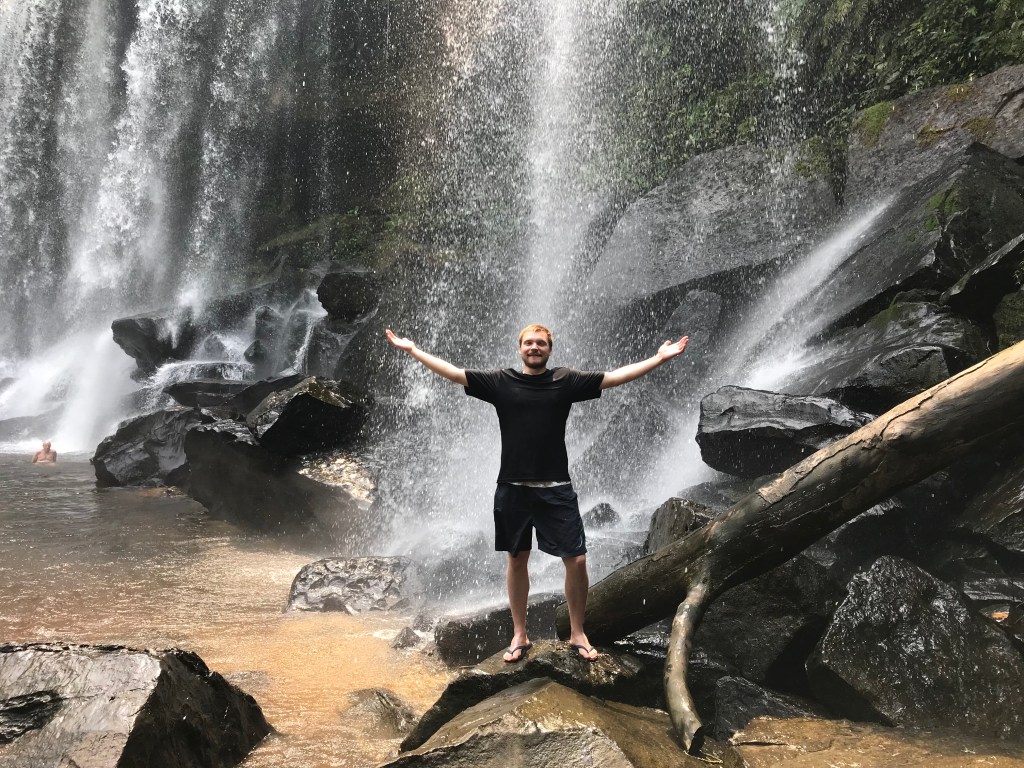
Feeling rather warm I decided to go in for a little swim to get closer. I didn’t account for the strong waves and slippery rocks, though, and my subpar swimming skills made this challenging. I was clearly struggling so a girl sitting on a nearby rock gave me her hand and pulled me up. Slightly embarrassing, but she was really nice about it. Getting to stand right under the waterfall was totally worth it!
Afterwards our group grabbed lunch at small cafe nearby, which charged $6 for spring rolls. This was very expensive for Cambodia, where a dish is usually around $3, but of course still better than SF.
After getting back I had some errands to run. The previous day, and also earlier that morning, I tried to book a flight to Vietnam (leaving in 3 days) on Cambodia Angkor Air’s website. Despite many attempts the payment wouldn’t go through, so I had to try the old-fashioned way: in person. After my tour I walked to a physical Angkor Air location, but of course, their credit card machine was broken. I owed $140 in cash but as a gringo tourist knew better than to carry around that kind of money. I looked for a nearby ATM but the first one turned out to be Visa-only (my debit card was MasterCard)… Eventually I found a compatible one and successfully bought my (physical) flight ticket. Next task!
I then had to work out my Airbnb tuk-tuk pickup. I tried to message the host at the Angkor Air store, but their WiFi was down so my message didn’t go through. I bought a SIM card down the street ($5 for 9GB of 4G data) and messaged the host again. Then I walked back to the hostel, packed, and waited for a message back. It turned out that my original message didn’t send (the app showed it red instead of green) which I must not have noticed due to my mild red/green color blindness. Airbnb should really work on their accessibility…
Eventually things were sorted out and my ride showed up after a game of pool with Clemens. I checked in and went to dinner at a nearby restaurant that looked more like a shack. There were dogs and cats lying on the floor and kids hanging around. When I walked in a dog started barking; the waitress calmed it down. I got some tasty curry and meh dumplings, then went to sleep early in anticipation of the Angkor Wat sunrise.
Angkor Wat
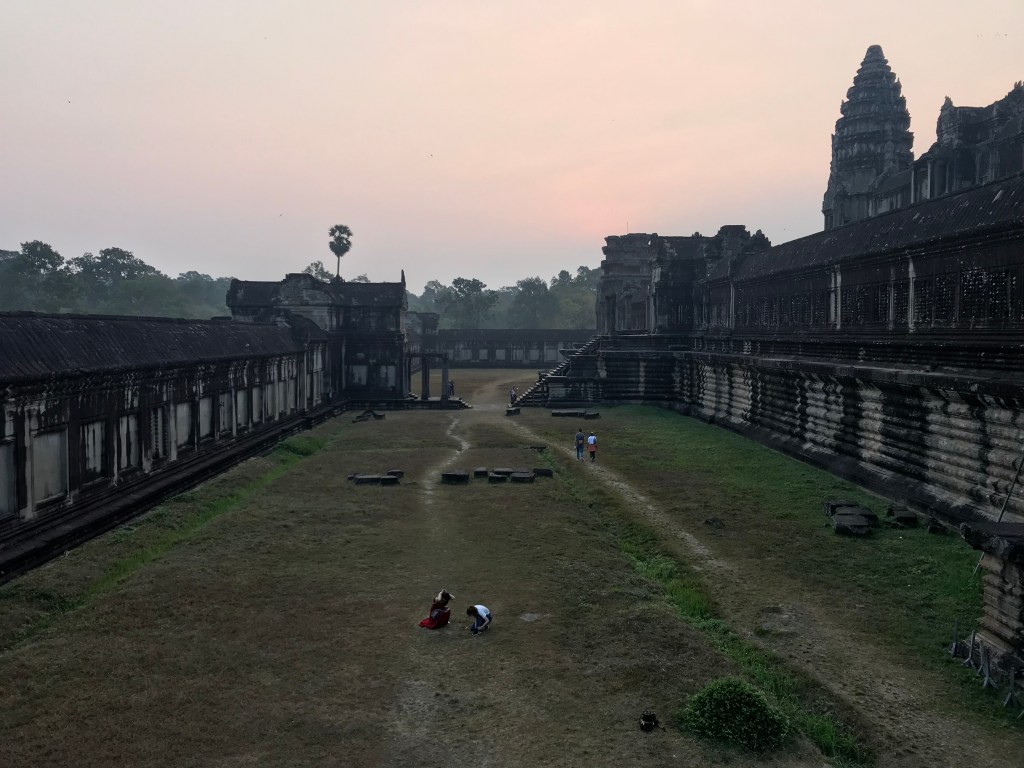
Angkor Wat (literally, “city of temples”) is a temple complex built in the 12th century, at the heyday of the Khmer Empire. It is one of over a thousand temples at Angkor, the Khmer capital and the largest pre-industrial city in the world.
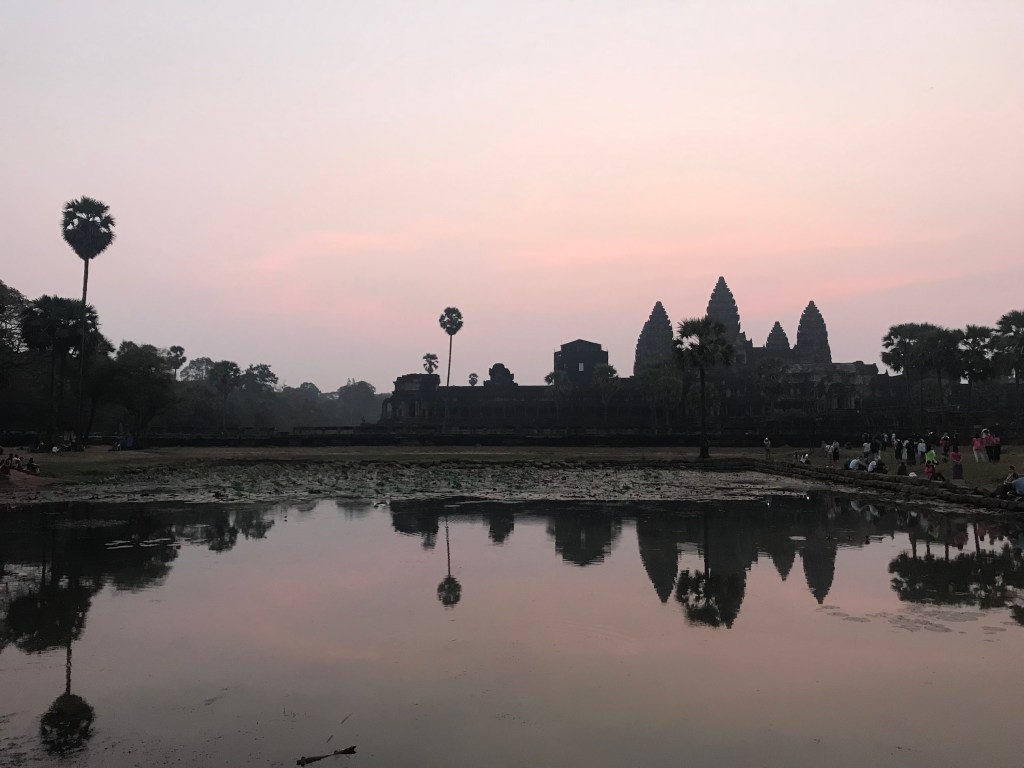
Considered to be the eighth wonder of the world (and a finalist for the New Seven Wonders of the World list), Angkor Wat is the world’s largest religious monument and a UNESCO World Heritage Site. Originally constructed as a Hindu temple, it was converted to Buddhism towards the end of the 12th century (during the empire’s mass religious conversion). Its central tower – and most iconic view – symbolizes the mythical sacred Mount Meru, the center of all physical and spiritual universes in Hinduism and Buddhism.
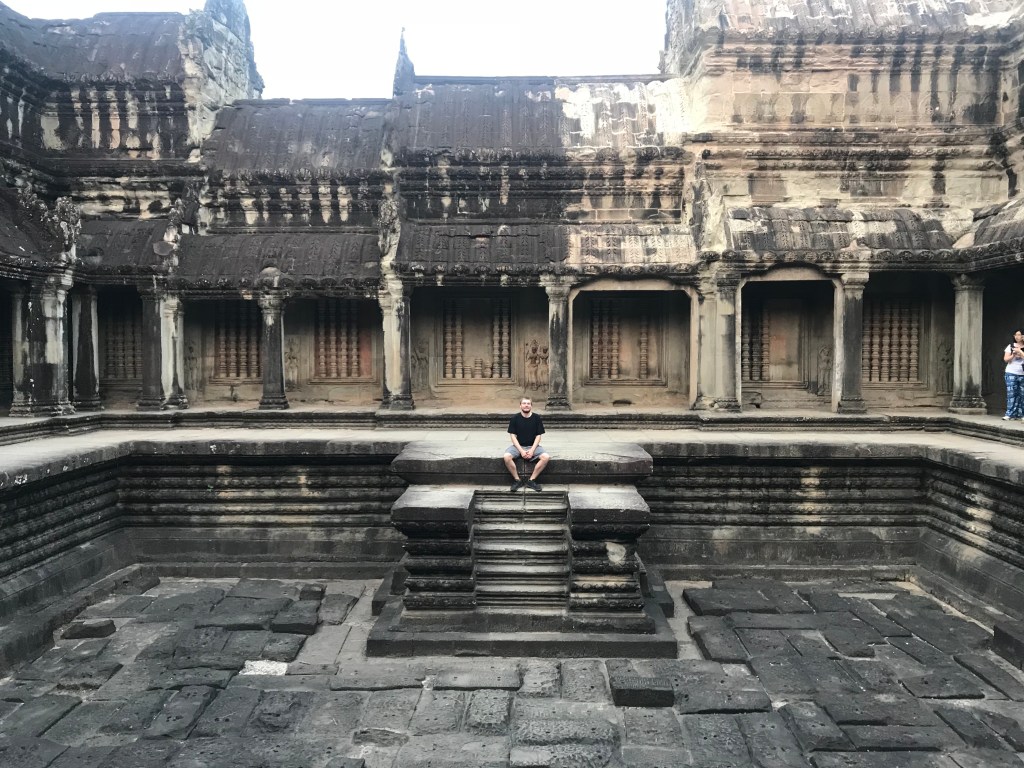
My tour started dark and early the next “day”. I woke up at 3:45am and got on a tuk-tuk to go meet the rest of the group: 3 girls and a British guy named Ben. The driver said the police don’t allow people to stuff in so we split into 2 tuk-tuks; Ben and I got our own.
Ben had a pretty cool background: he used to be general manager (managing ~100 people) of a well-known fancy seafood restaurant in England (The Seafood Restaurant, headed by celebrity chef Rick Stein who apparently used to work with Gordon Ramsay). Ben’s stories made me crave fresh seafood.
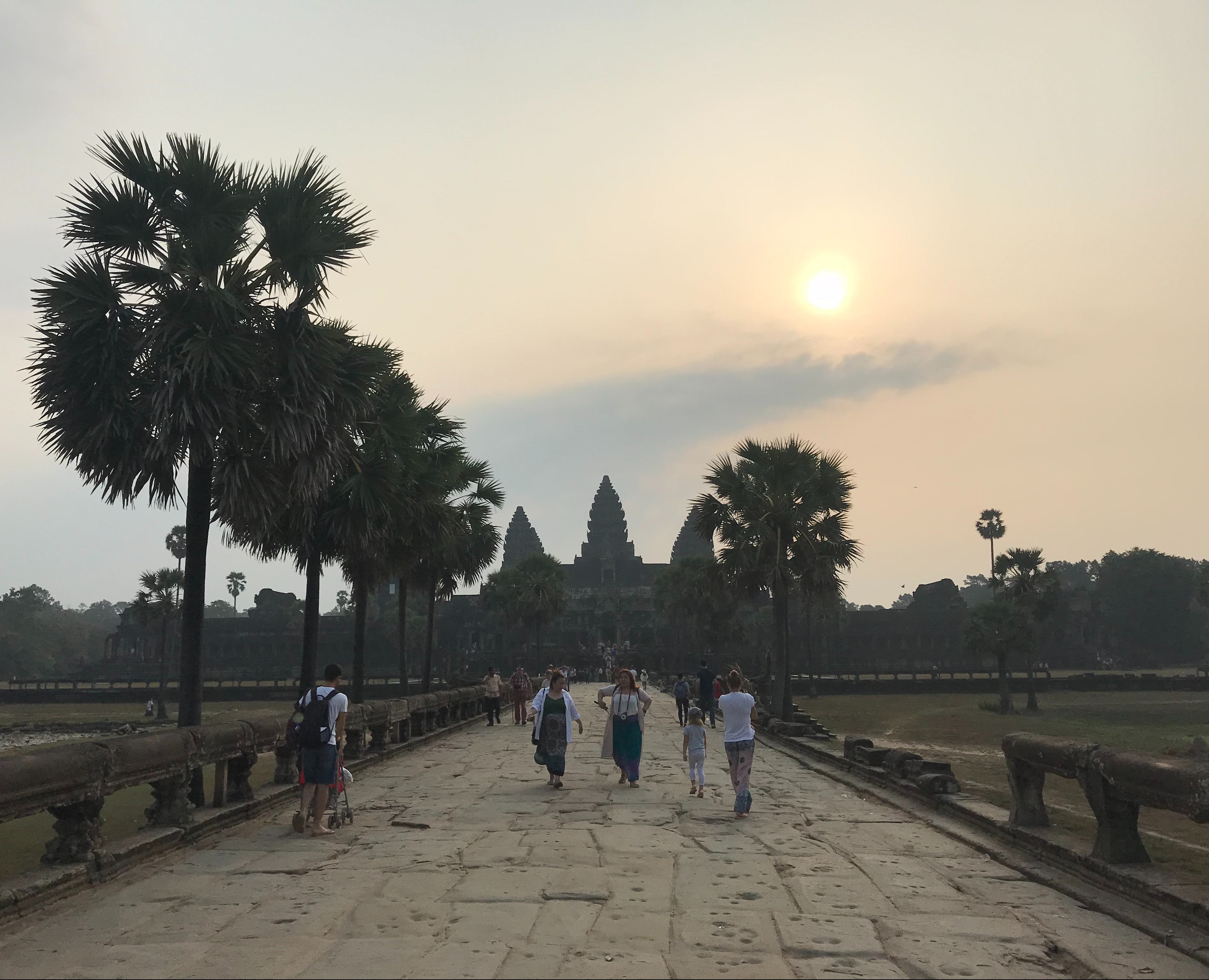
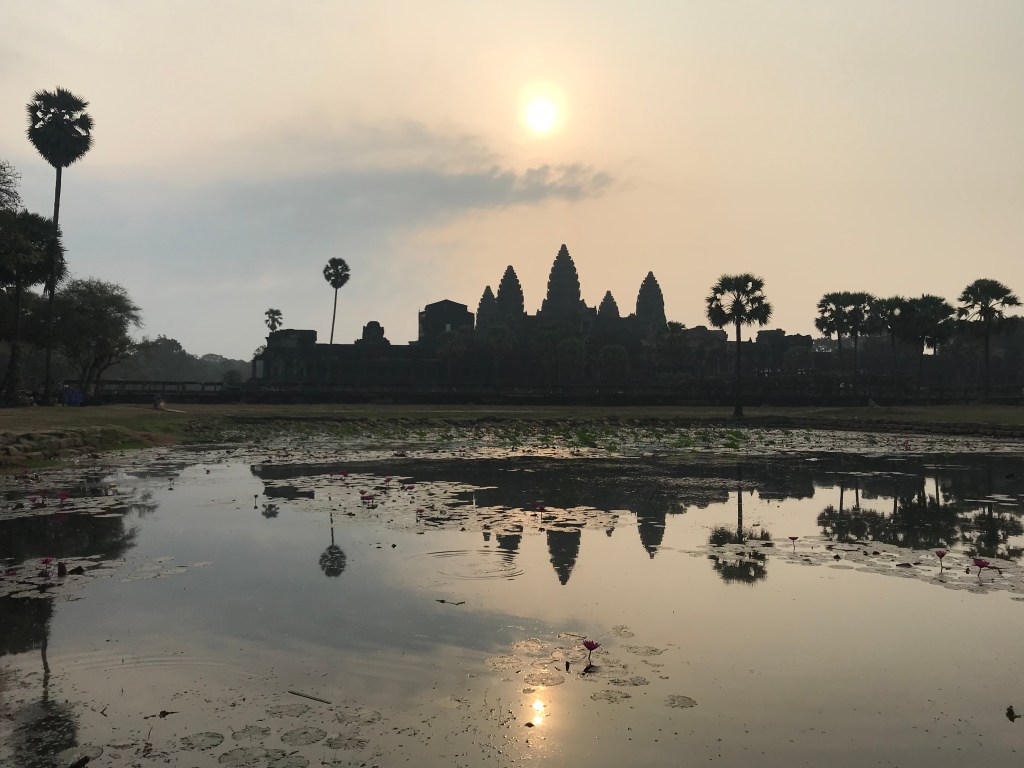
We picked up our tickets (a 3-day pass for $62) and headed to the sunrise spot. It was super crowded, and for good reason! The break of dawn was an amazing sight, although we didn’t have the patience to stay until the actual sunrise (no clouds so no crazy colors anticipated).
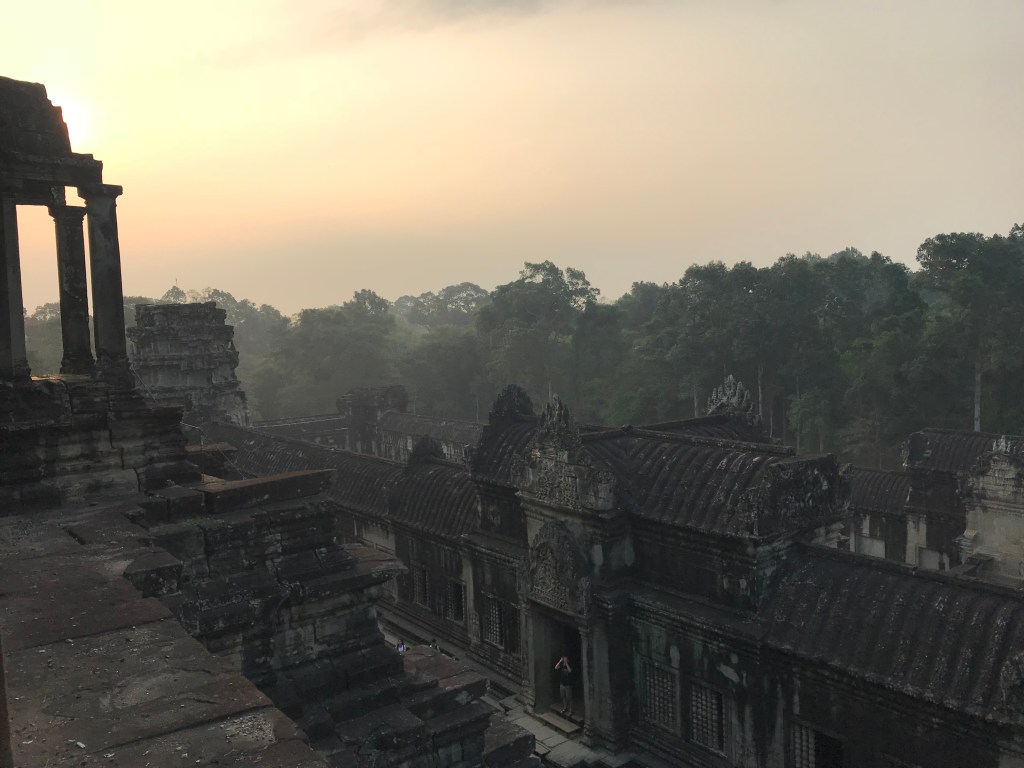
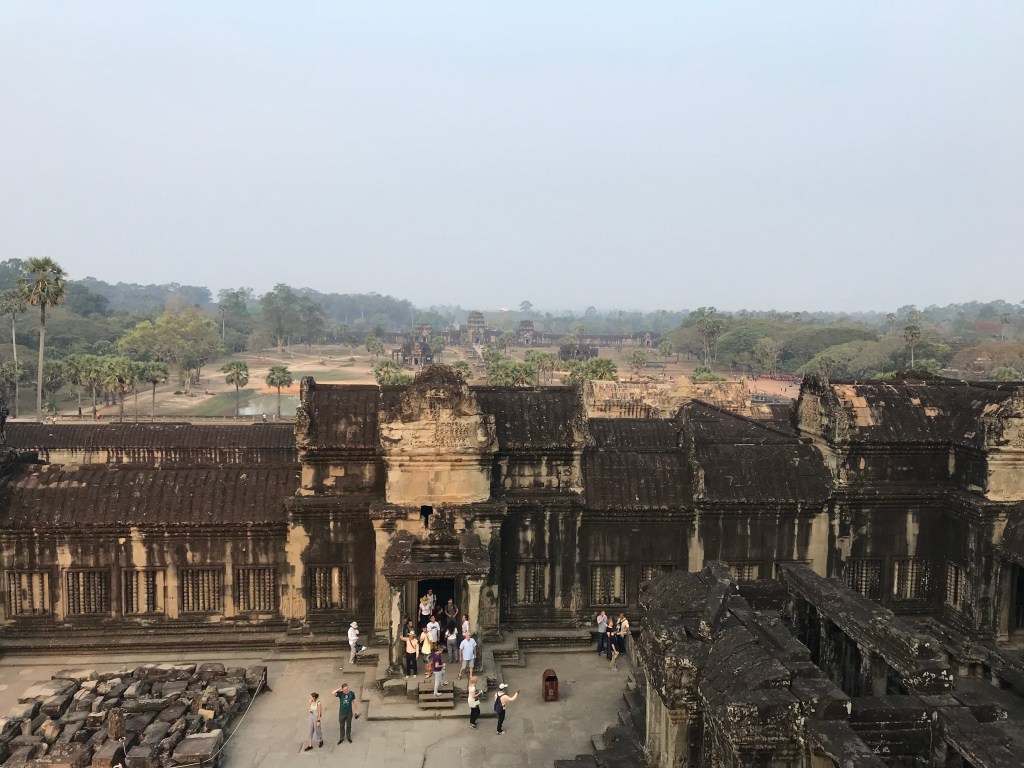
Once it was light Ben and I headed in to the temple. It was extremely hot so the exploration was pretty tiring, but after about an hour we basically saw everything we wanted to.
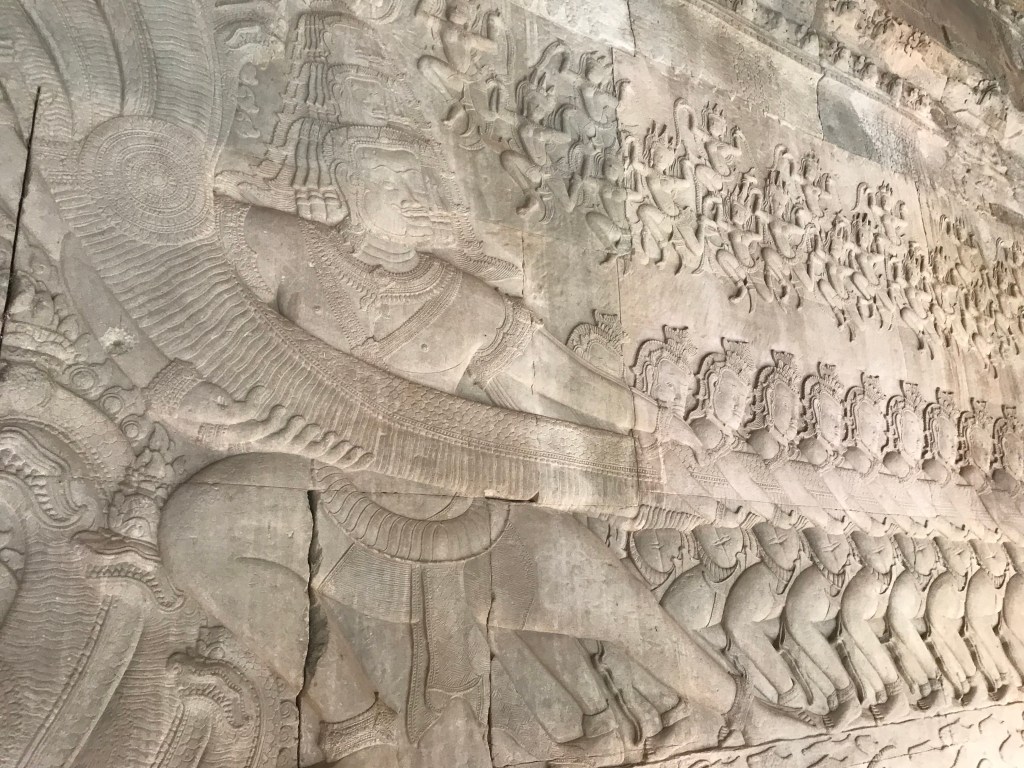
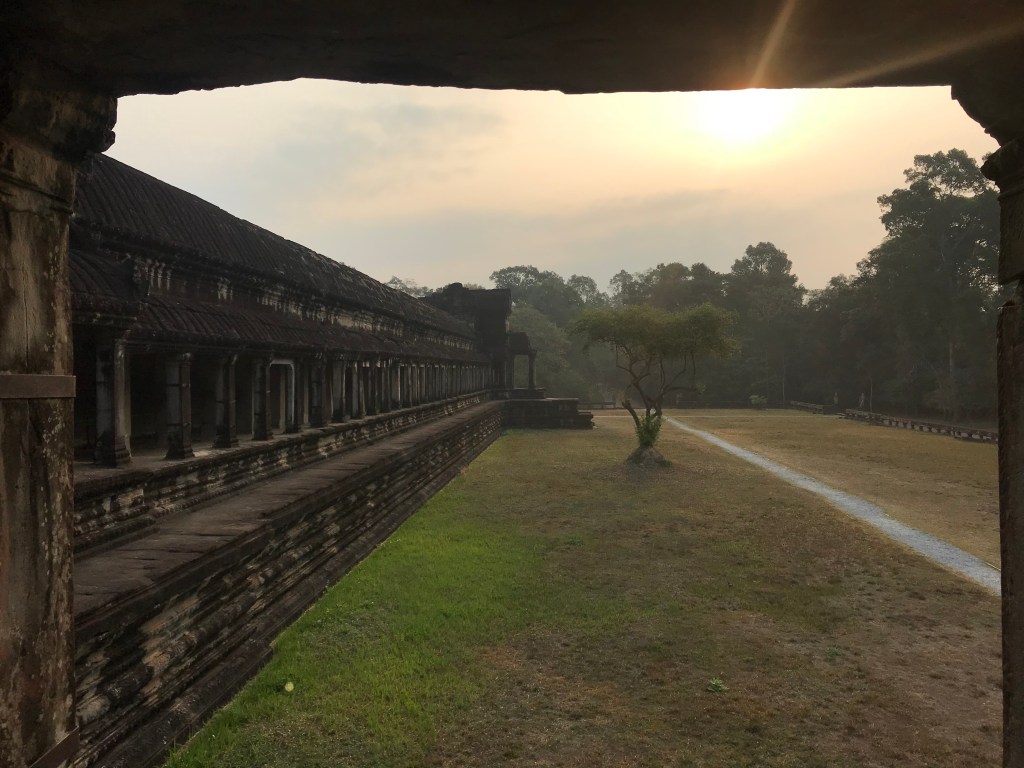
We returned to the sunrise spot, which now had a much better view – complete with monkeys casually walking around (not pictured).
Angkor Thom
After the incredible Angkor Wat, Ben and I met our driver and headed to Angkor Thom.
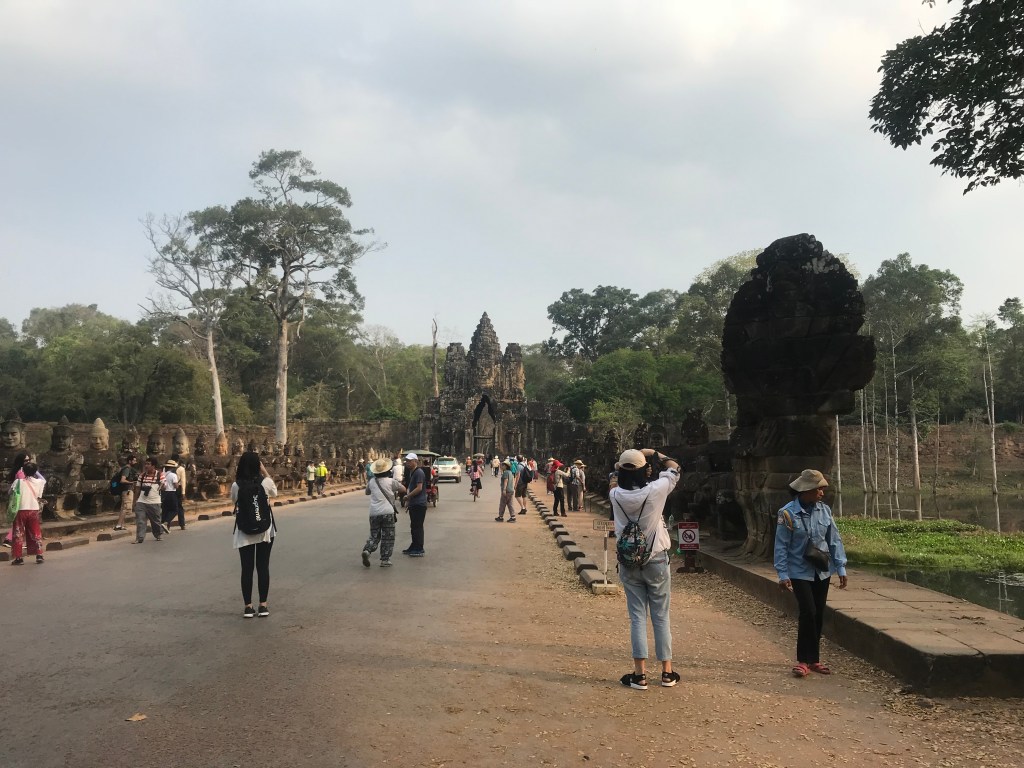
Angkor Thom was the last capital city of the Khmer Empire, built by Jayavarman VII (the “Warrior King”) at end of the 12th century. In one inscription, Jayavarman is referred to as the groom and the city as his bride.
The city is built using a common Bayon style, defined by a few characteristics which we’ll see below: the use of laterite (a rock rich in iron and aluminum), the presence of face-towers, and giant figures carrying the naga (half-human half-serpent beings; a female naga is a nagini) at the entrances.
Bayon
Bayon is the most famous site at Angkor Thom, built in the 12th century as the king’s state temple.

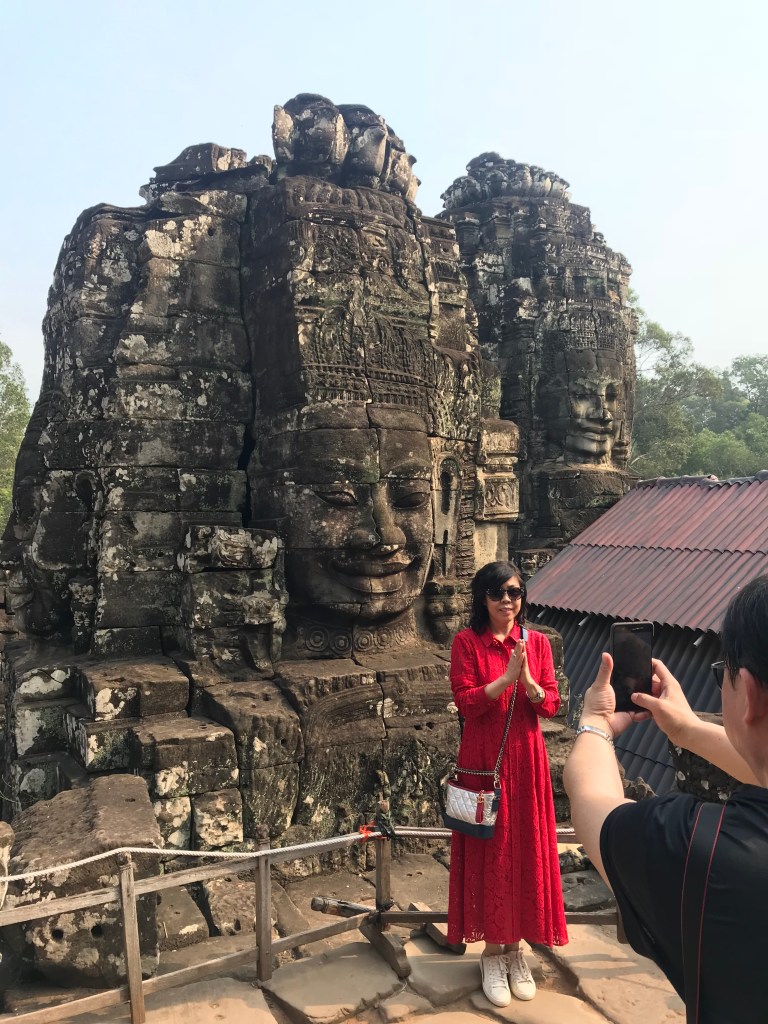
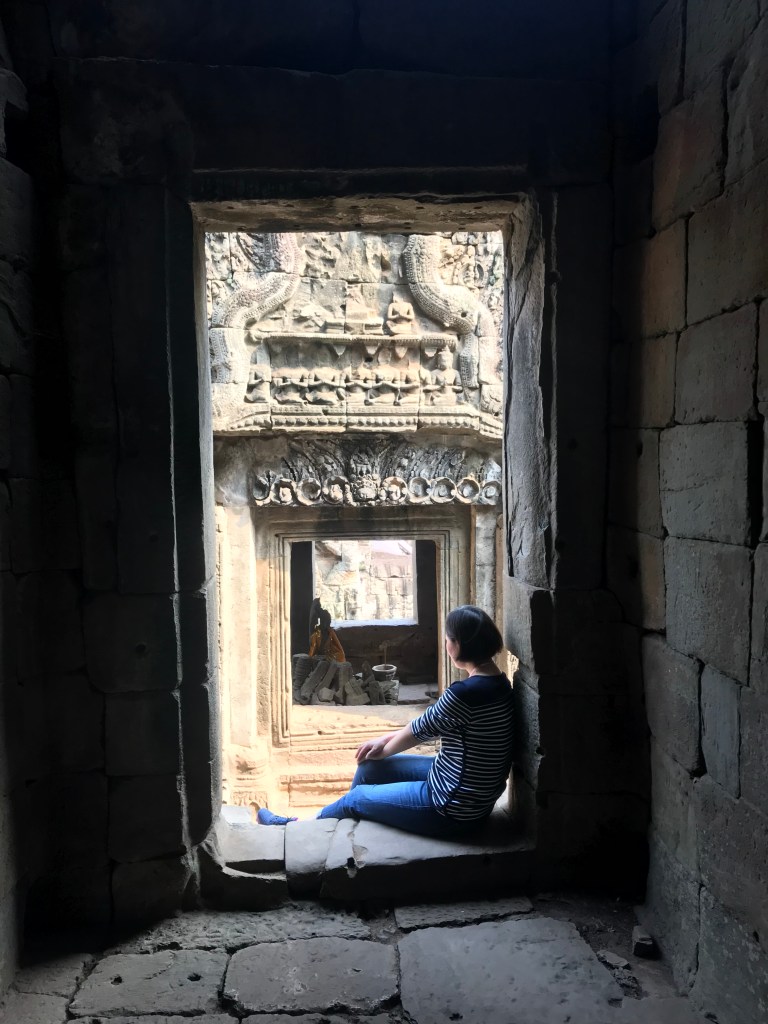
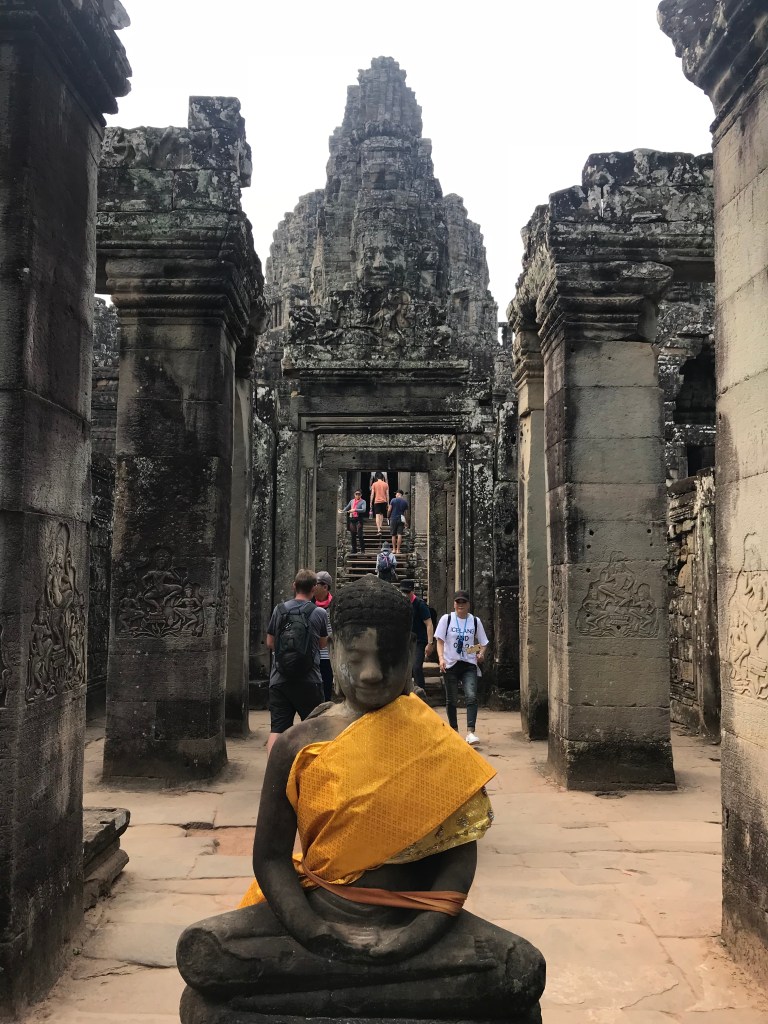
It was super crowded and in all the commotion I lost Ben.
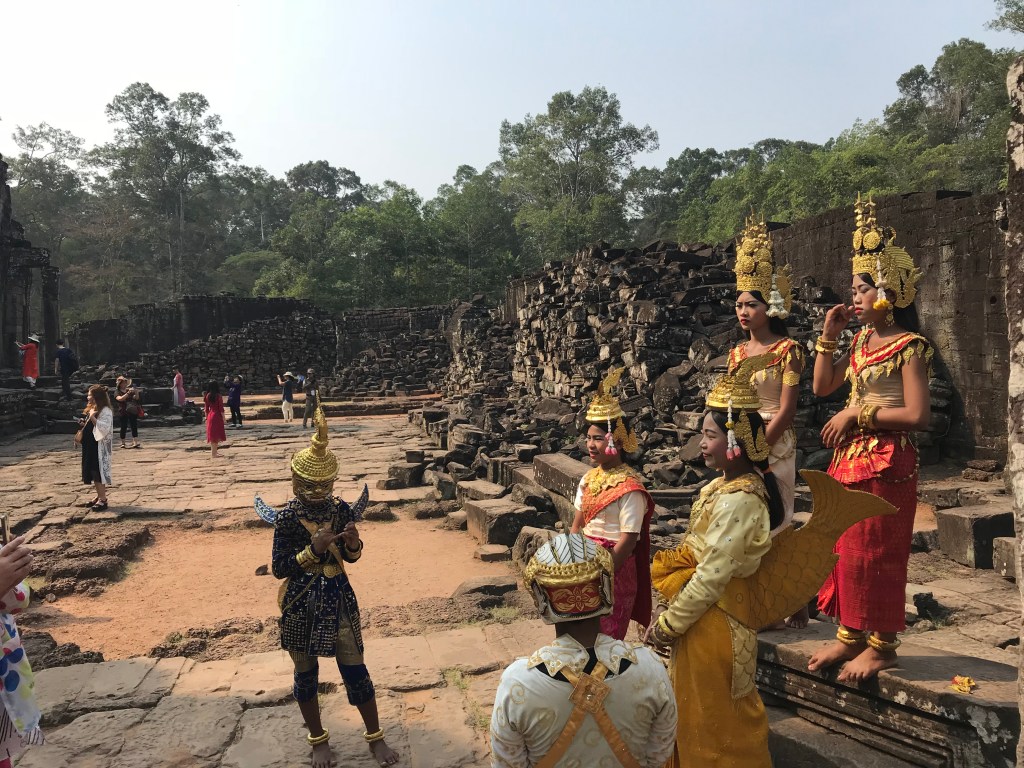
After exploring Bayon there was still no sign of Ben, so I continued along to Baphuon.
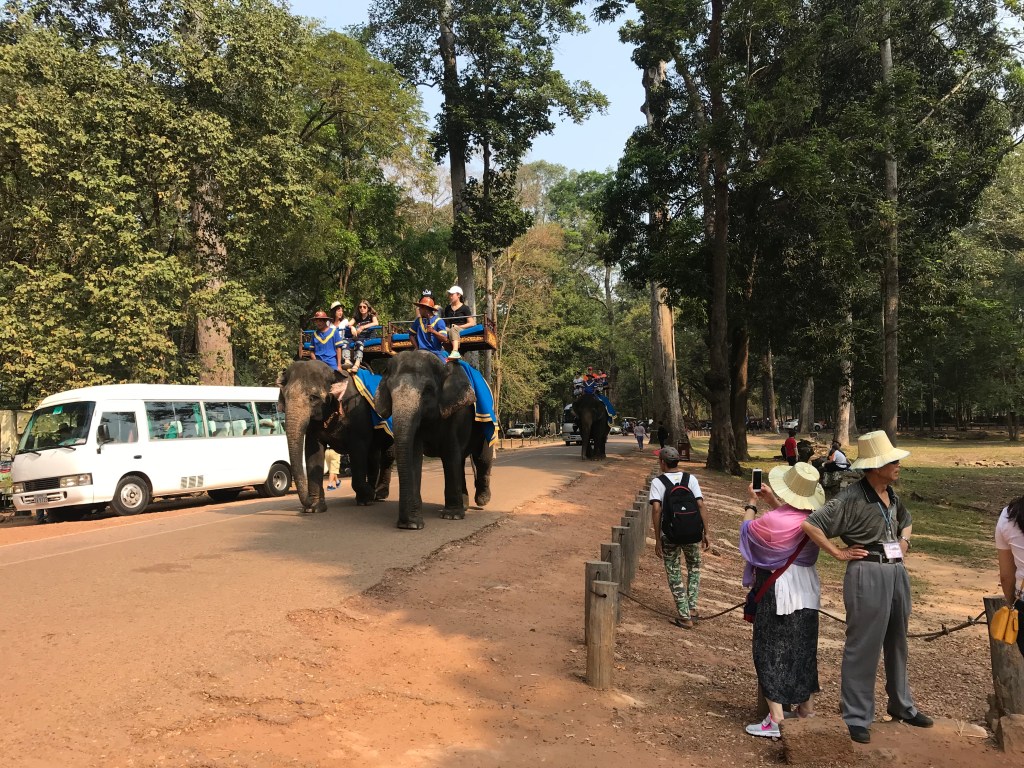
Baphuon
Baphuon was built in the 11th century and dedicated to the Hindu god Shiva. This meta-temple had multiple sub-temples of increasing height, with intricate carvings covering every surface.
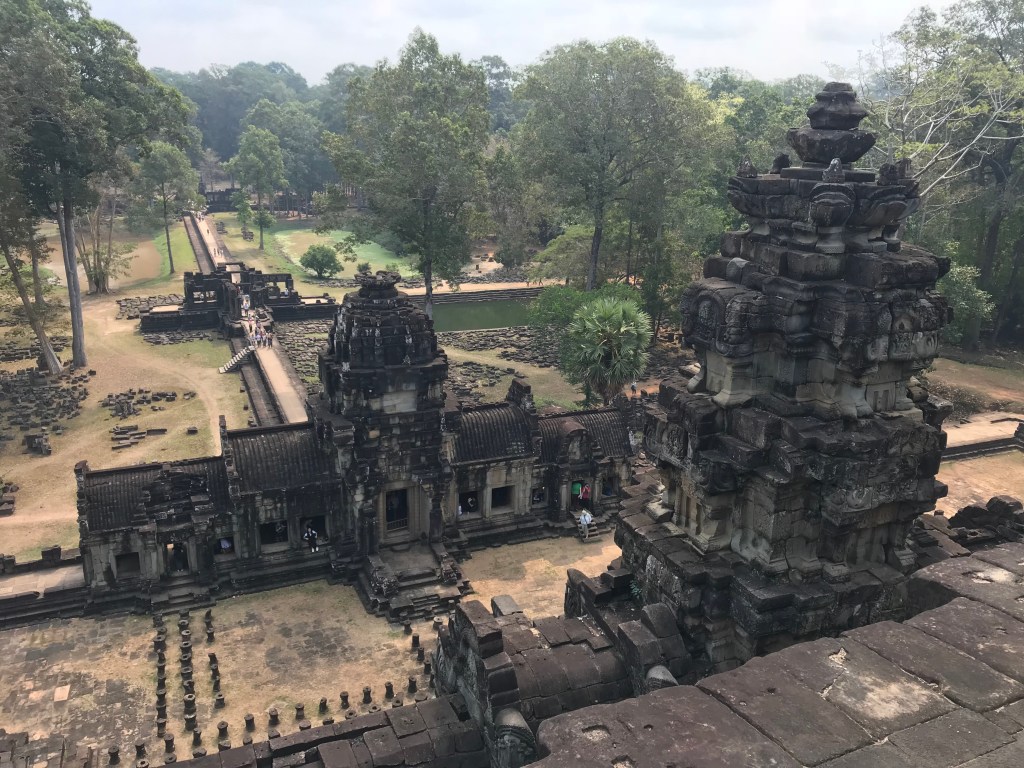
On the way up some guy randomly started telling me Baphuon facts; this seemed suspicious so I told him I was good. He kept following me and asked to sign some form. Growing up, my mom always told me not to sign any forms presented by strangers, so I told him no but that I could instead give $1. He asked for $2, but I didn’t have other singles in my wallet, so said “sorry” and walked away.
I headed to the next stop and finally found Ben!
Ta Prohm
It had been quite a day, so when we found our driver I was ready to go home. However, he knew how to impress tourists and asked if we wanted to see the “Tomb Raider temple”. Without hesitation we said yes.
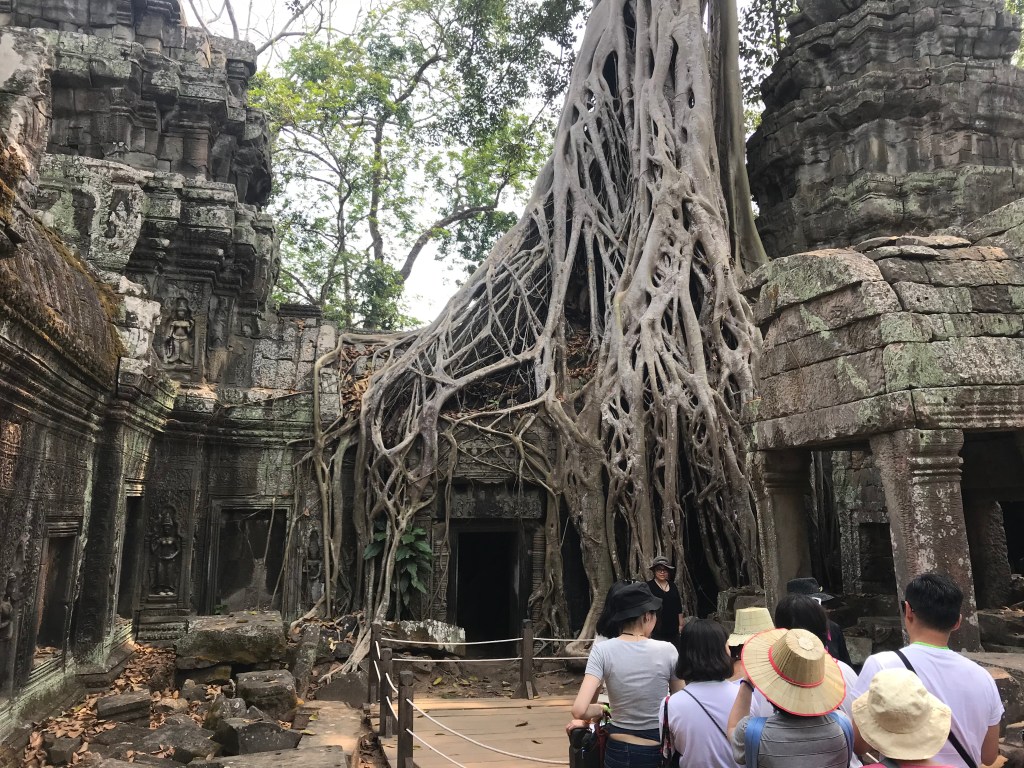
Founded again by Jayavarman VII as a monastery and university, the “Tomb Raider Temple” aka Ta Prohm was awesome, with tree roots wrapping around temple walls. Unlike other temples at Angkor it is in much the same condition as its original state, due to significant restoration work (with a minimum amount of new stones) which was still going on.
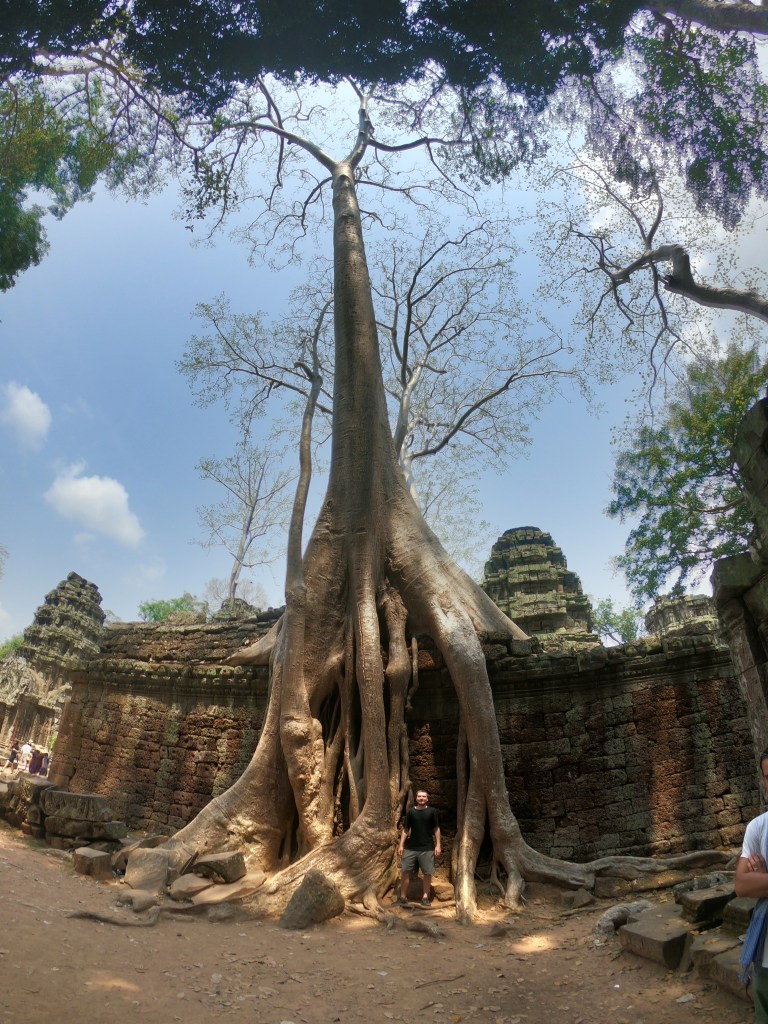
After admiring this lost world Ben and I found our driver and headed back to the hostel. It was only the afternoon, yet I felt like I had already lived a lifetime.
I signed up for another tour for the next day, picked up lunch, and Netflixed in bed. In the evening I took a tuk-tuk to Burger King to ensure minimal chances of food poisoning. I was still pretty shaken up by my Thai hospital experience; on top of that, my friend Cliff told me that he himself got food poisoning in Cambodia so I wanted to play it safe.
Angkor Grand Temple Circuit
The next day was my Angkor Grand Circuit tour. It was just me and two girls that I remembered from yesterday: Philippa, originally from France but living in London, and Virginie, from Belgium.
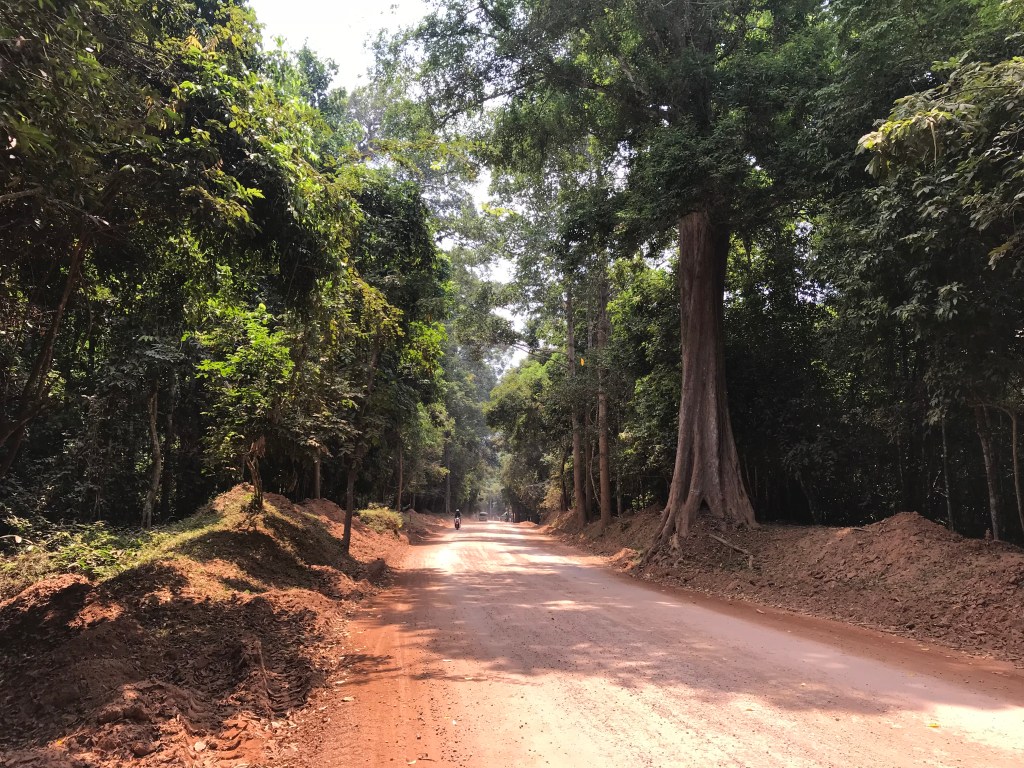
The girls were really friendly. They often spoke French to each other, and Philippa would sometimes translate. Virginie told me it was because she thought her English wasn’t very good, though to me it seemed totally fine. Eager to impress, I told the girls that I learned French in school. Philippa asked me what I did for work; I took a few seconds to formulate a response so it was just English for me after that.
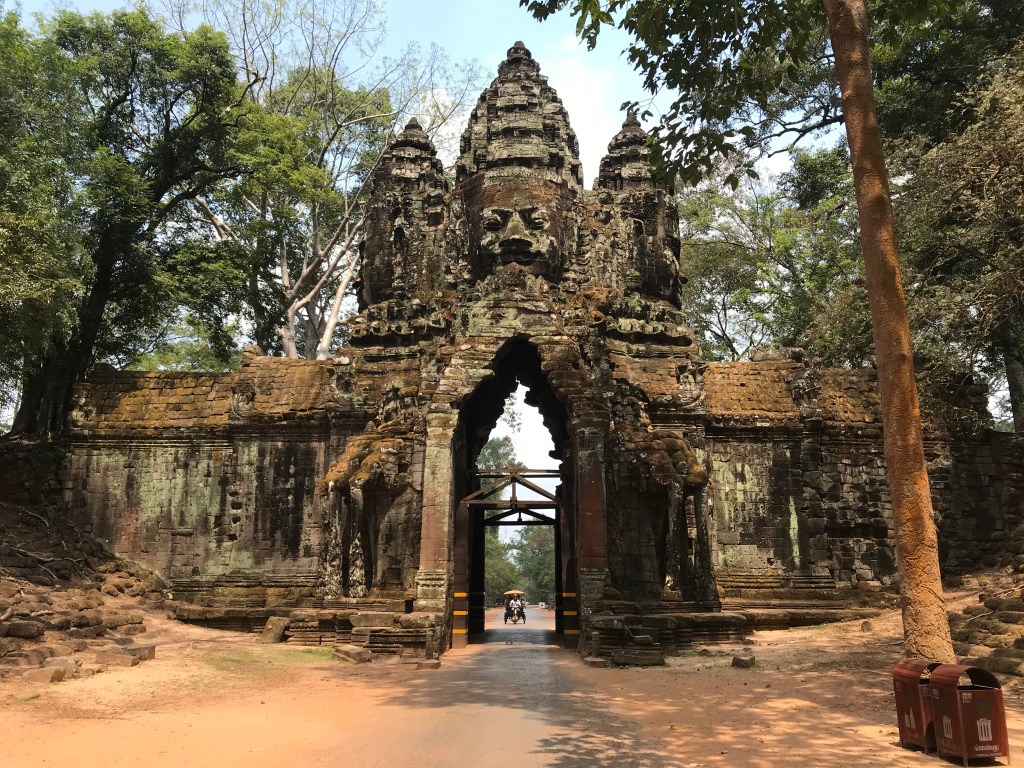
Our driver asked if we wanted to see the “lady temple” first before doing the circuit. We did, so we started with a small detour. The 40-minute ride passed by quickly in good conversation, and the tuk-tuk was open so we had a nice breeze. We drove by a road sign that said “We love Korea”: apparently Korea is involved in a lot of investments and aid to Cambodia.
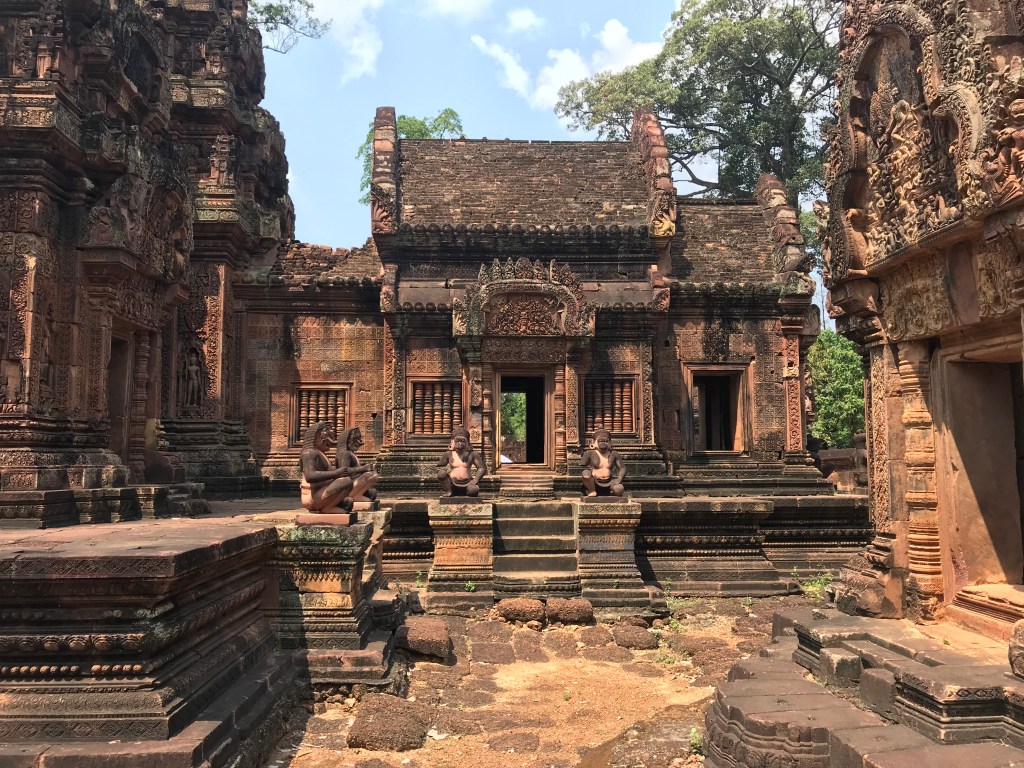
The “lady temple”, Banteay Srei (which means “citadel of the women”), was picturesque and intricate. Philippa had a guide book with her and read us some interesting facts.
The temple was built in the 10th century, dedicated to the Hindu god Shiva. It is said the name comes from its red color, its miniature scale (compared to other Angkorian temples), and elaborate carvings of female deities on the walls. There were local children around trying to sell us stuff (this wasn’t in the guidebook).
Next, we headed back and proceeded with the actual “circuit”. Our tuk-tuk driver was a really cheerful guy and kept saying “right here, right now” and giving us fist bumps.
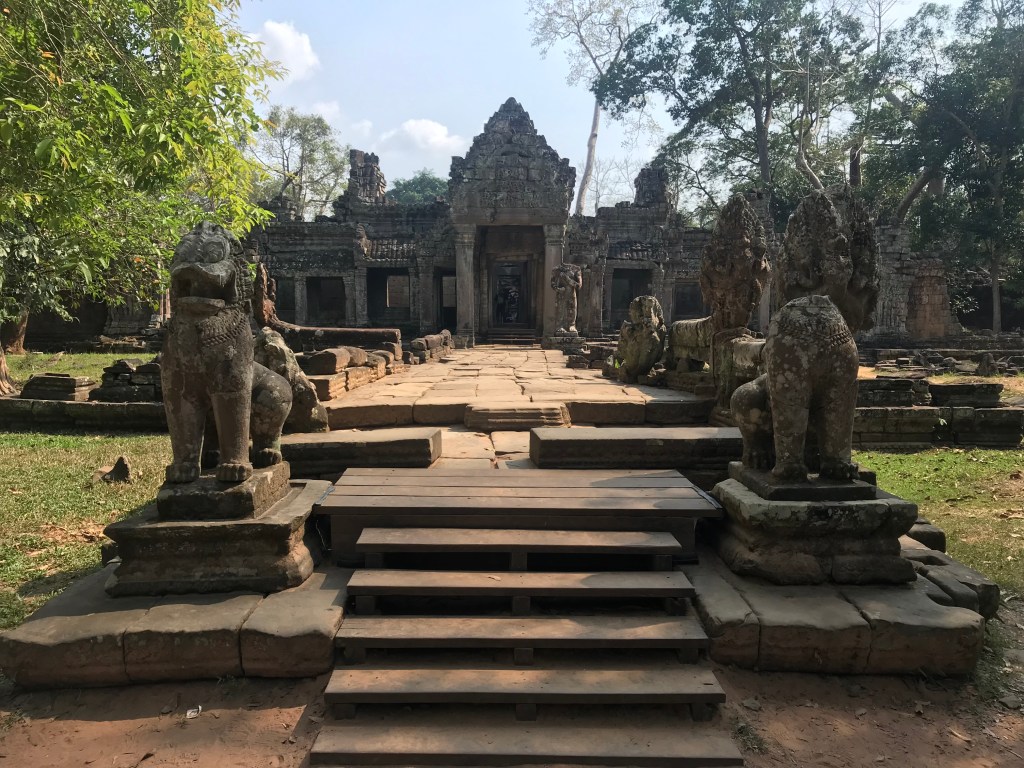
The first circuit stop was Preah Khan, meaning “royal sword.” This temple was built for Jayavarman VII to honor his father (Dharanindravarman II), and is now mostly ruins because of bad construction. It remains largely unrestored today. Thanks, Philippa’s guide book!

On the way out of the temple I saw a lady wearing a really impressive sun hat with a flap covering her face (basically a helmet). I complimented her hat and said that it was the next step up from mine, which only had a black flap – amateur hour. She laughed and was very excited. I asked her where she got it and she said Hong Kong; I said I’ll look for it when I go. She said “welcome” and there were lots of smiles all around. What a nice interaction!
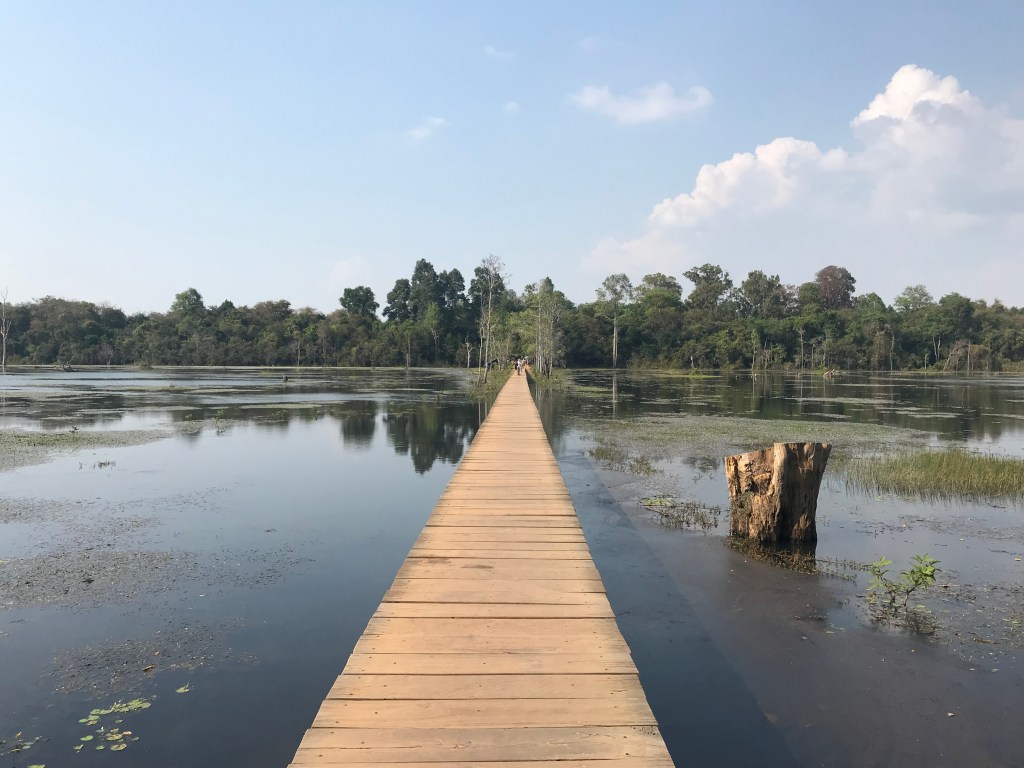
The next stop was Neak Pean, a small temple on a circular artificial island in the middle of a lake.
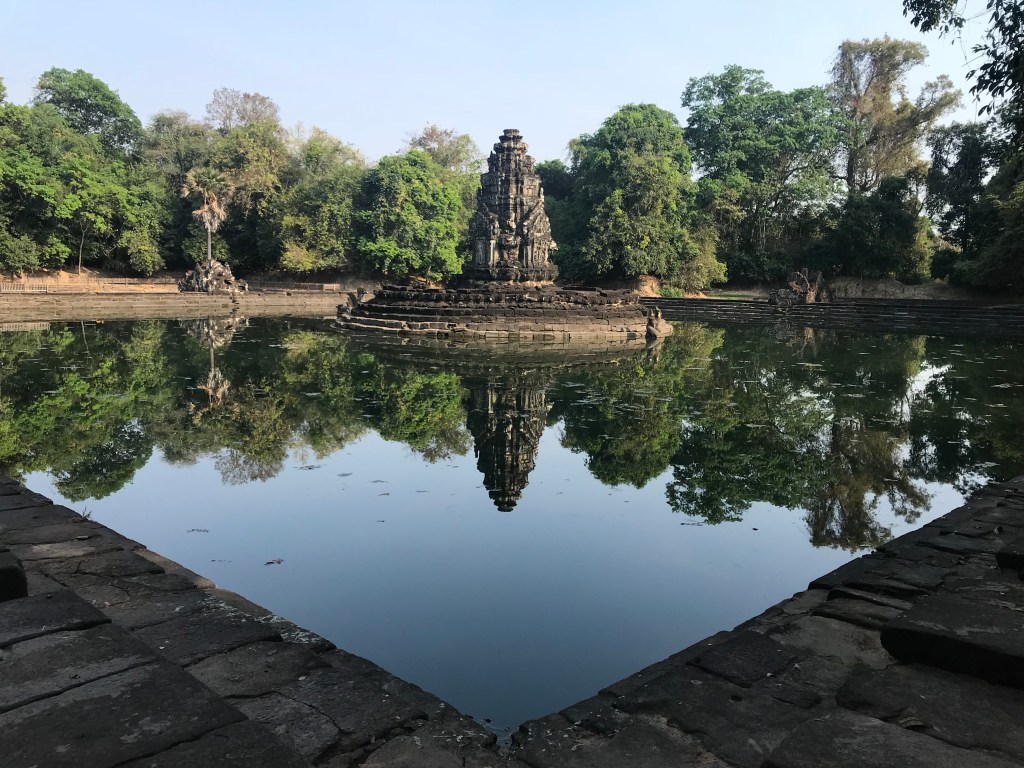
Neak Pean, built (surprise surprise) in the 12th century by Jayavarman VII, was designed as a hospital and had 4 connected pools. The pools represented Water, Earth, Fire, and Wind, and it was believed that going into a pool would balance the elements in the bather, curing disease.
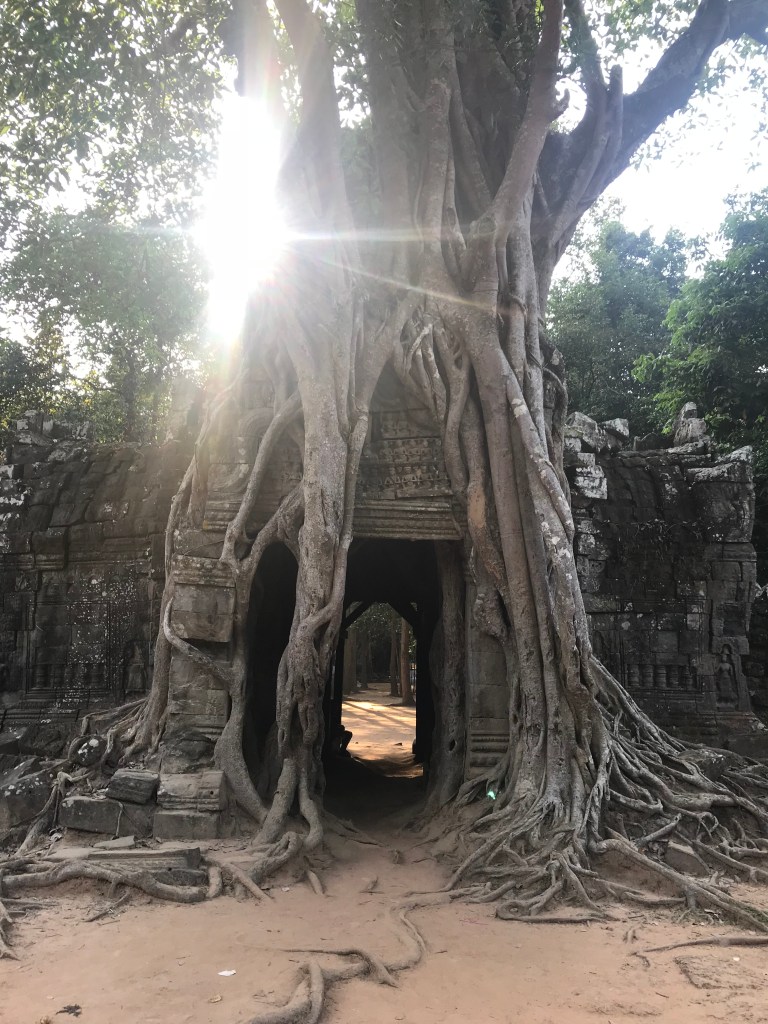
Next was Ta Som, where one of the entranceways had a sacred fig tree growing through it. Again, there were little girls (not more than 8 years old) selling postcards.
Next we headed to East Mebon, which stands on an artificial island of a dried-up reservoir. This temple was once only reachable by boat.
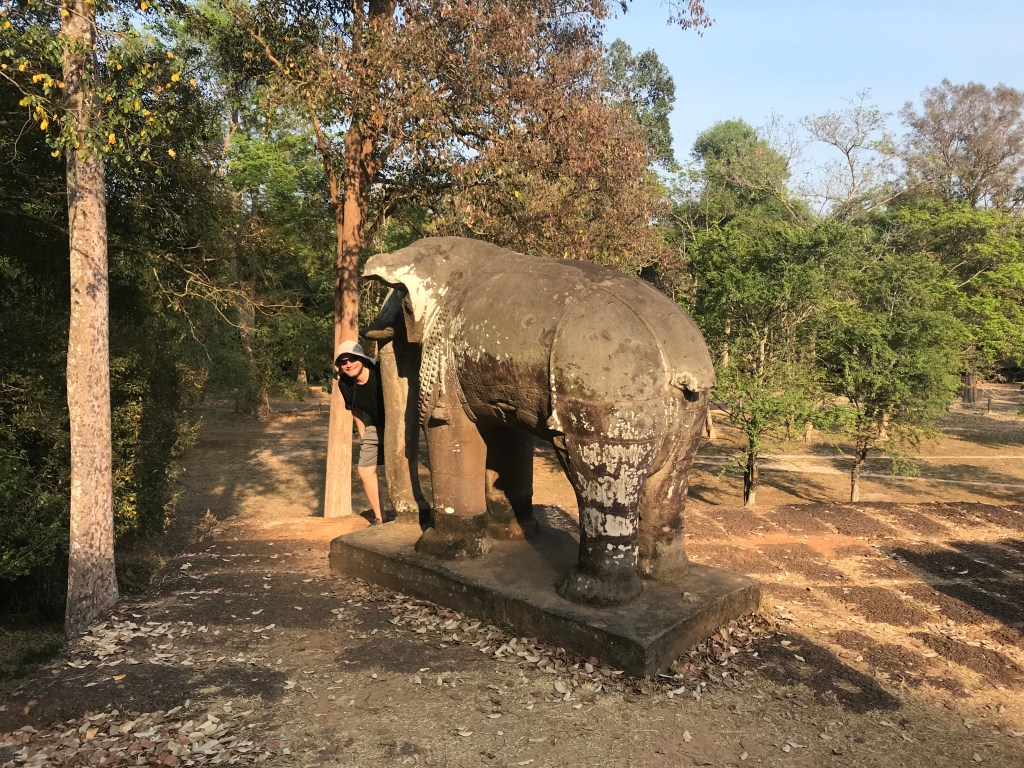
Throughout the whole tour we loved chatting with our cheerful driver. I taught him the phrase “sun’s out, guns out” which he didn’t get at first, but after I explained what “gun” meant in this context he laughed. He really enjoyed this new saying.
Our final stop was Pre Rup temple, whose name means “turn the body”. It is believed that funerals were conducted here, with the deceased’s ashes ritually rotated in different directions. There were some steep stairs but it was a good vantage point for the sunset.
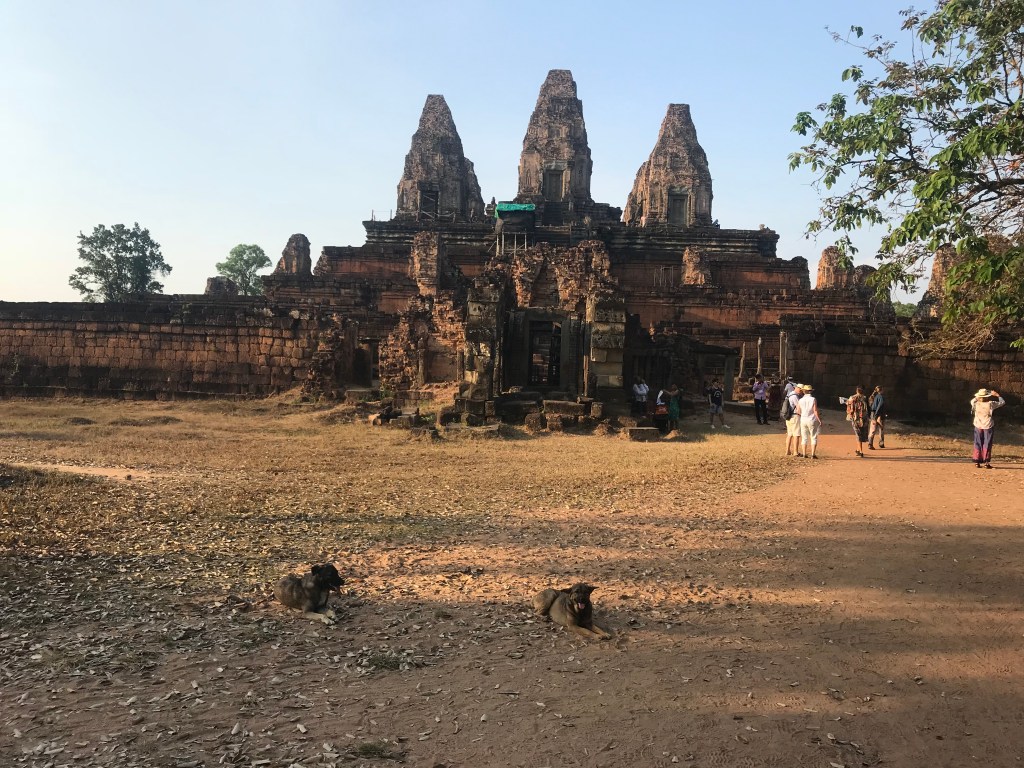
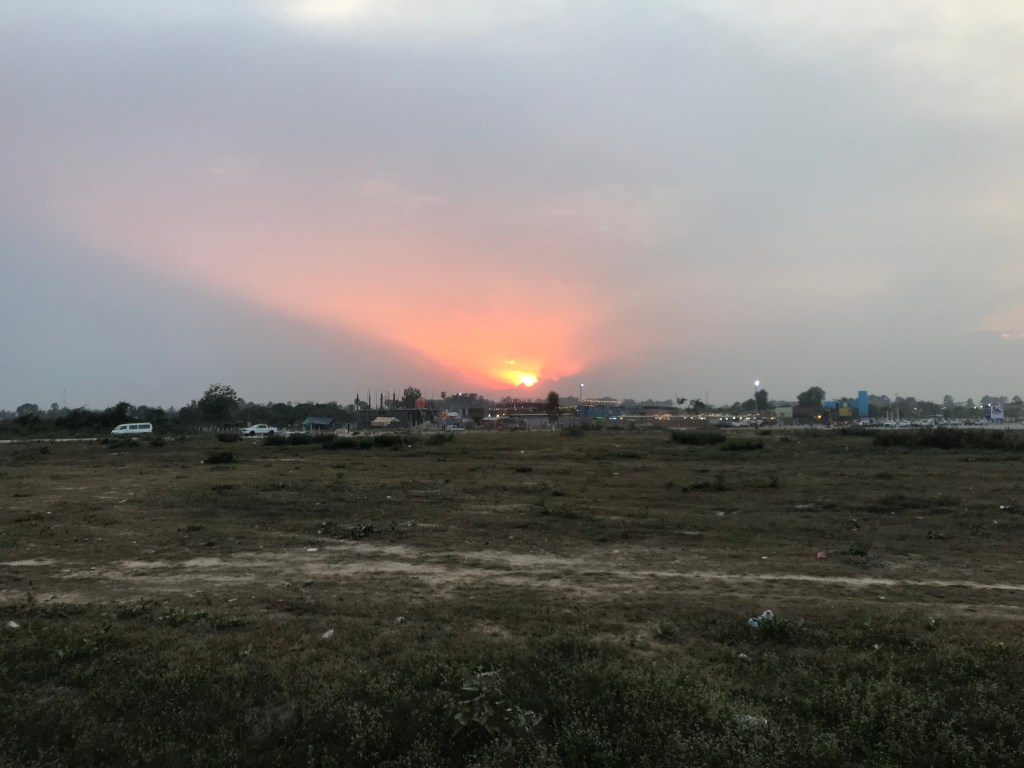
Unfortunately it was cloudy and almost impossible to see the sun, so after 30 minutes we gave up and went home. The girls told me that they tried to see the sunset here the previous day but were also unsuccessful.
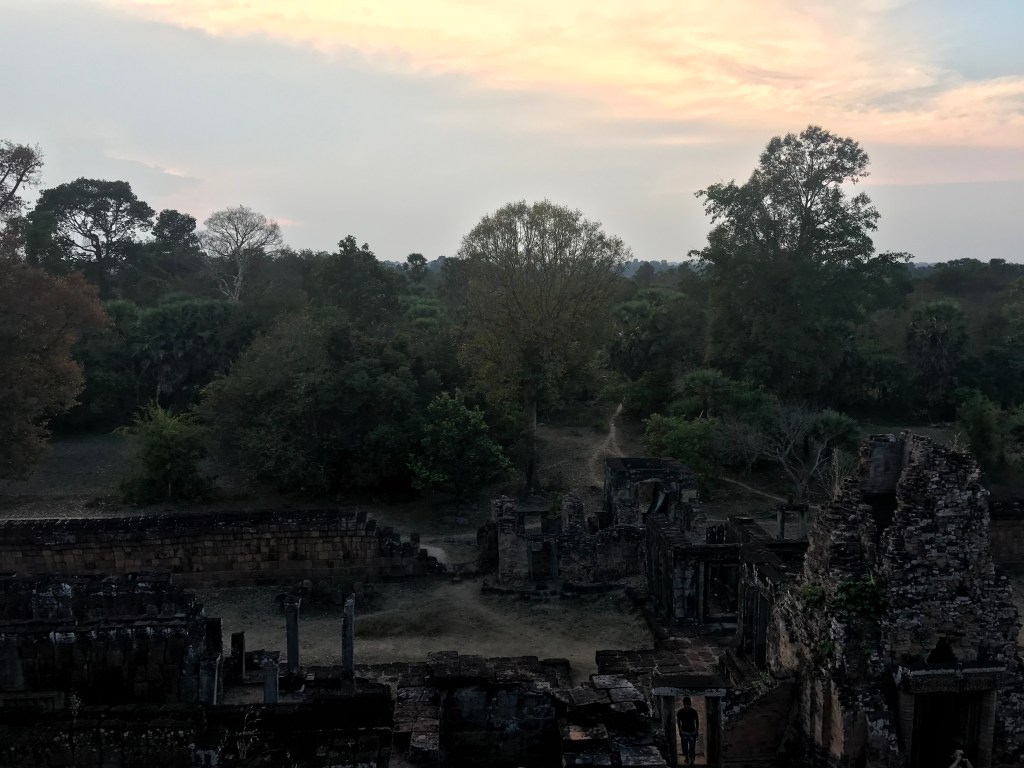
The sun finally decided to come out on our ride back, and it didn’t disappoint!
I got back to the hostel, grabbed some low-risk Burger King, and headed to bed.
And with that, my time in Cambodia came to an end. Next stop: Vietnam!

 Mikhail's Travel Adventures
1 thought on “Siem Reap, Cambodia (2/28/18)”