

After almost a week in Chiang Mai I headed further north, to Pai.
A small town near Thailand’s border with Myanmar, Pai was once a quiet market village, with a population of just 2000 in 2006. Today it has become a tourist hotspot.

Pai is considered a “hippie” destination and is particularly popular with backpackers; its location near the mountains makes it an easy base for trekking and visiting local hill tribes. I had never heard of Pai until I met other backpackers in Thailand who told me I had to visit.
While this word-of-mouth fame has been a boon for Pai’s local economy, not all effects are positive. During high season (November – March) the tourist rush can get so bad as to cause traffic jams and even water shortages. Luckily I did not experience this during my stay.
Unsurprisingly, Pai is a destination on the Banana Pancake Trail, a common backpacker circuit in Southeast Asia. There are 57 destinations on this circuit and by the end of my trip I will have hit 13 of them 🙂 The trail gets its name from the banana pancake, a popular dish served to Westerners in hostels and cafes. Fun fact: South America has its own version, the Gringo Trail. I’ll save that for next time!
Arrival
Getting to Pai is easiest by bus, which I caught from my Chiang Mai hostel. What followed was a 3-hour nauseating adventure, with crazy windy roads and countless sharp turns. The driver wasn’t going too fast but the ride was still a struggle. I shouldn’t have eaten such a big breakfast..
I arrived in the afternoon, not feeling great at all. Tired and a little sick from the drive, I checked into my hostel and relaxed in bed for a few hours. In my dorm room I met a nice Dutch girl who invited me to eat with her friends.
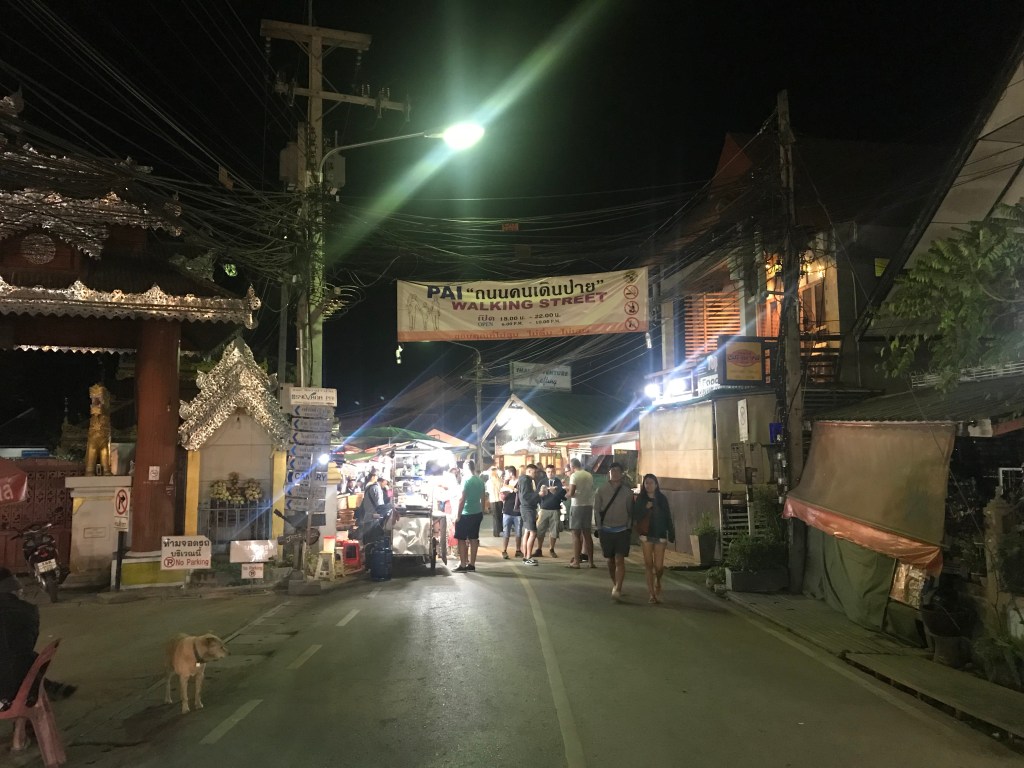
The dinner group was all Dutch, 4 girls and 1 other guy. We all headed to the night market, which was my first real look at Pai. The town felt super touristy and almost every building was a guest house or souvenir shop.
The Dutch group spoke Dutch for most of the time, but the other guy (Mitchell) inclusively kept switching back to English. As was the case for most other travelers I met in hostels, my new friends were all younger than me: these kids had just finished college and were backpacking for a few months before their Master’s.
After a tasty dinner we went back to the hostel where everyone was getting ready to head out to the bars. I, too, joined for a bit but was feeling tired (still hadn’t recovered from that crazy drive) and headed home early.
Day Tour
The next day was my tour of Pai, which promised to cover the most popular tourist spots. A tuk tuk picked me up in the morning, where one of the passengers was a Swiss girl I had met at the Chiang Mai hostel a few days ago – what a small world! I guess every backpacker is just trying to get their banana pancakes.
White Buddha Temple
Our first stop was the White Buddha Temple, located on top of a mountain with an awesome view.


After admiring the construction and the view we headed to our next stop, a viewpoint off the windy road.

Tham Lod Cave
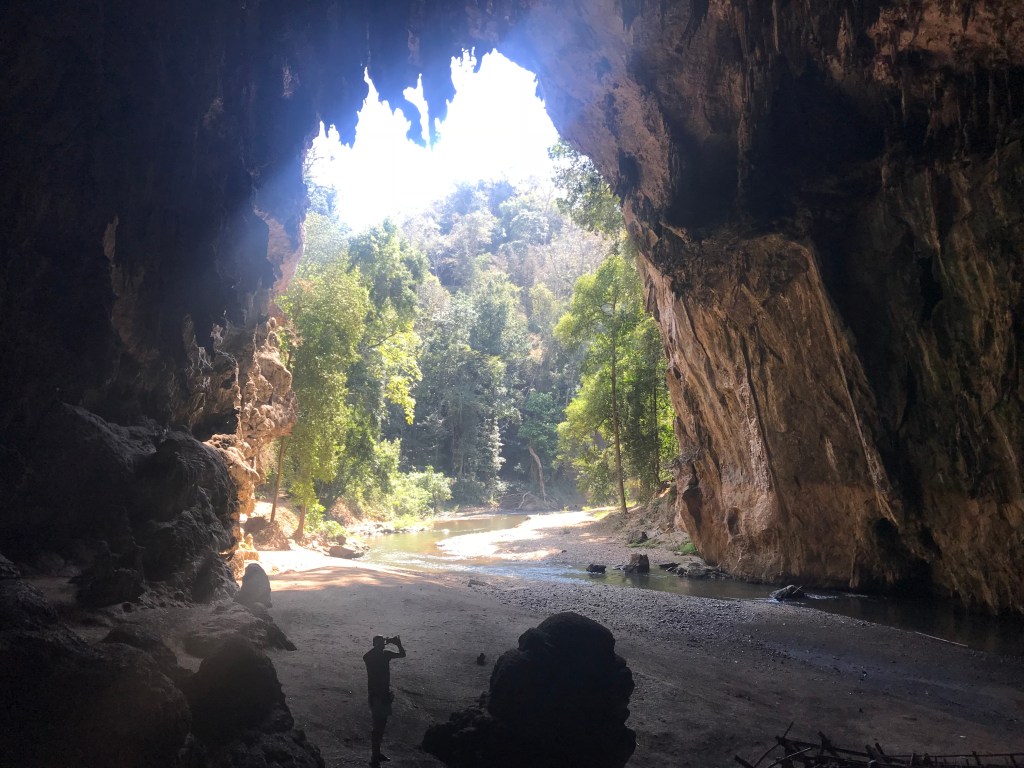
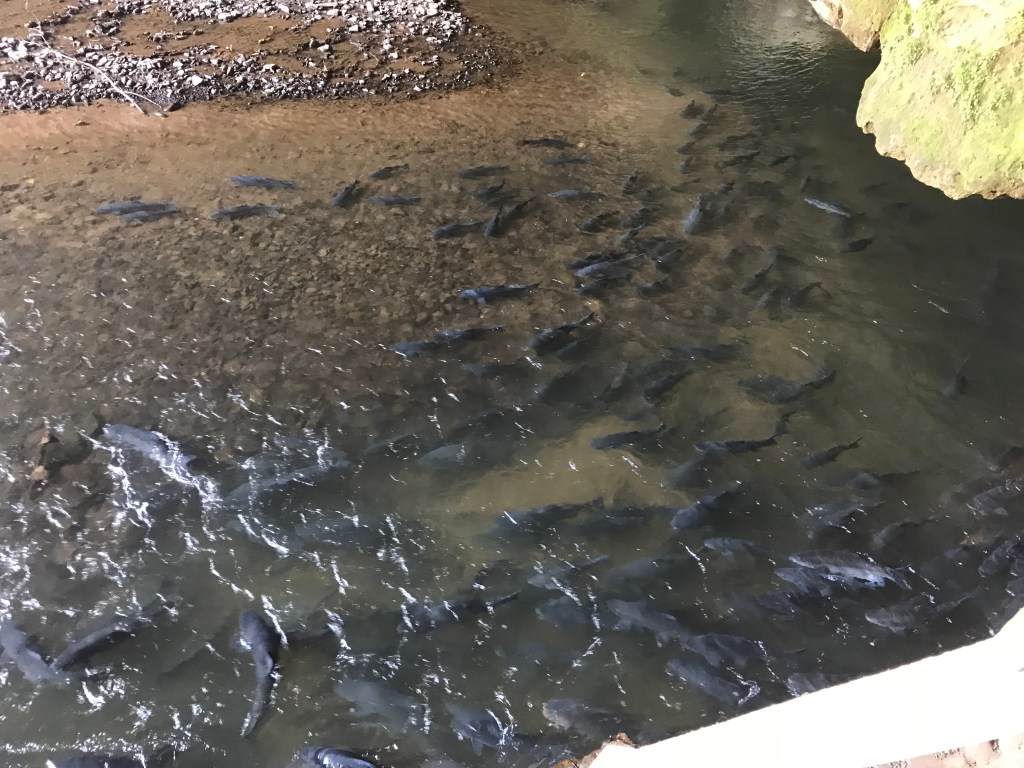
Next up was my first caving experience (of several) on this trip: Tham Lod Cave. Tham Lod is actually a cave system about a mile long; it’s home to a large number of bats and even has a river flowing through it!
The hour-long drive was again rather unpleasant: crowded tuk tuk + windy road = sad Mikhail.
The destination was worth the struggle, however. The cave system was massive, with a ton of caverns and crazy looking rock formations. Good thing we had a guide who spoke softly (ish) and carried a bright light – it would’ve been easy to get lost otherwise!

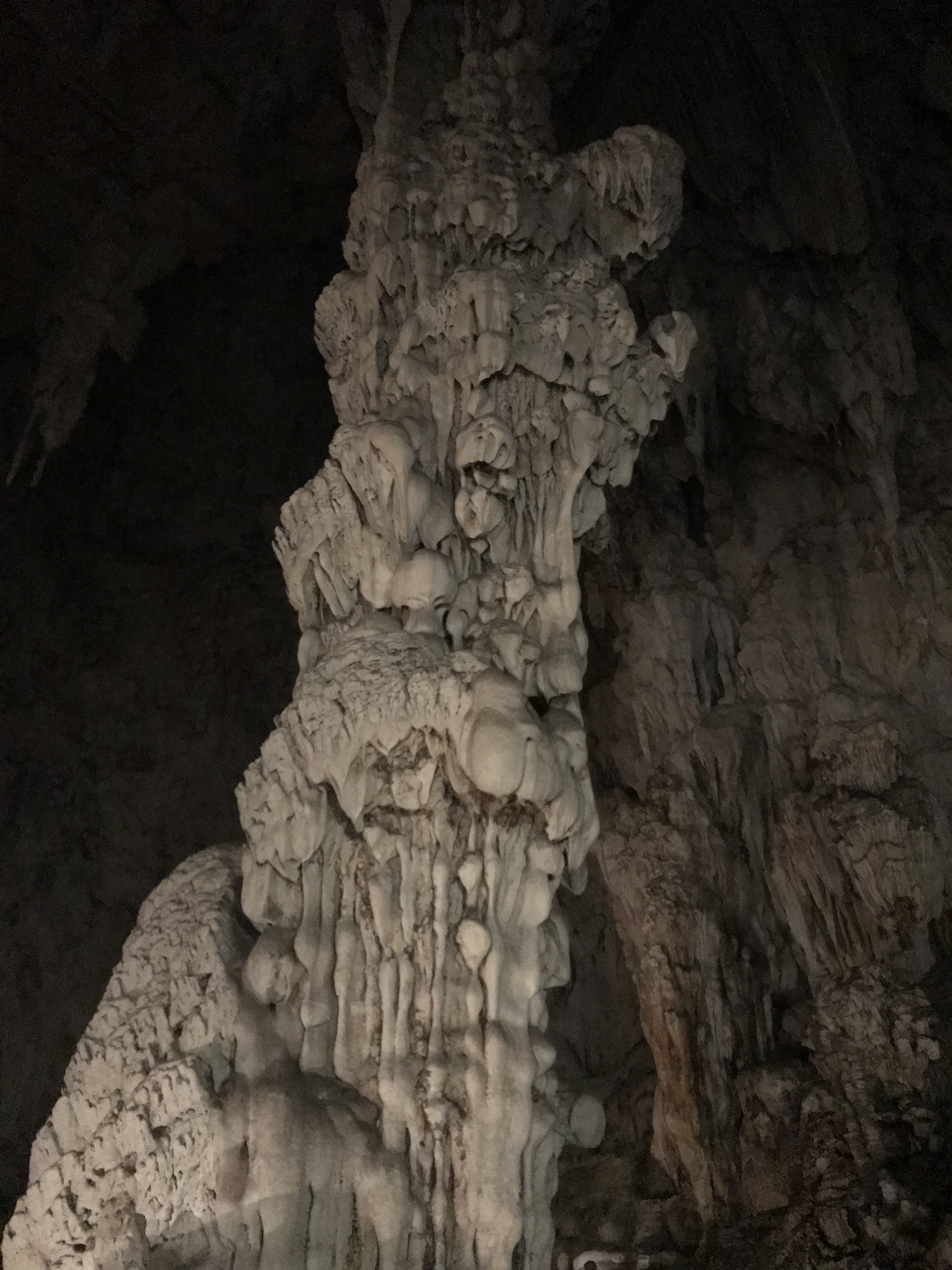
There was a lot of cool stuff to see, but most impressive were the stalactites and stalagmites. I always confuse the two so here’s a quick science lesson: stalactites are the ones that hang down, and stalagmites are the ones that stand up. Remember: “stalactite” has a C for “ceiling”, and stalagmite has a G for “ground”.

For the sake of proper terminology, the limestone stalactites and stalagmites we see in caves are actually called speleothems, since stalactite and stalagmite are general terms describing formations that form in various materials (e.g. ice, lava, sand), not just limestone. We won’t be too pedantic here, though.


Cave stalactites are formed when a mineralized water solution precipitates from the ceiling: the solution travels through the rock until it reaches an edge and then drips down to the floor. A chemical reaction takes place; the drip rate must be slow enough for carbon dioxide gas to escape into the cave atmosphere and calcium carbonate to deposit on the stalactite. If the rate is too fast then the solution will retain most of its calcium carbonate as it falls down, in which case the degassing occurs on the floor. This is how stalagmites form.
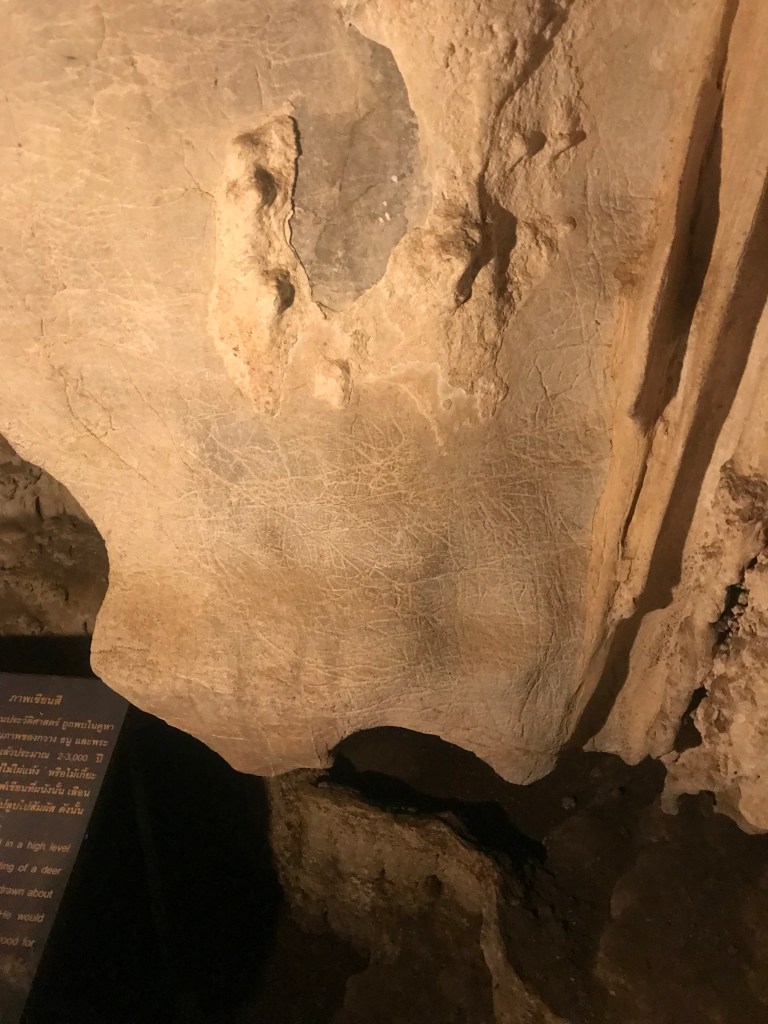


Stalactites grow at an average rate of 0.13mm a year, which means in ~20 years they can grow a full inch! There were some massive ones in these caves and of course I hit my head on one.

Mo Paeng Waterfall
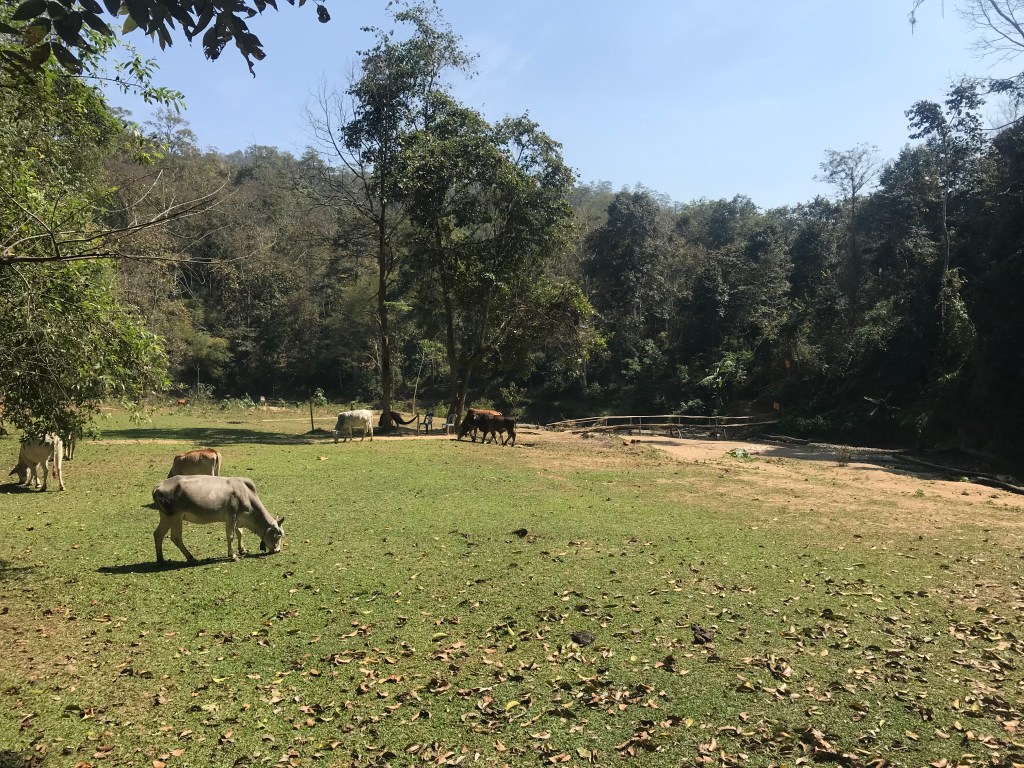
After a few hours exploring the caves we grabbed a quick lunch and drove to Mo Paeng waterfall.

This was another long windy and bumpy drive, and I felt sick again. At least it wasn’t Mo Paeng-ful than the others.

Pai Canyon
After the dry waterfall we headed to our last stop – Pai Canyon – to catch the sunset.

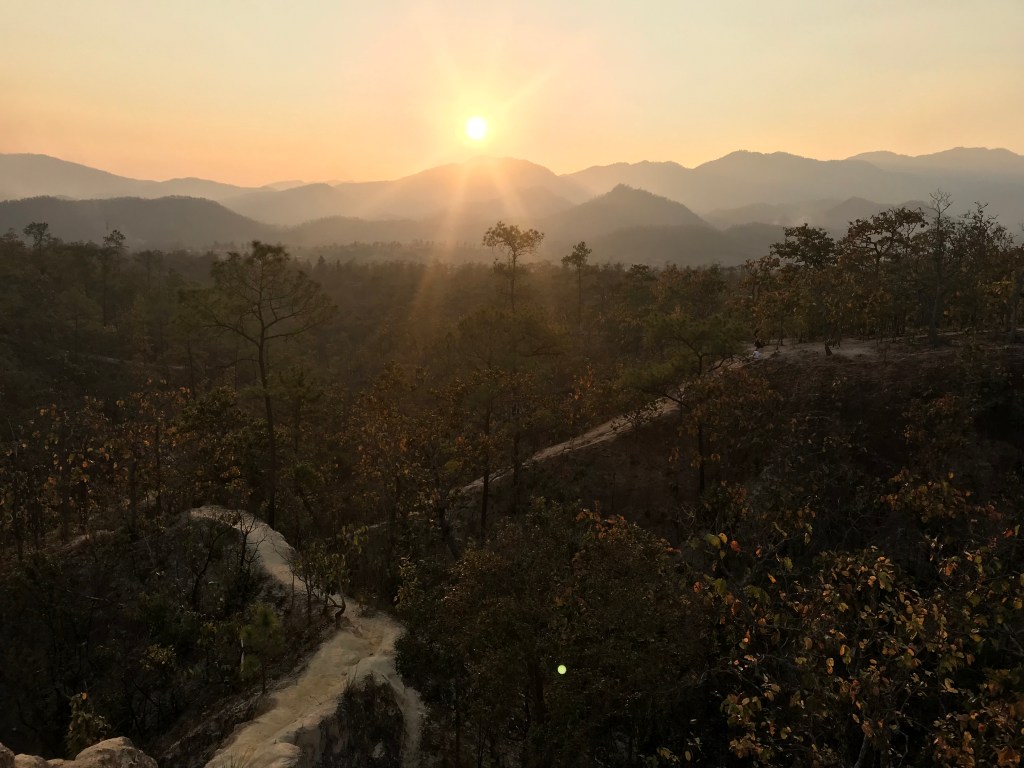
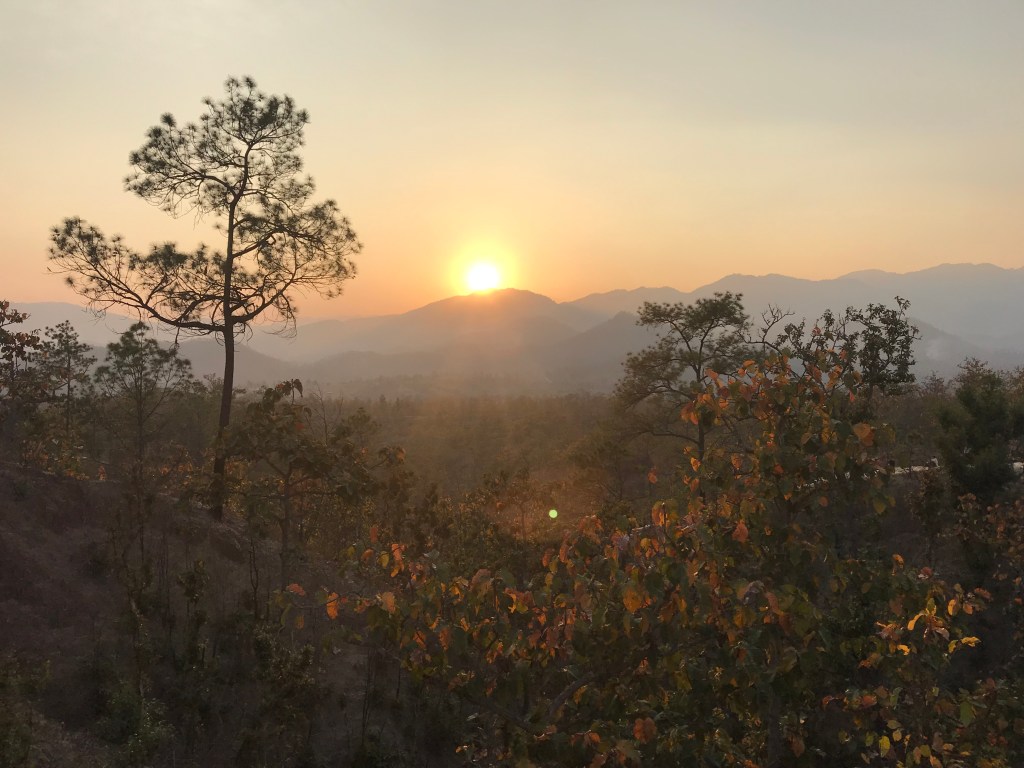
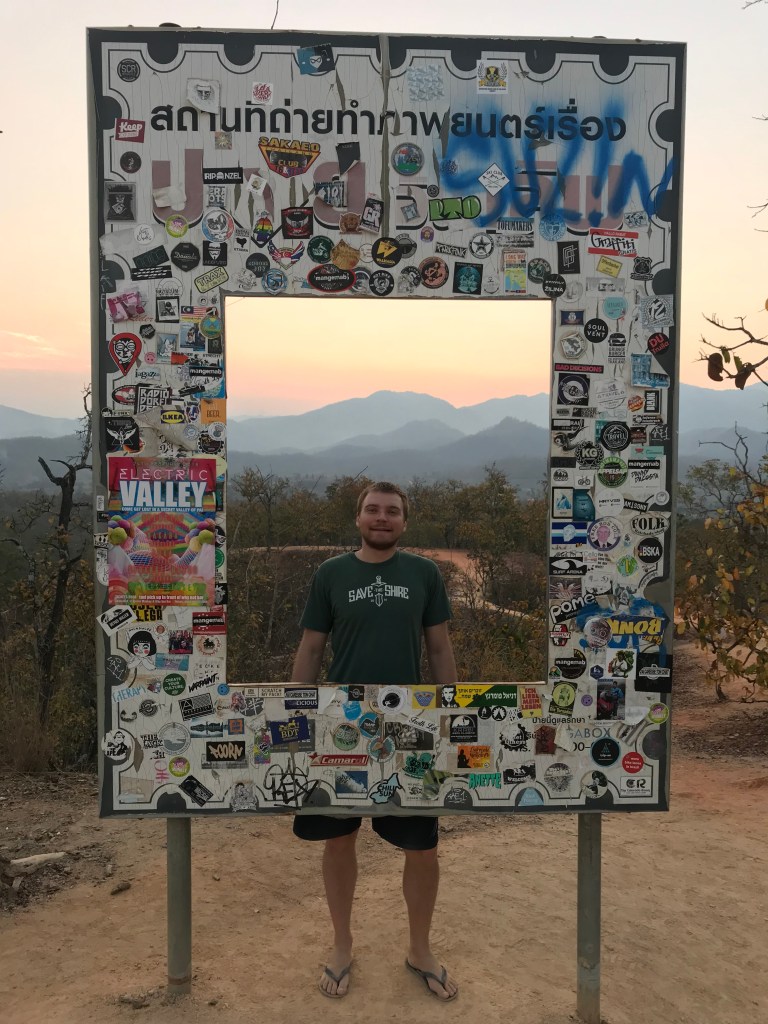
As you can see, this was a prime Instagram location. Luckily there were plenty of trails around so it was easy to find non-crowded vantage points.


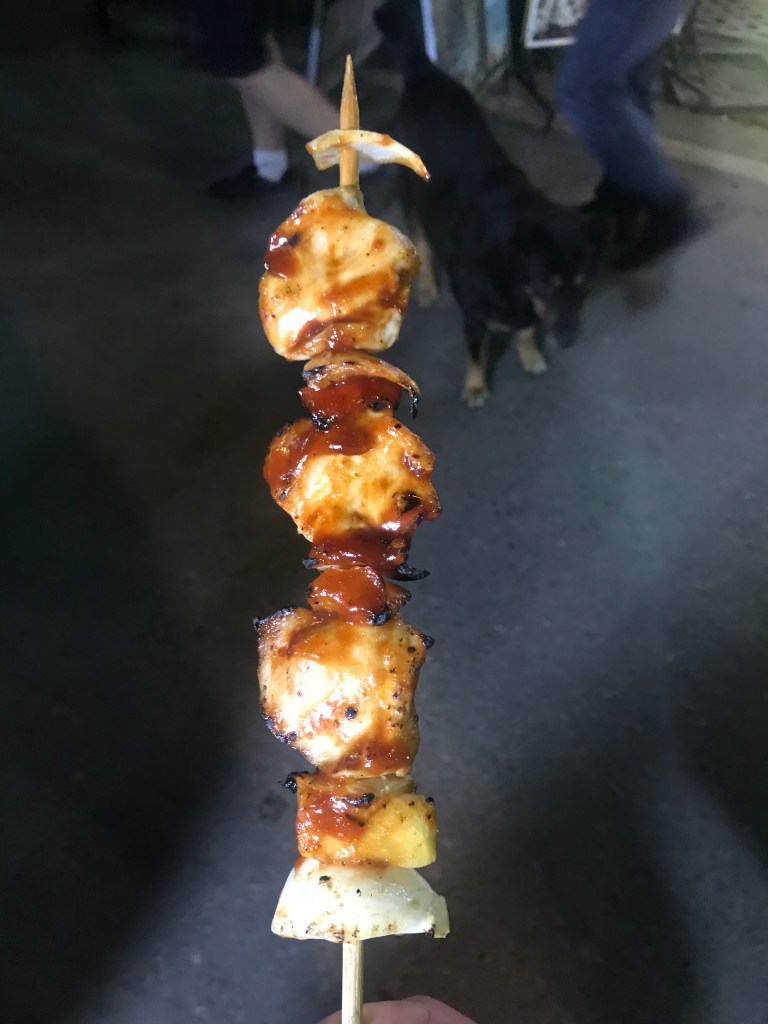
After the amazing day I got dropped off at the hostel, showered, and grabbed some street food for dinner: pork skewers, chicken tikka masala, mango sticky rice, and a smoothie. All the essentials!
Departure
The next day I woke up and checked out of the hostel, then grabbed a quick lunch at a nearby cafe. I had a chicken curry baguette with tomatoes and lettuce on the side – a risky move since tourists aren’t advised to consume anything which has been washed with tap water. Afterwards I wanted to treat myself so, feeling adventurous, I grabbed some ice cream from a street vendor.

Eventually I took a bus to Chiang Mai airport so I could fly back to Bangkok, my last stop in Thailand. I got to the airport and relaxed near my gate, patiently waiting for my flight. Unfortunately at this point I hit a bit of a detour and instead ended up in the hospital.
Stay tuned for some “exciting” adventures! Next stop: Chiang Mai Klaimor Hospital…

 Mikhail's Travel Adventures
1 thought on “Pai, Thailand (2/18/18)”