After spending all morning falling in love with Sioux Falls I headed westward to explore a few more South Dakota treasures: Badlands National Park, Rapid City, and Mt. Rushmore.
Some highlights:
- Baddest lands
- Berlin Wall in Rapid City
- President faces in stone
- Beautiful snowy mountains of Black Hills National Forest
Badlands National Park
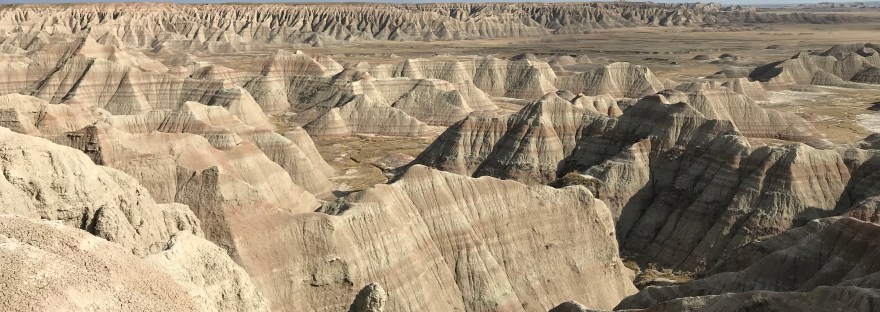
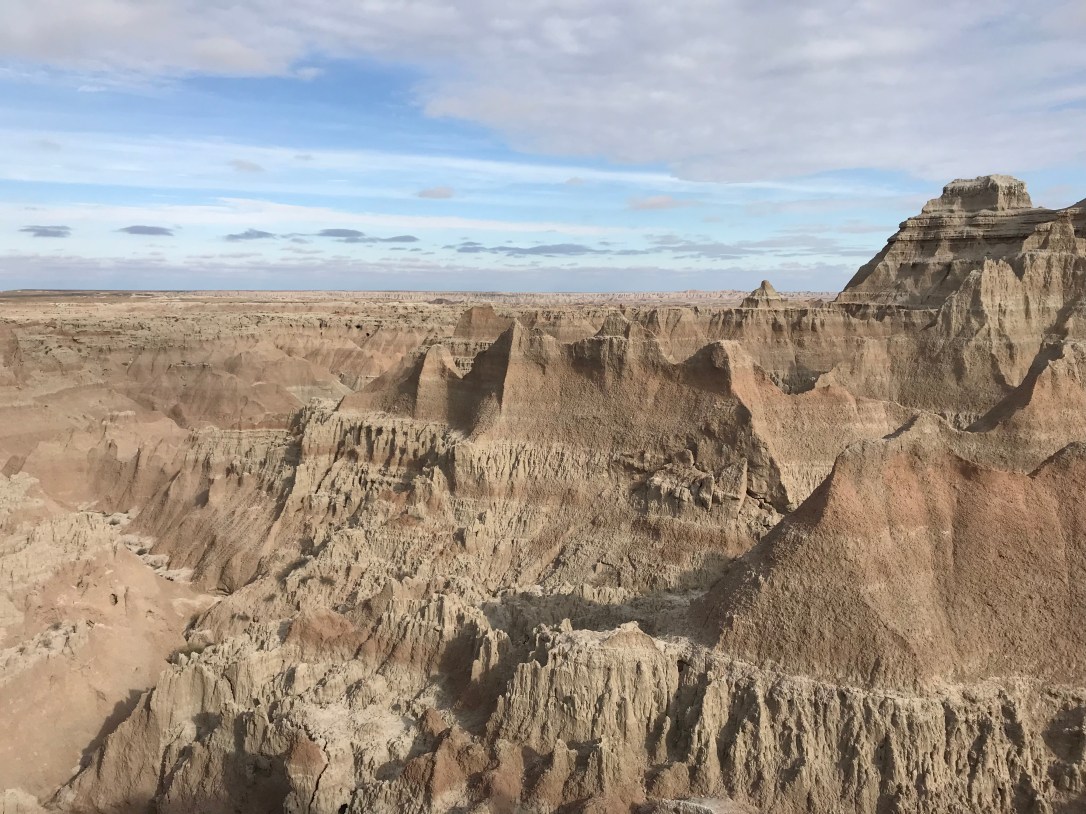
I first headed to Badlands National Park, highly recommended by my friend David. I had never been to Mars but I imagine Badlands is the closest thing on Earth. Unbelievable views that stretch as far as the eye can see. Thanks David!

Back in the day the Lakota Native Americans called this land the “white hills” and apparently had great success hunting here. However, it was the French trappers who gave this land its present name in the mid-1700s. Frustrated by the sharp peaks and crumbling rock they called this area les mauvaises terres – bad lands. With such a clever name it’s no surprise that the Lakota adopted it too.

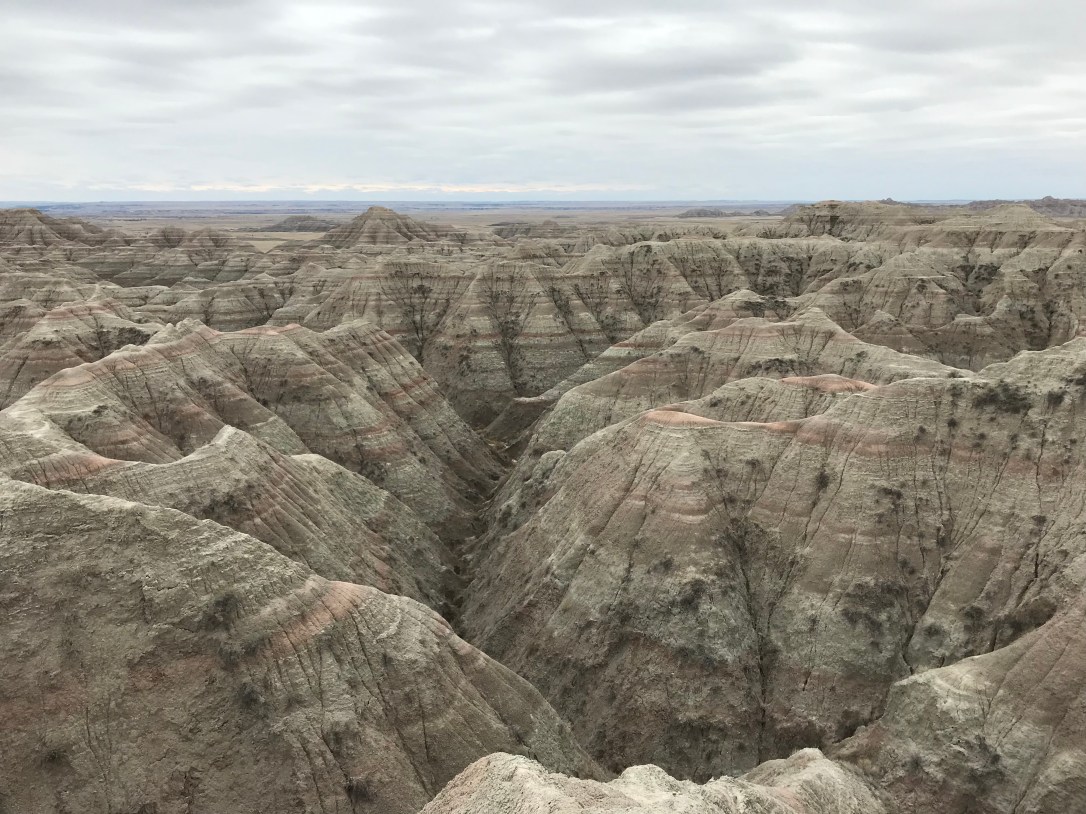
In 1929 the S.D. Department of Agriculture published an ad to attract settlers, in which it called this land the “Wonderlands” with promises of “scenic and recreational advantages.” Quite reasonably this triggered an influx of hopeful homesteaders. Unfortunately, as you can probably predict, things didn’t go as smoothly as expected. This semi-arid and wind-swept area, combined with the Great Dust Bowl of the 1930s and waves of grasshoppers, proved to be less welcoming than advertised and many houses were abandoned. Bad luck in the badlands.


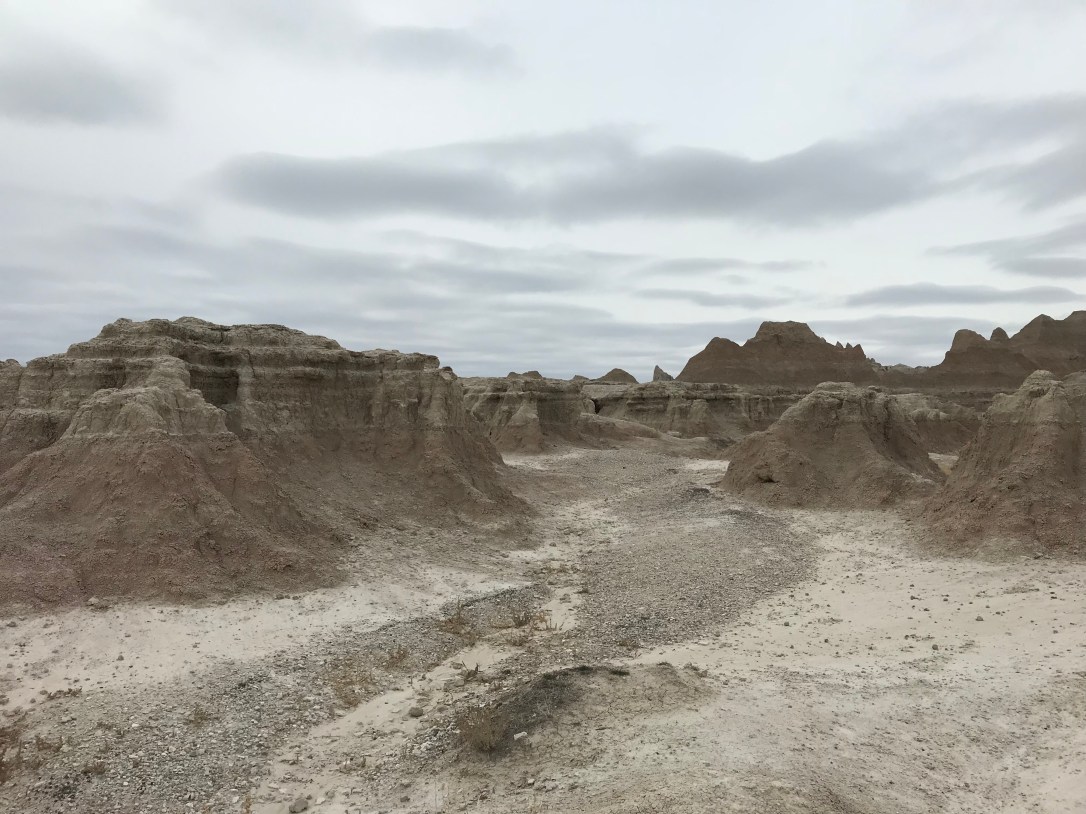
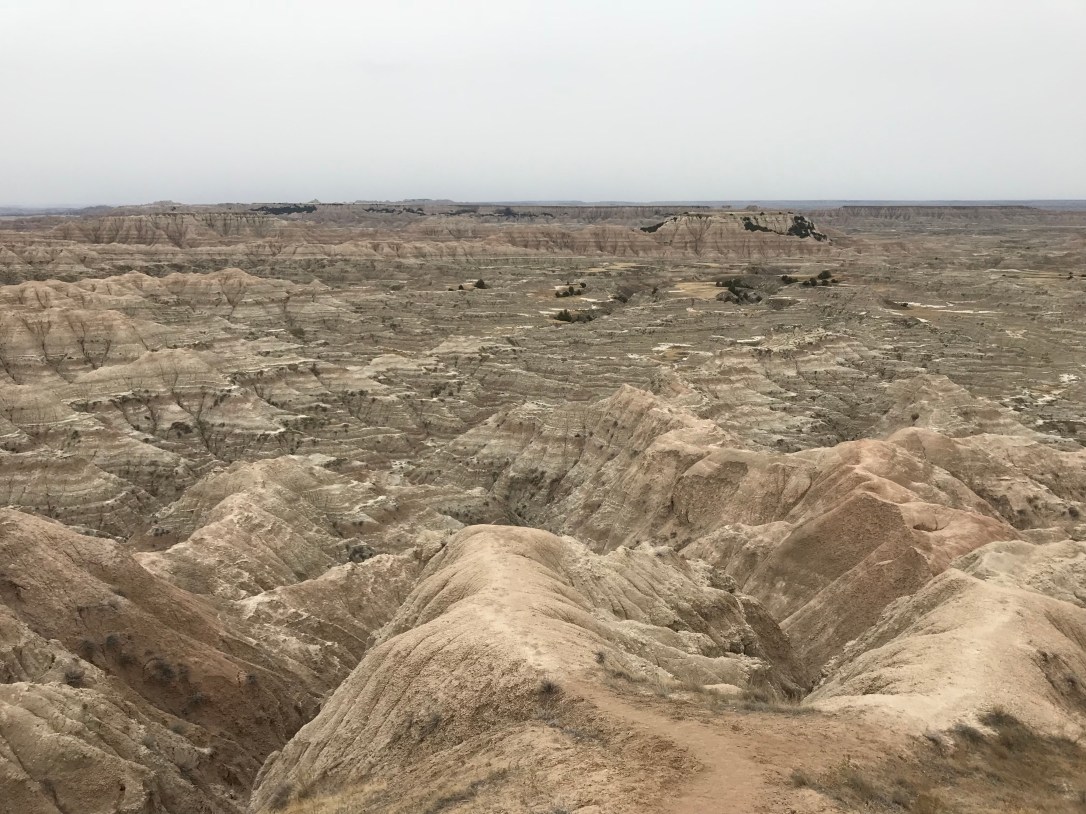
In order to fully appreciate the next photo we need a brief history lesson. After the sea drained away 65 million years ago a jungle formed and chemicals from decaying plants produced a yellow soil. When 37 million years ago sediment from the west washed over the jungle, the sediment was converted into a red soil. Though long fossilized, the sea and the jungle both left visible evidence of their passing in these mounds, which today are called the Yellow Mounds.


Rapid City
After an amazing time at Badlands I continued rapidly driving west. My next stop was Rapid City, the second most populous city in South Dakota (after Sioux Falls) with a population of almost 75,000!
Not only was Rapid City on the way to Mt. Rushmore but it also had a piece of the Berlin Wall on display, something I had to see.
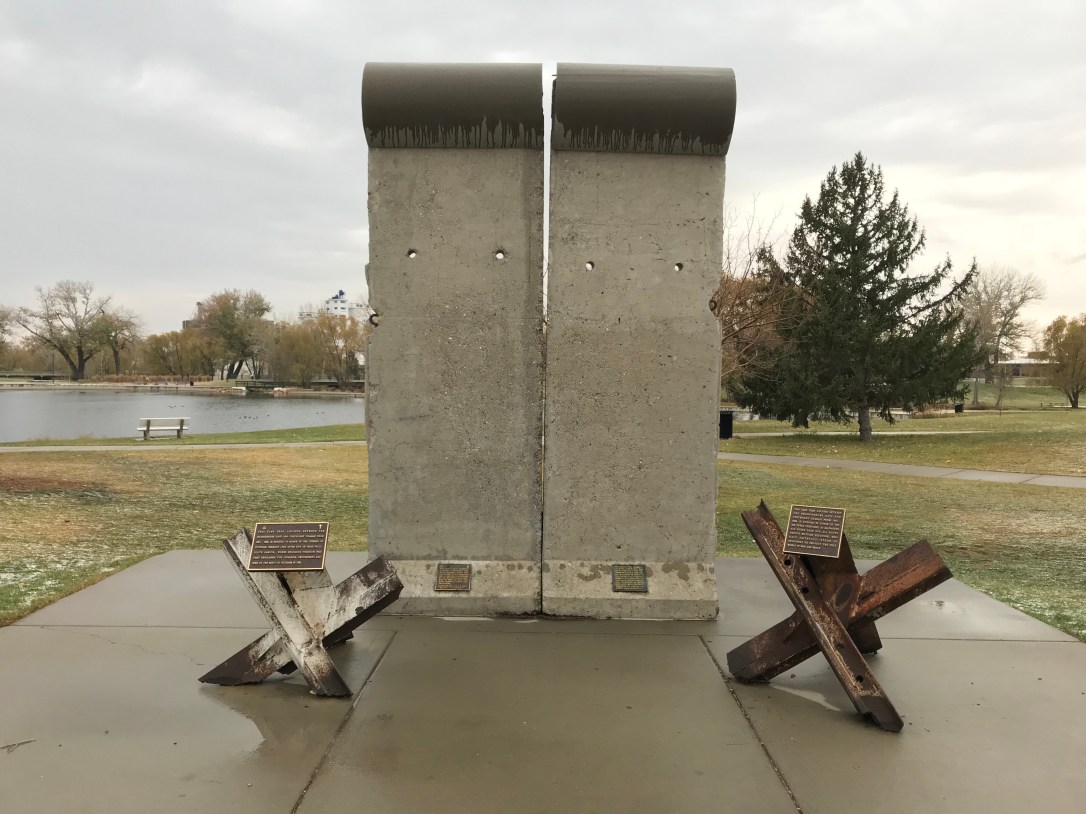
In the mid-1990s a traveling Berlin Wall exhibit came to the South Dakota School of Mines & Technology. A local businessman named Dale Clement thought it would be a “neat thing for us to have out here” and on a whim bought a piece of the wall for a few thousand dollars. It’s that easy!
Black Hills National Forest
Next I headed into Black Hills National Forest, home of Mt. Rushmore.

Mt. Rushmore
Mt. Rushmore was one of the primary reasons why I wanted to drive through South Dakota, and I was thrilled to finally see it.
The monument was amazing but I must say I was a little underwhelmed by how small it looked from the observation deck. At 60ft tall the president heads are certainly impressive, but the observation deck is pretty far away.

Mt. Rushmore’s construction happened 1934 – 1939 and was led by sculptor Gutzon Borglum. The four faces carved were chosen to represent the birth, growth, development, and preservation of the United States:
“George Washington signified the struggle for independence and the birth of the Republic; Thomas Jefferson the territorial expansion of the country; Abraham Lincoln the permanent union of the States, and equality for all citizens, and Theodore Roosevelt, the 20th century role of the United States in world affairs and the rights of the common man.”

- The rainy/crying faces of Washington, Jefferson, Roosevelt, and Lincoln.
The idea for carving famous people into the Black Hills to promote tourism came from state historian Doane Robinson. Robinson wanted Mt. Rushmore to feature American West heroes such as Lewis and Clark, but Borglum wanted broader appeal and thus chose the presidents.

Crazy Horse Memorial
My final stop in South Dakota was the Crazy Horse Memorial in Black Hills. Crazy Horse was a Lakota war leader who bravely fought the US Federal Government against encroachments on Lakota territories. Fatally wounded by a guard when resisting imprisonment in 1877, Crazy Horse is regarded as one of the most iconic Native American leaders.
The monument has been under construction since 1948 and is far from being completed.
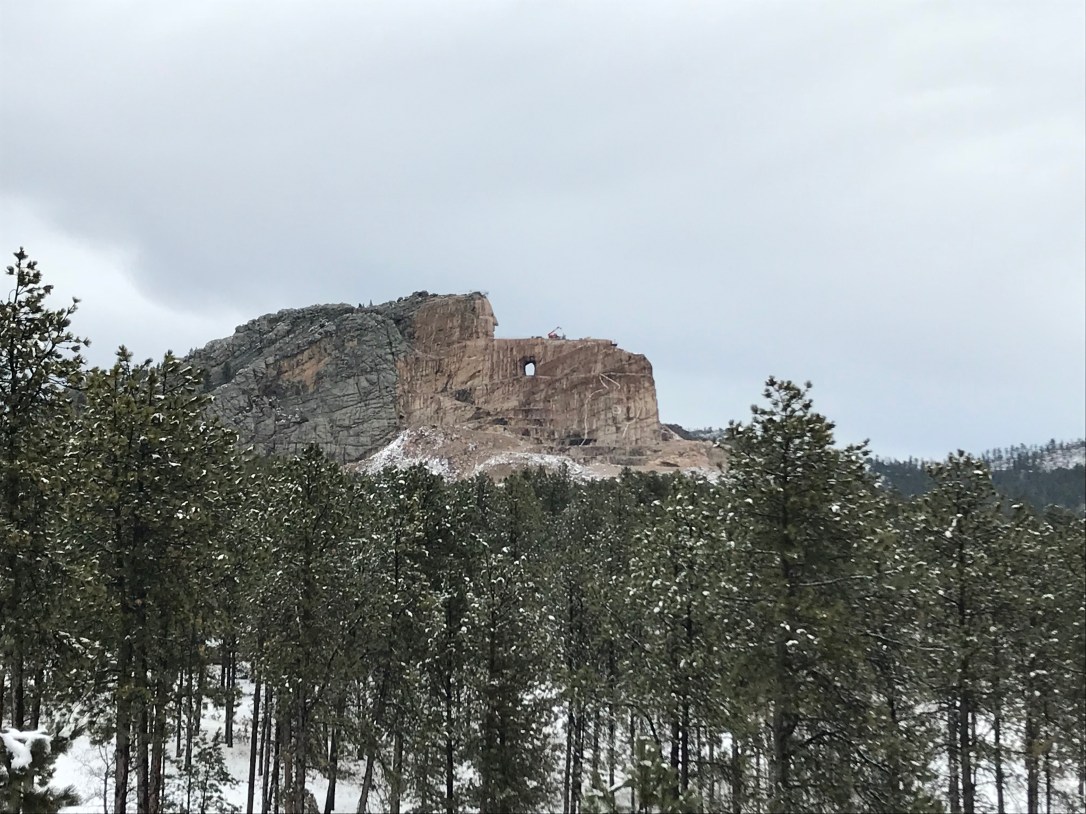
It cost extra $ to get close to the monument, so unfortunately I was only able to get a photo from far away. Will have to come back when construction is done.

Wyoming
And with that my wonderful stay in South Dakota came to an end. The road to my next stop (Colorado) was through Wyoming, where I was lucky to catch some amazing views.

Next stop: Denver!

 Mikhail's Travel Adventures