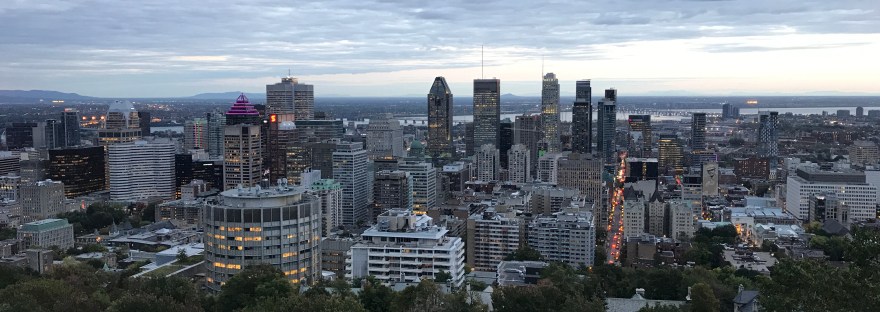
My next stop was Montreal, the second-largest city in Canada and the second-largest primarily French-speaking city in the world (#1 is Paris). Unsurprisingly, Montreal is called the “Paris of Canada.”
Some highlights:
- Beautiful European architecture
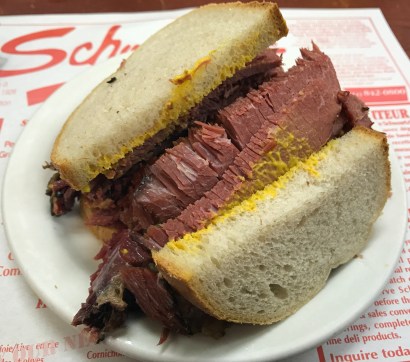
- Best smoked meat sandwich (Schwartz’s)
- Best poutine (La Banquise)
- Second best bagels after NYC (St. Viateur)
Brief History
Montreal was founded in 1642 by a group of French settlers led by a guy named Maisonneuve. Originally a missionary settlement called Ville-Marie, the town grew to become a center of the regional fur trade. A key part of French Canada for over 100 years, Montreal was surrendered to the British in 1760 after the French and Indian War.
In the 1920s and 1930s, during the US Prohibition, Montreal became a “mecca for thirsty Americans” from nearby New England and New York. This type of tourism inspired an industry of vices such as alcohol and gambling.
Montreal was the financial center of Canada until the second half of the 20th century, when it was overtaken by Toronto.
Smoked Meat
My first stop on Wednesday was Schwartz’s, a Jewish deli famous for its smoked meat (beef brisket) sandwiches. Amazing!
Notre-Dame Basilica
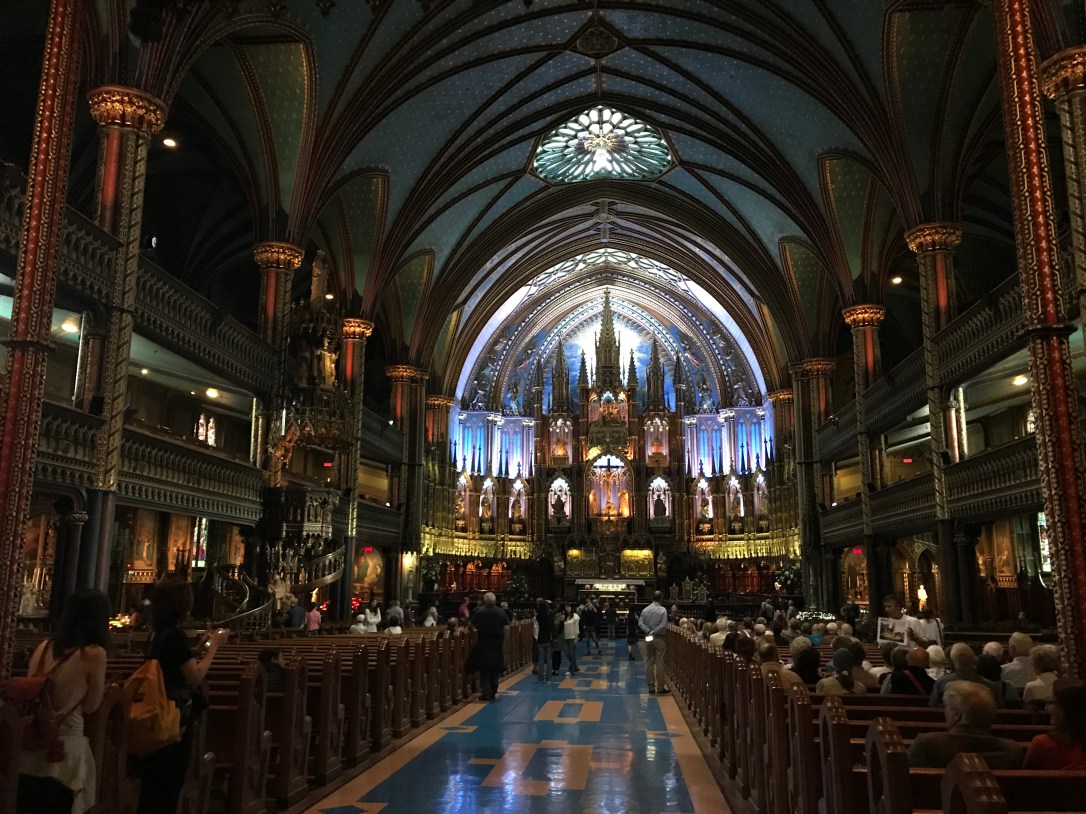
After some amazing meat I headed to the Notre-Dame Basilica, a Gothic Revival church built in 1829 (restored version of the original parish built in 1672). What an incredible building.

Pointe-à-Callière Museum
My next stop was Pointe-à-Callière, a museum of archaeology and history which is itself an archaeological site. Some of the original architecture exposed during construction is left as is, and is incorporated into the museum exhibits.
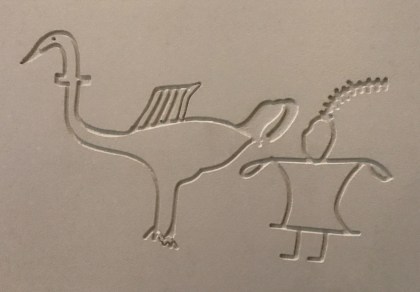
One interesting thing I learned about was the Great Peace of Montreal, a treaty signed in 1701 between New France and 40 (!) of the First Nations. France and Britain were involved in the fur trade and native tribes competed to be the favored suppliers, which the Europeans used to pit the tribes against each other. These intense “fur wars” forced some tribes to pursue peace, eventually leading to a large-scale treaty.
The Great Peace treaty is still considered valid by the First Nations tribes involved, and highlights the ways in which treatment of the natives diverged for the different colonizing nations. According to a 19th-century historian:
“Spanish civilization crushed the Indian; English civilization scorned and neglected him; French civilization embraced and cherished him.”
Biosphere
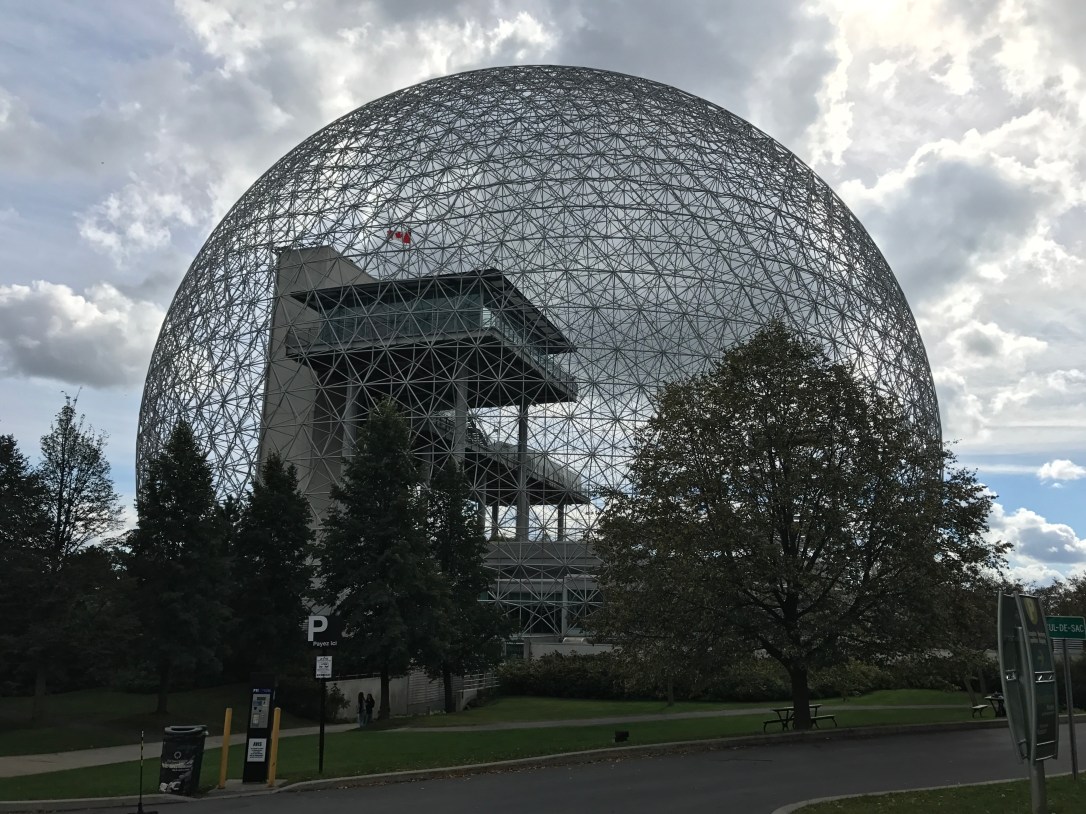
I started my Thursday with the Biosphere, an environmental museum inside of a geodesic dome. The structure was built for the American Pavilion at the 1967 World’s Fair in Montreal, and given to Montreal by the US as a gift.

Mount Royal Park
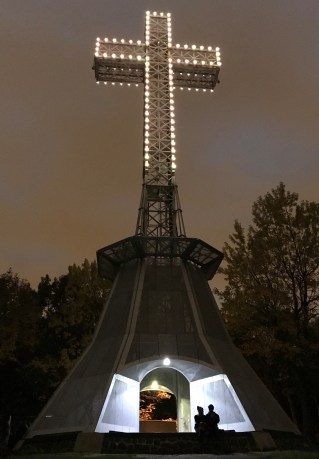
Next, it was time for a scenic view so I headed up to Mount Royal Park overlooking the city. Stunning!

Saint Joseph’s Oratory
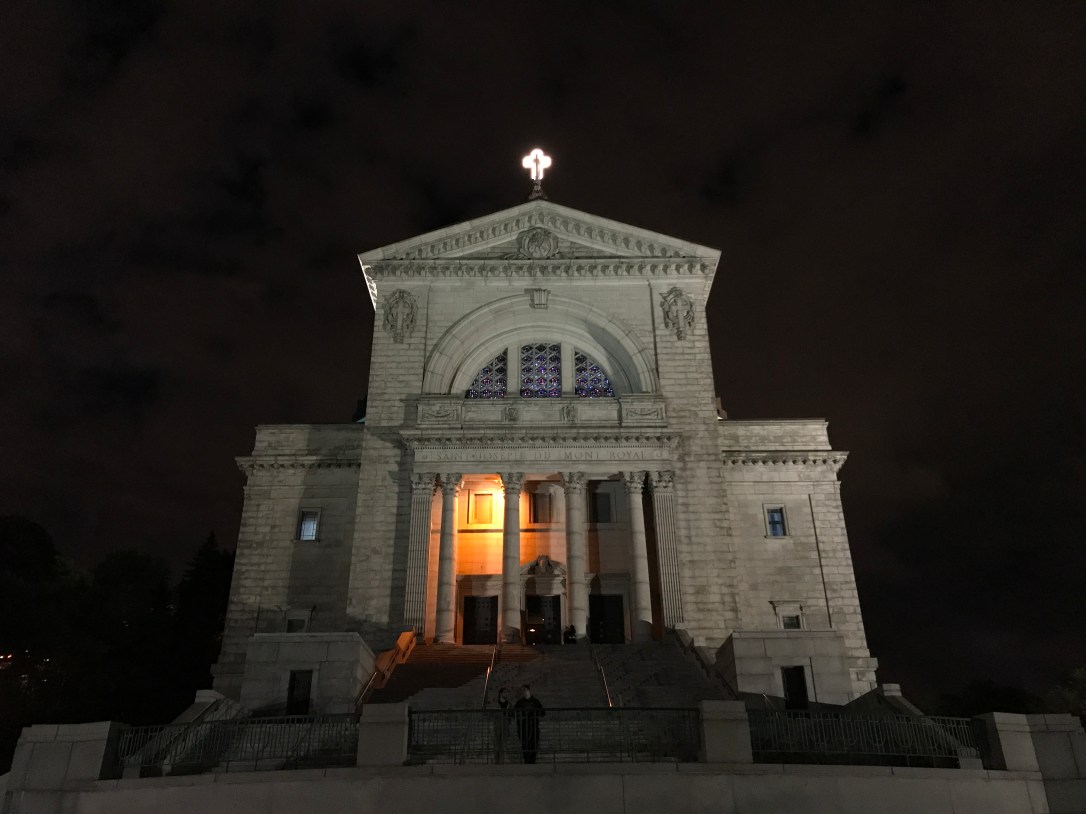
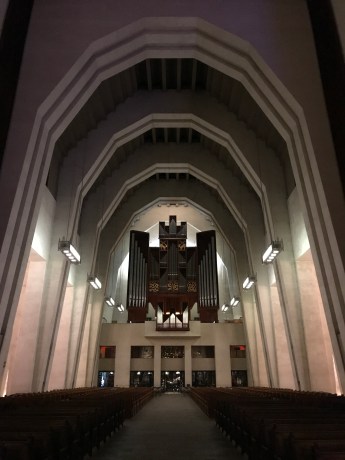
My next stop was Canada’s largest church, Saint Joseph’s Oratory of Mount Royal. Its dome is the third largest of its kind in the world!

Poutine
Poutine is a Canadian dish (originally from the province of Quebec) that is basically cheese fries: French fries with cheese curds and gravy. It’s a common late-night food and can be found all around Canada.
After a long day of exploring I wanted to get some of that famous Canadian poutine so I headed to one of the top-rated places, La Banquise. This restaurant specializes in eccentric toppings and has huge portions. I was definitely not pouting after eating here!

Biodome
I started my Friday with a trip to the Biodome, located in the Olympic Park (built for the 1976 Summer Olympics).

The Biodome is a nature museum that includes replicas of 4 ecosystems found in the Americas, with exhibits featuring animals local to these ecosystems.
The 4 ecosystems are:
- Tropical rainforest (South America)
- Laurentian forest (North America)
- St. Lawrence Marine Ecosystem (around the nearby Gulf of St. Lawrence)
- The Subpolar Region (Arctic and Antarctic)
The museum created a very realistic experience for each ecosystem – I felt as if I was really transplanted there! The rainforest was warm and humid and the subpolar room was cold, as expected, but experiencing all this in one building was very surreal. Would highly recommend this place!

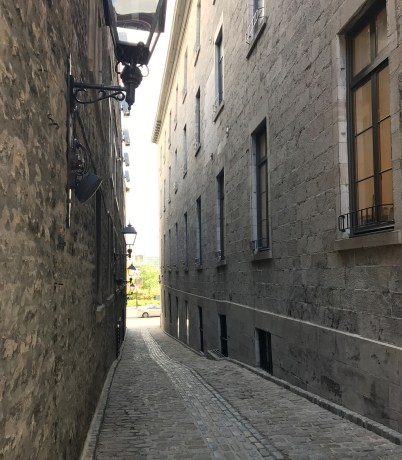
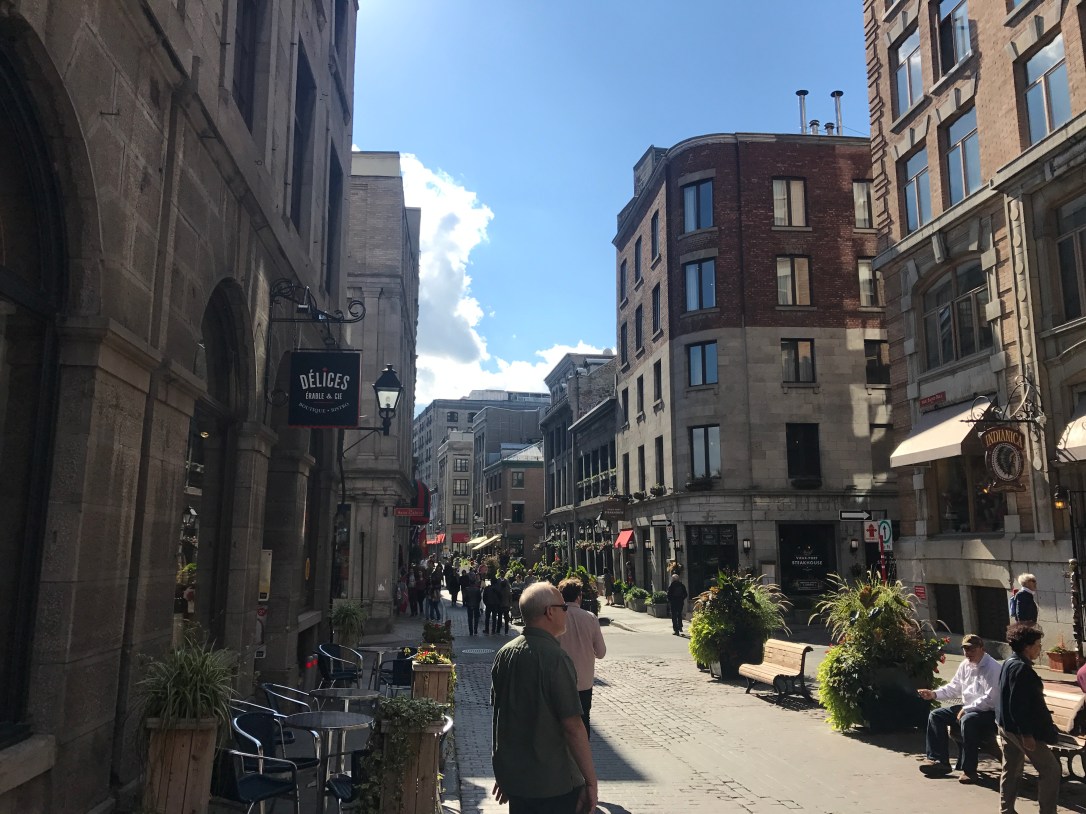
Old Montreal Walking Tour
After the Biodome I took a guided walking tour around Old Montreal. I learned some cool historical and cultural tidbits and it was a fantastic way to wrap things up!

The English Pug and the French Poodle
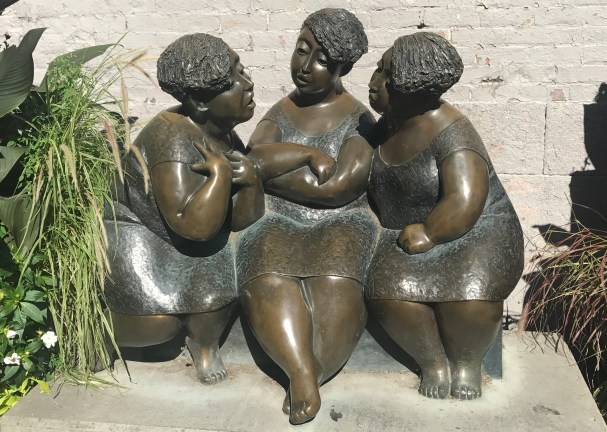
The highlight of Old Montreal for me was a pair of statues in Place d’Armes called the English Pug and the French Poodle.


While the humans are looking away and oblivious, the dogs are looking in each other’s direction, ready to unite.
For context, Quebec was originally French and became a British territory after the French and Indian War. This transition created some cultural tensions, which the statues try to convey: the Englishman is snubbing a French Canadian symbol while the French woman is apprehensive of English power. The dogs, having no such cultural prejudices, just want to play.
Montreal Bagels
Before leaving the city I had to try those famous Montreal bagels so I stopped at St. Viateur Bagel for lunch. The bagels were quite good, and different from the NYC bagels I was accustomed to: they were smaller (the holes were larger), denser, and sweeter. Still not better than New York bagels but definitely worth a try!

This concludes my stay in Montreal. It’s a great city full of culture and good food, and definitely worth a visit. Next stop, Toronto!

 Mikhail's Travel Adventures